
Refine by
Forestry Articles & Analysis
519 articles found

The increasing generation of agricultural residues, forestry byproducts, and organic waste has created significant challenges for waste biomass management. ...
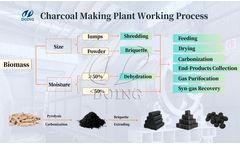
For biochar that improves soil, choose farming and forestry leftovers, like rice husks, crop stalks, and sawdust. For making activated carbon, the best choices are fruit shells-based raw materials, such as coconut shells, walnut shells, and apricot kernels. ...
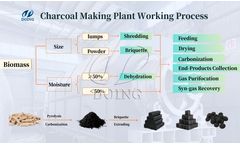
Although both utilize agricultural and forestry waste as raw materials, they differ fundamentally in terms of their manufacturing processes, physical forms, and final product value. ...
Biomass residues, including agricultural byproducts, forestry waste, and organic industrial discards, contain latent energy that can be efficiently recovered through carbonization processes. ...
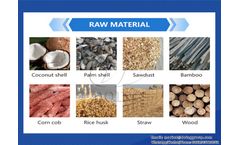
Agricultural Processing Residues: Such as fruit pomace, soybean dregs, spent grains (brewery waste), residues from traditional Chinese medicine processing, etc. ② Forestry Waste Prunings from Fruit Trees and Timber Forests: Such as tree branches, vines, dead branches, fallen leaves, etc. ...
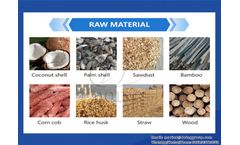
Abundant Biomass Feedstocks: Lowering Production Costs Indonesia possesses vast and diverse biomass resources, providing natural cost advantage for charcoal production. Whether in the form of agro-forestry residues—such as palm shells, coconut shells, and rice husks—or waste generated during wood processing, these materials serve as high-quality feedstocks for ...
While wood has traditionally been the primary source, there is an increasing focus on using agricultural waste, forestry residues, and even municipal solid waste for biochar production. ...
Moreover, biochar can neutralize acidic soils and immobilize heavy metals and pollutants, reducing their bioavailability to plants and preventing contamination of groundwater and surrounding ecosystems.Another notable advantage of biochar is its role in promoting circular economy by valorizing agricultural and forestry waste. Each year, the world generates approximately 1.4 ...
Understanding Biochar and Its Role in Carbon Sequestration Biochar is a stable form of carbon that is produced through the pyrolysis of organic materials, such as agricultural waste, forestry residues, or even municipal solid waste. The process involves heating the feedstock in a low-oxygen environment to create a solid, carbon-rich material that can be used for soil enhancement ...
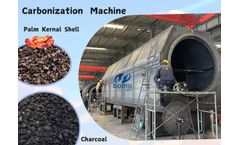
It can also efficiently convert biomass resources such as food waste and forestry waste, providing flexible and sustainable waste resource utilization solutions for plantations, agricultural processing enterprises, and the environmental protection industry. 2. ...
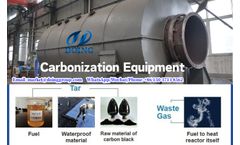
Biomass pyrolysis is a process that heats organic matter (such as wood, agricultural, and forestry waste) to high temperatures, causing it to decompose in an oxygen-free or low-oxygen environment. ...
Transforming Agricultural Residues The biochar machine operates through carbonization, a thermochemical process conducted under oxygen-limited conditions. Crop residues, forestry offcuts, and animal waste are introduced into the system, where high temperatures convert them into a porous, carbon-rich solid. ...
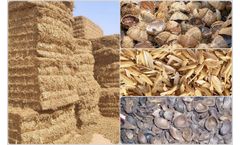
Using straw to produce biochar not only effectively reduces agricultural waste accumulation but also improves soil fertility and enhances the sustainability of agricultural production. 3. Forestry Waste Forestry waste, such as wood, branches, and bamboo, is also an important raw material for biochar production. These wastes are typically rich in organic matter, ...
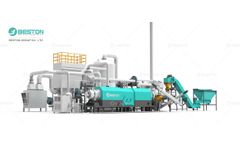
Additionally, the ability to convert agricultural or forestry waste into marketable charcoal elevates both sustainability and profitability. ...
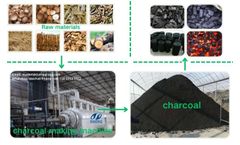
High Resource Utilization: Charcoal maker machine can convert agricultural and forestry waste such as sawdust, fruit shells, and straw into useful energy, achieving a circular biomass resource. 2. ...
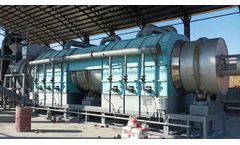
At the forefront of this evolution is the biomass pyrolysis plant for sale, an industrial solution engineered to convert agricultural residues, forestry waste, and other organic materials into biochar—a stable, porous solid additive. ...
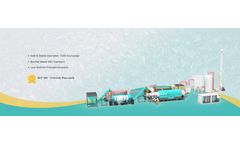
In a biomass pyrolysis plant, feedstock such as wood chips, agricultural waste, forestry residues, or even municipal solid waste undergoes thermal decomposition at high temperatures (usually between 400°C and 800°C) inside a pyrolysis reactor. ...
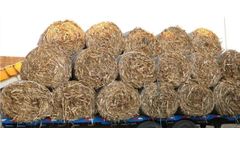
Coupled Co-Firing: Chongqing Conch Cement’s biomass co-firing project utilizes locally abundant agricultural and forestry waste, such as bamboo scraps and straw. Through HARDEN’s RDF (Refuse-Derived Fuel) preparation system—featuring high-speed shredders for precision crushing, dust removal, and magnetic separation—the waste is processed into RDF fuel ...
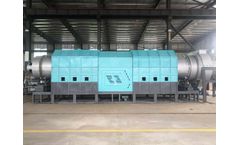
Typical materials include agricultural residues, forestry by-products, and organic municipal waste. The energy consumed in harvesting, drying, and transporting feedstock contributes to the plant's total carbon footprint. ...

Laser Output Power Price Range Worktable Size 1000w-20000w $35000-$270000 3015/ 4015/ 4020/ 6020/ 6025/ 8020/ 8025 Fiber Laser Cutting Machine Application industries: metal cutting, electrical switch manufacturing, aerospace, food machinery, textile machinery, engineering machinery, locomotive manufacturing, agricultural and forestry machinery, elevator manufacturing, special ...