
Refine by
Forestry Waste Articles & Analysis
160 articles found

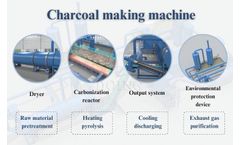
The commercial production of charcoal has evolved significantly with the introduction of advanced carbonization technologies. Modern manufacturing facilities require equipment capable of delivering high productivity, consistent product quality, and efficient resource utilization while meeting increasingly stringent environmental standards. Selecting the appropriate wood charcoal making machine is ...
This means that for every ton of biochar produced and applied, not only is waste pollution reduced, but a "carbon sink" contribution is also made to global carbon emission reductions. ...
Produced through the pyrolysis of agricultural and forestry biomass, biochar can permanently store carbon while creating valuable by-products such as renewable energy and bio-oil. ...
The transition toward sustainable resource management has increased the importance of technologies capable of converting agricultural and forestry residues into valuable products. Among these innovations, biochar production has emerged as a practical strategy for maximizing biomass utilization while reducing waste generation. ...
The increasing generation of agricultural residues, forestry byproducts, and organic waste has created significant challenges for waste biomass management. ...
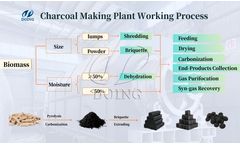
Although both utilize agricultural and forestry waste as raw materials, they differ fundamentally in terms of their manufacturing processes, physical forms, and final product value. ...
Biomass residues, including agricultural byproducts, forestry waste, and organic industrial discards, contain latent energy that can be efficiently recovered through carbonization processes. ...
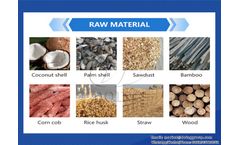
Suitable Biomass Feedstocks Biomass feedstocks must be sustainably sourced—for example, agricultural straw, wood chips, or organic waste. Agricultural residues, forestry waste, and other non-food biomass are typically accepted, while materials that cause deforestation or compete with food supplies are not. ...
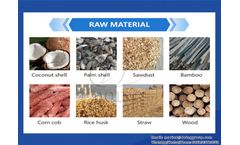
Abundant Biomass Feedstocks: Lowering Production Costs Indonesia possesses vast and diverse biomass resources, providing natural cost advantage for charcoal production. Whether in the form of agro-forestry residues—such as palm shells, coconut shells, and rice husks—or waste generated during wood processing, these materials serve as high-quality ...
While wood has traditionally been the primary source, there is an increasing focus on using agricultural waste, forestry residues, and even municipal solid waste for biochar production. ...
In an era marked by escalating climate change, soil degradation, and waste accumulation, finding sustainable and multifunctional solutions to address these interconnected environmental challenges has become imperative. ...
Understanding Biochar and Its Role in Carbon Sequestration Biochar is a stable form of carbon that is produced through the pyrolysis of organic materials, such as agricultural waste, forestry residues, or even municipal solid waste. The process involves heating the feedstock in a low-oxygen environment to create a solid, carbon-rich material that ...
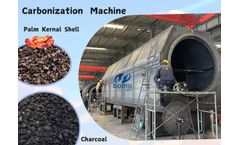
While environmentally friendly, this method requires specialized technology to ensure thorough decomposition of the waste. · Incineration: Empty palm fruit bunches can also be converted into energy through high-temperature combustion, reducing waste backlogs. ...
Our planet is drowning in waste—from mountainous tyre piles to non-recyclable plastics and agricultural residues. But what if these environmental burdens could be transformed into high-value commodities? Enter pyrolysis technology, a game-changer in waste management that leverages heat in an oxygen-free environment to break down organic materials. At the heart of this revolution lies the ...
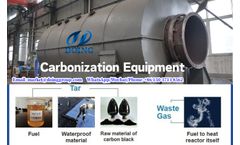
Biomass pyrolysis is a process that heats organic matter (such as wood, agricultural, and forestry waste) to high temperatures, causing it to decompose in an oxygen-free or low-oxygen environment. ...
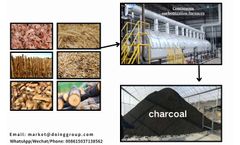
Wood charcoal preparation is the process of converting wood into a highly efficient fuel through appropriate methods. Traditionally, wood was carbonized in earthen kilns or pits, an inefficient and environmentally harmful process. Modern charcoal production combines traditional knowledge with modern technology to ensure wood charcoal quality while prioritizing environmental protection and ...
Transforming Agricultural Residues The biochar machine operates through carbonization, a thermochemical process conducted under oxygen-limited conditions. Crop residues, forestry offcuts, and animal waste are introduced into the system, where high temperatures convert them into a porous, carbon-rich solid. ...
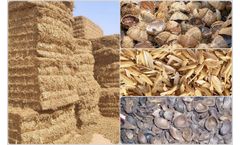
Forestry Waste Forestry waste, such as wood, branches, and bamboo, is also an important raw material for biochar production. ...
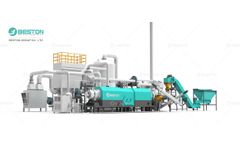
Additionally, the ability to convert agricultural or forestry waste into marketable charcoal elevates both sustainability and profitability. ...
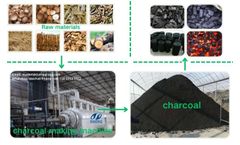
High Resource Utilization: Charcoal maker machine can convert agricultural and forestry waste such as sawdust, fruit shells, and straw into useful energy, achieving a circular biomass resource. 2. ...