
Formaldehyde Concentration Articles & Analysis
16 articles found

Cubic has developed a comprehensive portfolio of gas sensors based on core technologies including NDIR, light scattering, MEMS MOX, and electrochemical principles, enabling accurate detection of key indoor air quality parameters such as carbon dioxide (CO2), particulate matter (PM1.0, PM2.5, PM10), total volatile organic compounds (TVOCs), temperature, humidity, and formaldehyde ...
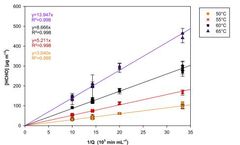
Existing formaldehyde calibration methods often face limitations, such as instability over time or limited concentration range. ...

Did you know that in addition to its disinfection and sterilization properties, hypochlorous acid disinfectant has so many powerful functions? Today we will explain them in detail for ...

Efficacy and Application of Photocatalysts Air purification The photocatalyst generates hydroxyl radicals after being exposed to light, and reacts with organic substances in the air to form non-toxic inorganic substances, which can effectively decompose formaldehyde, benzene, ammonia, convert them into H2O and CO2, and oxidize and remove ammonia nitrogen compounds, sulfides and ...

Throughout the pressing process, add 17 kg of water as well as 100 ml of formaldehyde fluid concentration to 37% per 100 kg to improve its nutrition and also digestibility. ...

H&E staining The frozen slide was warmed at room temperature for 10 min and fixed with 1 ml 4% formaldehyde (10 min). After being washed once with 1× DPBS, the slide was quickly dipped in water and dried with air. ...

Monitoring of toxic and harmful gases such as formaldehyde and carbon monoxide in the home environment After the renovation of many new houses, more than 90% of harmful gases seriously exceed the standard, and the indoor formaldehyde concentration may exceed 2.5ppm, and some may even exceed 10ppm. Therefore, formaldehyde sensors, ...

The logs are chipped, broken down into individual fibres. Then a urea-formaldehyde resin is used to glue the wood fibres back together to form the various types of MDF. During the manufacturing process, formaldehyde is released to the atmosphere, and, therefore the local Council has set requirements on ambient formaldehyde ...

The challenge Edition Research institutions found that the air quality index of the environment in common household, schools, all kinds of typical offices and buildings indicates the serious problems are CO2 which is on the high side, volatile organic compounds( formaldehyde) and high concentration of biological contamination, which are caused by weak atmospheric ...

The concentrations of NaCl and MG at which growth of both species was inhibited were higher than the respective mean 96h median lethal concentrations (LC50-96h) for silverside eggs. In the case of F, the growth inhibition (GI) of F. solani was achieved also at concentrations higher than the respective LC50-96h. Only for F. semitectum a complete ...

The htV-M can precisely measure formaldehyde concentrations in parts per million (ppm) and mg/m3 over a wide range of temperature and humidity. The Formaldemeter htV is a manual hand-held instrument, which can take instantaneous single-point measurements of Formaldehyde, Temperature and Humidity. Both instruments can accurately measure very low ...
Long-term exposure causes chronically impaired lung function, skin hardening, swelling and flaking, dermatitis, allergic eczema, and cancer. Formaldehyde has also been shown to cause sleep disturbance, impaired memory, reduced concentration, nausea and menstrual irregularity. ...

Acetaldehyde is also known by a variety of synonyms which include acetic aldehyde, ethanol, ethyl aldehyde and methyl formaldehyde. “Concentrations of acetaldehyde are often higher in indoor environments than outdoors,” reported Ben Sublasky, National Director of Client Services for LA Testing and EMSL Analytical, a leading environmental testing ...

As product safety regulations for industry are becoming stricter, more testing at lower levels is required for toxic elements or hazardous organic chemicals such as formaldehyde in children’s toys/clothing. Formaldehyde resins are used in fabrics to bind pigments to the cloth, as a fire retardant and to provide stiffness. ...
Formaldehyde presented the highest concentration in indoor and outdoor air, followed by acetone and acetaldehyde. Indoor carbonyl concentrations were higher than outdoor concentrations at all sampling sites. Indoor exposure factors were estimated for formaldehyde and acetaldehyde, ranging from 202 µg day–1 to 554 ...
Formaldehyde was measured in rainwater samples collected at a residential area of Trombay, Mumbai (a coastal site in India). A mean concentration of 2.1 µmo1/1 and a range of 0.4-11.0 µmol/l were observed. The mean formaldehyde concentration in rainwater has increased from 1.2 µmol/l in 1979 by a factor of about two at this ...