
Refine by
Fruit Handling Articles & Analysis
10 articles found
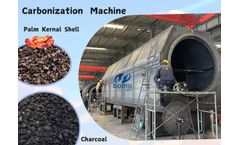
Palm oil is a widely used vegetable oil worldwide, particularly in food processing, cosmetics, and bioenergy. After palm fruit is processed to extract its oil, the empty fruit bunches often become a neglected waste stream. These empty fruit bunches consist primarily of stalks, peels, and some unextracted pulp. ...
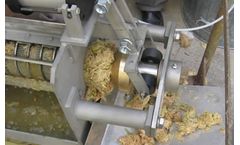
Its continuous slot design offers superior flow rates while preventing clogging, making it ideal for continuous operation in high-volume wastewater treatment systems. Application in Fruit and Vegetable Wastewater Treatment: Wastewater from fruit and vegetable processing contains high levels of organic materials, suspended solids, and by-products that must be ...

A screw press machine plays a crucial role in the efficient and sustainable management of fruit and vegetable waste. As the global population continues to grow, so does the demand for fresh produce, resulting in higher levels of waste generated in the fruit and vegetable processing industry. ...

Annular space heat exchangers, such as the HRS AS Series, work by passing the product through the gap between the inner and outer tubes (the annular space), which makes them suitable for thick, highly viscous products such as fruit purees, thick sauces, honey and syrups. The advantage of such a design is that it ensures even heating or cooling of the product, while the use of ...

Take Care Picking Your Navels Oleocellosis is rind damage usually in the form of spots or dark areas resulting from rough handling of fruit when picked in poor weather conditions (too cold or too wet). ...

Peaches and nectarines are climacteric fruit. Their rapid ripening after harvest is the reason for their short shelf life and it represents a serious limitation on the handling and transporting of this fruit. Ethylene is the direct or indirect cause of most of the physiological disorders in climacteric fruit. Ethylene ...
Peaches and nectarines are climacteric fruit. Their rapid ripening after harvest is the reason for their short shelf life and it represents a serious limitation on the handling and transporting of this fruit. Ethylene is the direct or indirect cause of most of the physiological disorders in climacteric fruit. Ethylene ...

Knowledge of fruit physico–chemical properties and physiological responses is important for the design and development of appropriate postharvest handling and storage systems to reduce losses and maintain quality. ...
Soluble solids content, firmness, fruit weight and colour index were analysed in each fruit. External validation carried out indicated good predictive performance, particularly for soluble solids content and fruit firmness. These parameters are of key importance in strategies for nectarine post-harvest handling and for nectarine ...
The current level of technology that can enable researchers and industry to understand the mechanical reasons for these levels of damage is discussed. The use of pseudo-fruit to measure the forces acting in the postharvest system can enable repeatable force profiles to be established. ...