
Refine by
Ftir Articles & Analysis
394 articles found

Abstract: Midac has developed a “Puff by Puff” Fourier Transform Infrared (FTIR) validated smoke analyzer for measuring as many as 30 different compounds in cigarette smoke. ...
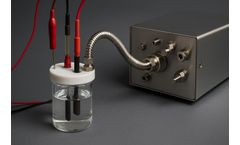
In contrast, the disordered Pd3Ni alloy shows no CO2 evolution, consistent with a 4-electron oxidation pathway. In-situ ATR-FTIR captures the evolution of surface-bound intermediates and their time-dependent transformations during ethanol oxidation, while DEMS provides real-time detection of volatile and gaseous products at the electrode–electrolyte interface. ...
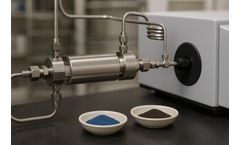
Experiments were conducted in a quartz fixed-bed reactor coupled with a QMS detector and FTIR spectroscopy for operando analysis.All catalysts retained the CHA structure of SSZ-13, but the preparation method strongly affected metal distribution and speciation. ...

This review explores the molecular architecture of insect cuticles, the hydrophobic mechanisms that maintain their impermeability, and the potential of biosurfactants to temporarily alter these properties, resulting in moisture imbalance and behavioral dispersal. Analytical tools such as SEM, FTIR, and AFM are discussed as methods to visualize and quantify the interactions at the ...
Ensuring workplace safety, environmental compliance, and process reliability requires advanced gas detection solutions. FTIR (Fourier Transform Infrared) spectroscopy offers a comprehensive approach by simultaneously detecting multiple gases, monitoring emissions, and ensuring a safe working environment for employees, even at trace levels. ...
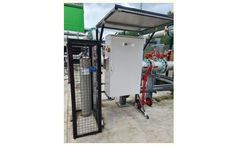
There are several reasons for this but the overriding one is cost. Traditional techniques use FTIR, GCIMS or GCMS instruments which can provide excellent accuracy, rapid results, and a huge amount of data. ...
Diffuse reflectance infrared Fourier transform spectroscopy (DRIFTS) is a powerful analytical technique for the study of powdered and rough surface materials. It is widely employed for quality control, materials characterisation and catalytic studies in both research and industrial settings. However, optimal sample preparation and instrument setup are crucial to obtain the most reliable results ...
BySpecac

Fourier Transform Infrared Spectroscopy (FTIR): FTIR analysis of chemical functional groups in the carbon nanotube surface. For instance, FTIR could register and alter oxygen-groups in doped carbon nanotubes. ...

l Fourier Transform Infrared Spectroscopy (FTIR): FTIR is particularly effective for analyzing organic and polymeric coatings, identifying molecular bonds and functional groups. ...
ByMatexcel
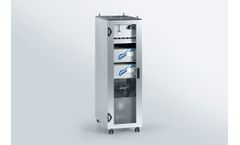
Traditional technologies for this type of measurement (NDIR, FTIR, etc.) are reaching their detection limits for many pollutants. ...
The secondary structure of a protein refers to the specific conformation formed by the rotation or folding of the polypeptide backbone atoms along a certain axis, that is, the spatial position arrangement of the polypeptide backbone atoms, which does not involve the amino acid residue side chain. The secondary structure of proteins mainly includes α-helices, β-pleated sheets, β-turns, and random ...
The ATR FT-IR method (Attenuated Total Reflectance Fourier Transform Infrared Spectroscopy) is an effective method for analyzing monosaccharide composition. This technique utilizes the infrared absorption characteristics of specific functional groups in monosaccharide molecules to identify and quantify monosaccharides.Basic PrincipleIn ATR FT-IR analysis, infrared light passes through the sample, ...

Sample PreparationFor the preparation of solid samples for FTIR spectroscopy, KBr is used. About 2 mg of the sample and 200 mg of KBr are dried and ground. ...

Infrared spectroscopy (especially Fourier-transform infrared spectroscopy, FTIR) is a commonly used technique for studying the secondary structure of proteins. ...

Among these, our GT6000 Mobilis stands out as a pioneer, being the first and only FTIR analyzer to receive this coveted certificate. Let’s delve deeper into how this certification and the GT6000 Mobilis itself revolutionize emission monitoring. ...

Specifically, one of the most powerful infrared spectroscopy for studying protein secondary structure is the fourier transform infrared spectroscopy (FTIR). Nuclear magnetic resonance Nuclear magnetic resonance technology can determine the conformation of proteins in a solution, but it is generally limited to the study of smaller proteins with a molecular weight of not more ...
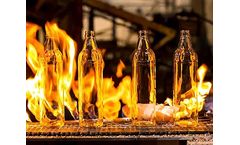
Context The client, already familiar with ENVEA’s products through previous collaborations, was looking for a continuous emission monitoring solution to equip a new hollow glass production and processing plant for liquid ...
ByENVEA

Structural information can be obtained using X-ray diffraction (for AH adjuvants only), spectroscopy (FTIR, NMR, Raman) and transmission electron microscopy. Granularity Aluminum adjuvants typically consist of primary nanoparticles that form irregularly shaped aggregates ranging in size from 1 to 20 μm. ...

To validate the quality and efficacy of our nanocomposite, we employed an array of analytical techniques, including Fourier transform infrared spectroscopy (FTIR), scanning electron microscopy (SEM), energy dispersive X-ray spectroscopy (EDS), X-ray diffraction (XRD), and transmission electron microscopy (TEM). ...

However, with the advancement of technology,Fourier transform infrared spectrometerThe application of (Fourier Transform Infrared Spectroscopy, FTIR) gas analyzers has gradually become popular, bringing revolutionary changes to industrial gas emission monitoring and gas control in the production process. This article will explore how to use FTIR gas analyzers to ...