
Refine by
Ftir Spectroscopy Articles & Analysis
309 articles found
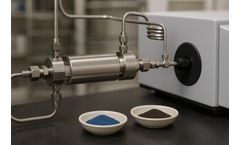
Experiments were conducted in a quartz fixed-bed reactor coupled with a QMS detector and FTIR spectroscopy for operando analysis.All catalysts retained the CHA structure of SSZ-13, but the preparation method strongly affected metal distribution and speciation. ...

Polystyrene microplastics (PSMPs), small plastic fragments measuring less than 5 µm in diameter, are increasingly recognized as harmful air-borne pollutants. Studies demonstrate their ability to penetrate deep into the lungs, where they can induce oxidative stress, inflammation and airway remodeling. A recent study by Balkrishna et al. (2025) investigates these effects in a murine model and ...

Ensuring workplace safety, environmental compliance, and process reliability requires advanced gas detection solutions. FTIR (Fourier Transform Infrared) spectroscopy offers a comprehensive approach by simultaneously detecting multiple gases, monitoring emissions, and ensuring a safe working environment for employees, even at trace levels. ...
Polymers are the foundation of countless modern applications, from automotive components to medical devices. Ensuring the integrity of raw materials, optimizing production processes, and maintaining product purity are essential to achieving high-performance polymers. Fourier-transform near-infrared (FT-NIR) spectroscopy is an indispensable tool for polymer manufacturers, providing rapid, ...
Diffuse reflectance infrared Fourier transform spectroscopy (DRIFTS) is a powerful analytical technique for the study of powdered and rough surface materials. It is widely employed for quality control, materials characterisation and catalytic studies in both research and industrial settings. However, optimal sample preparation and instrument setup are crucial to obtain the most reliable results ...
BySpecac
A new dawn for carbon utilisation in petrochemicals Imagine a world where the very emissions once considered a burden have become the foundation for cleaner, more efficient fuels. The petrochemical industry is on the brink of achieving such a transformation. The landscape is shifting away from decades-old traditional processes that, while profitable, have contributed significantly to global ...
BySpecac
AFM can, for instance, prove the height and spread of doped carbon nanotubes. Raman Spectroscopy: Raman spectroscopy can be a very useful technique for characterizing the carbon nanotubes to look for defects, lattice vibration modes, etc. ...

When paired with energy-dispersive X-ray spectroscopy (EDS), it also reveals elemental compositions. l Atomic Force Microscopy (AFM): AFM measures surface roughness and topology at nanometer precision. ...
ByMatexcel
The ATR FT-IR method (Attenuated Total Reflectance Fourier Transform Infrared Spectroscopy) is an effective method for analyzing monosaccharide composition. This technique utilizes the infrared absorption characteristics of specific functional groups in monosaccharide molecules to identify and quantify monosaccharides.Basic PrincipleIn ATR FT-IR analysis, infrared light passes through the sample, ...

FT-IR analysis, or Fourier Transform Infrared Spectroscopy, is an analytical chemistry technique used to obtain the infrared spectrum of a substance. ...

Infrared spectroscopy (especially Fourier-transform infrared spectroscopy, FTIR) is a commonly used technique for studying the secondary structure of proteins. ...
Industries worldwide rely on chromium for a range of applications. However, hexavalent chromium (CrVI) presents a big problem due to its toxicity. That’s where natural polymers for hexavalent chromium remediation step into the picture. These sustainable materials offer a promising solution for removing this pollutant from our water. You see, conventional methods for removing heavy metals ...

This method is most suitable when samples are clear solutions with proteins and peptides in a narrow concentration range. Fluorescence spectroscopy Ultraviolet and fluorescence spectroscopy is limited to the determination of a few proteins containing chromophores such as aromatic, heterocyclic or conjugated ring systems. Infrared spectroscopy ...

Structural information can be obtained using X-ray diffraction (for AH adjuvants only), spectroscopy (FTIR, NMR, Raman) and transmission electron microscopy. Granularity Aluminum adjuvants typically consist of primary nanoparticles that form irregularly shaped aggregates ranging in size from 1 to 20 μm. ...

To validate the quality and efficacy of our nanocomposite, we employed an array of analytical techniques, including Fourier transform infrared spectroscopy (FTIR), scanning electron microscopy (SEM), energy dispersive X-ray spectroscopy (EDS), X-ray diffraction (XRD), and transmission electron microscopy (TEM). ...

However, with the advancement of technology,Fourier transform infrared spectrometerThe application of (Fourier Transform Infrared Spectroscopy, FTIR) gas analyzers has gradually become popular, bringing revolutionary changes to industrial gas emission monitoring and gas control in the production process. This article will explore how to use FTIR ...
What are the different types of polymer characterization techniques? Fourier transform infrared spectroscopy (FTIR) FTIR spectroscopy is a non-destructive technique for probing the molecular structure of a polymer using infrared radiation. ...
ByMatexcel
Enter a world of high-end gas analysis. Delve deep into Portable NH3 Laser Gas Analyzers. Grasp their working principles, components, and types. Understand their applications, features, and benefits. Know the factors that impact their accuracy. This guide illuminates each ...
Welcome to the Ultimate Guide on Portable FTIR Gas Analyzer! This blog will be your go-to source for all the information. You’ll learn how this amazing device works, and why it’s so great. From the basic principles to the nuts and bolts inside, you will find it all here. Then, you’ll learn about the different types, how they perform, and where they can be used. Plus, find out ...
In the petrochemical realm, petrochemical gas analysis holds prime importance. Accuracy, a key factor, helps ensure product quality, safety, and compliance. With evolving techniques, your operations can harness utmost benefits. The goal? To learn, adapt, and ...