
Fuel Bunker Articles & Analysis
19 articles found

Various industries including Wastewater treatment, power generation, food processing, and chemical manufacturing depend on industrial strainers to separate unwanted suspended solids from liquids and slurries. However, conventional strainer methods can be unreliable and lead to extensive maintenance, particularly in cases (such as pulp mills) where the debris or solids are of substantial size and ...

In the power industry, Industrial strainers are used to separate unwanted suspended solids from liquids, and slurries from boiler water sLag, or for Altering Bunker C fuel supplied to burners for power generation. However conventional strainer methods can be unreliable and lead to extensive maintenance, particularly In cases where the debris or solids arc of ...

Use of LNG to replace other liquid fuels (propane, distillate fuel oil, bunker/residual fuel) is increasing worldwide. ...
HE SITUATION: No. 6 fuel oil is a dense, viscous oil produced by blending heavy residual oils with a lighter oil (often No. 2 fuel oil) to meet specifications for viscosity and pour point. When spilled on water, No. 6 fuel usually spreads into thick, dark colored slicks, which can contain large amounts of oil. The most viscous no. 6 oils will often breakup into discrete patches and tarballs when ...
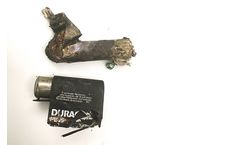
Michael, Austria SUMMARY: One of the most pressing recent issues in the mechanical processing and conversion of waste into solid recovered fuels (SRF) is the high fire risk. This is largely due to a constantly increasing number of lithium batteries in the general waste collection. ...

IMO 2020 marine fuel regulations result in “very long waiting lists at some shipyards,”, especially in China, for scrubber installation on ship vehicles. ...

Approximately 5 percent of the carbon positive biofuel returns to fuel Greasezilla and the other 95 percent can be used as a substitute for #6 bunker fuel. This fuel burns much cleaner than bunker #6 and is in demand because it meets IMO 2020 standards. ...

Also, since January 1st 2019, ships of 5,000 gross tonnage and above need to start collecting data on their fuel-oil consumption under the mandatory data collection reporting entered into force in March 2018. ...

Coriolis meters are being used in the shipping industry to give true volume of fuel being delivered and to avoid bunker disputes due to aeration of fuel, known as the ‘Cappuccino’ effect MORE INFORMATION Fuel suppliers sometimes introduce air intentionally into marine fuel during the pumping of ...

Organic waste streams are digested by anaerobic bacteria under ideal controlled conditions in reactor tanks and turned into methane to be used as fuel for electric power generators or to replace fossil fuels in steam boilers and heaters on the production site. Companies in Asia, Africa, America, Australasia and Europe already benefit from the biogas released to ...

Coming, ready or not Whatever the solution, demand for bunker fuel looks to be in jeopardy, and not just due to the high carbon emissions of fuel oil. ...

Solution: Containerised bespoke design – a complete heating system consisting of an EN303/5 compliant 60kW boiler plus bespoke bunker fuel store and accumulator tank within a container -a pre-wired and pre-piped solution to allow integration into the new heating system. ...

These services refer to: the breaking bulk or distribution of LNG (via small ships or truckloading) from the main import terminals to smaller regasification terminals, satellite plants or directly to customers located throughout the EU. the use of LNG as a fuel for heavy transport (trucking, bunkering, etc.) due to its superior environmental and economic ...

Energy Centre The boiler system and fuel bunker are housed within a specially designed energy centre building in the grounds of the manor. ...

Following the spill of bunker fuel oil (IFO 380, approximately 1,500–3,000 L) into San Francisco Bay in October 2009, PAH (polycyclic aromatic hydrocarbon) concentrations in mussels from moderately oiled areas increased up to 87,554 ng/g (dry wt.) and, 3 months later, decreased to concentrations found in mussels collected prior to oiling with a biological ...

Uncertainty in the global economy, credit crises, fluctuating freight rates and oil prices all affect the ship owner’s profit margins. Bunker fuel oil alone can account for up to 60% of a vessel’s operating costs. ...

About Jetoil… Jetoil is a Greek family company in the sector of marketing of fuels and lubricants, storage, distribution and marketing of petroleum products, bunkering fuel, renting and storing / handling fuel. ...

Specializing in technology to restore air, soil and groundwater quality, the company's patented selective phase transfer technology (SPTT) removes petroleum hydrocarbons (gasoline, fuel oil, diesel, and Bunker C) and polycyclic aromatic hydrocarbons (PAH), and chlorinated contaminants from soil, groundwater and fractured bedrock. ...

Another site, in Washington state, has been removing a #6 fuel oil/ Bunker C that sinks, floats and is neutrally buoyant. They are utilizing six PetroXtractors, model PX-A with 4 on customized stands. ...