
Refine by
Fuel Catalyst Articles & Analysis
32 articles found

Paint Mist and Dust Blockage Furniture coating exhaust gas frequently contains paint mist, wood dust and sticky organic particles that can accumulate inside filters, ducts, adsorbents, catalysts and heat exchangers. Without effective pretreatment, equipment performance may gradually decline and maintenance requirements may increase. 2. ...

The concentrated gas is sent to oxidation equipment for destruction.This approach significantly:Reduces fuel consumption Improves thermal efficiency Minimizes equipment size Lowers operating costs Helps facilities comply with strict international emission standardsAs a professional zeolite rotor manufacturer, CADAIR provides customized adsorption concentration systems for ...
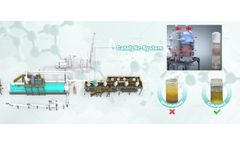
Catalytic pyrolysis has emerged as a pivotal advancement in thermal conversion technologies, particularly for transforming complex hydrocarbon feedstocks into higher-value liquid fuels. By incorporating specialized catalysts into the pyrolysis process, industrial operators can significantly improve oil yield, enhance product quality, and optimize energy ...

For maximal effectiveness catalysts frequently require a structural support system. Catalyst carriers fulfill this function and alumina stands out as the preferred material for this purpose. ...

Promoting selective cracking – Certain catalysts encourage the formation of shorter-chain hydrocarbons, reducing wax production. ...

Catalysts play a large role in chemical research by accelerating chemical reactions. Using the kinetic analysis of catalytic reactions can help us learn more about how these catalysts function at a molecular level. Catalytic reactions underpin the synthesis of pharmaceuticals and the production of fuels. ...
By converting plastic waste into fuel on-site, reliance on centralized energy infrastructure diminishes, promoting resilience and self-sufficiency. ...
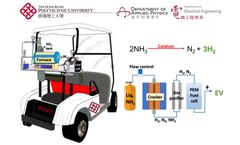
To close the gap between NH3 supply and H2 utilization, we demonstrated an NH3-powered fuel cell electric golf cart as a proof of concept. The integration of NH3 cracker (installed with catalyst), gas purifier, fuel cell, and energy management system formed a successful powertrain that could thrust a golf cart into motion. The catalytic ...

Infrared sensors are the ideal solution for monitoring syngas composition during waste-to-energy processes.Increasing awareness surrounding the limited and polluting nature of fossil fuel resources has resulted in a significant increase in consumer, business, government, and regulatory demands for green energy over the past decade. ...

Green hydrogen, produced from water electrolysis using renewable energy sources, is being explored as a strategy to reduce the dependence on fossil fuels and decarbonize chemical processes. From an environmental standpoint, this approach is extremely attractive given that mild conditions are used during electrolysis and there are no greenhouse gases produced when using the ...

Cyclic voltammetry (CV) is the backbone of most electrochemical research and is an essential electrochemical technique that allows researchers to explore candidate catalysts in greater depth. When coupled with modeling, a systematic goal-focused protocol will supply a range of data that will inform the user of more novel techniques and complex setups. This disciplined approach will save time in ...

Hydrogen – clean and green? Due to its high gravimetric energy density and zero pollution emission, «green hydrogen» is a clean and sustainable energy carrier which is expected to become one of the fuels of the future. Green hydrogen is produced with renewable energy sources, and it can help to mitigate global warming by using cleaner ...
ByB&W Tek

What is a Fuel Cell? Fuel cells generate electricity through an electrochemical reaction rather than combustion. Inside a fuel cell, hydrogen and oxygen are combined to generate heat, water and electricity. They represent a clean, efficient, dependable, and quiet source of power that does not need to be recharged, but can continue to produce electricity as long as fuel is ...

A new catalyst designed by a research team changes biomass into fuel sources with exceptionally high efficiency and provides new opportunities for producing next-generation renewable materials. ...

Types of Catalysts There are two main types of catalysts used for catalysis; heterogeneous or homogenous. ...

The recovery of condensable fraction increased from 30.8 wt.% at 400°C to 71.45% at 450°C and further increased to a maximum of 86.65wt.% at 500°C in absence of catalyst. The catalyst increased the yield of the condensable product and decreased the reaction time. ...
For OSRE, the experiments were conducted at atmospheric pressure, with water to ethanol molar ratio of 3 or 6 and oxygen to ethanol molar ratio ranging from 0.5 to 1.5, over a temperature range of 350–550°C on Rh/CeO 2 /γ-Al 2 O 3 catalysts. Compared to SRE, the activity in OSRE was higher, but the selectivity to desired products was slightly lower. ...

Four other metals are "near -critical" platinum (Pt) (catalyst for fuel cells), indium (In) (a component of solar cells), graphite (C) (manufacture of alkaline batteries and lithium - ion batteries for hybrid and electric vehicles) and rhenium (Re) (alloy turbines). ...

Nanoparticulate cerium dioxide (nano‐CeO2), when combusted as an additive to diesel fuel, was transformed from 6 nm to 14 nm sizes into particles near 43 nm, with no obvious change in the unit cell dimensions or crystalline form. ...

Providentially for South Africa, platinum is also used as a catalyst in hydrogen fuel cells. Platinum catalysts are a core component of proton exchange membrane fuel cells (PEMFC), a widely used hydrogen fuel-cell type for powering cars and stationary applications such as lights and telecommunication towers. ...