
Refine by
Fume Filter Articles & Analysis
41 articles found

Introduction Soldering operations in electronics manufacturing generate more than just visible smoke. When flux compounds are heated during soldering, they release volatile organic compounds (VOCs), resin vapors, odors, and fine airborne contaminants that can accumulate rapidly in enclosed workspaces. While particulate filters capture smoke particles, gaseous contaminants require a different ...
Introduction The performance of any fume extraction system depends not only on its design but also on how well it is maintained over time. In industrial environments, welding fume extractors are continuously exposed to particulate loading, pressure fluctuations, and operational wear. ...
Introduction Selecting the right filtration technology is one of the most critical decisions in designing an effective fume extraction system. Welding and metalworking processes generate fine particulate matter, often in submicron ranges, which require specialized filtration approaches. Among the most widely used technologies are electrostatic fume extractor systems and cartridge fume extractor ...
Introduction Welding fumes consist of submicron particulate matter, metal oxides, and gaseous byproducts that are difficult to remove without properly engineered filtration systems. While capture at the source is critical, the effectiveness of a welding fume extraction system ultimately depends on how efficiently these contaminants are filtered ...
Many factories are open 24 hours a day. To meet production goals, welding often goes on for two or three shifts. In these places, welding fume extraction systems work for long hours every day. When equipment runs all the time, it has to work harder, keep the airflow stable, and plan for maintenance. A well-made welding fume extractor should be able to handle heavy workloads without losing ...
Soldering fume extractors get rid of smoke and flux fumes from places where electronics are worked on. Over time, filters gather dust and other particles, which slows down the flow of air. The system will slowly lose its ability to catch fumes if it is not maintained. Regular maintenance makes sure the system works well and gets ...
Why Multi-Station Areas Need Strong Fume Control Modern workshops often run several welding, soldering, or machining stations side by side. While this improves productivity, it also increases the concentration of fumes in one shared space. If the fumes are not controlled properly, they spread across stations and affect every worker in the area. Multi-station layouts make fume extraction systems ...
Creating Cleaner and Safer Work Environments in Welding Operations Welding is an essential part of most manufacturing processes, but it produces fumes that can harm workers and reduce air quality. A metal fabrication and assembly unit faced this exact problem in their workshop. To protect their workforce and improve overall air quality, they partnered with Powertech Pollution Controls, a trusted ...
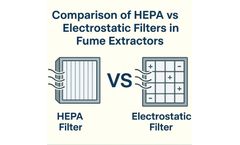
Choosing the Right Filter for Cleaner AirIndustrial processes like welding, soldering or machining all require efficient fume control and fume extractors play an important role in maintaining safe air quality. The filters inside a fume extractor is what traps the airborne pollutants before releasing the air into ...
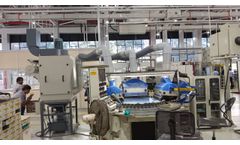
Keep duct lengths short and use smooth bends to improve airflow efficiency.Position the Extraction Points ProperlyPlace the suction hood or fume extraction arm as close as possible to the fume generation point. ...
Soldering in Electronics Manufacturing Soldering is a critical process in electronics manufacturing and various soldering methods are used to join components on circuit boards with precision. However, the process of soldering also leads to generation of potentially harmful fumes that are released from the solder and flux. Soldering fume extractors can help to capture and control the fine ...
Installing a fume extraction system within your shop floor can help to remove smoke, fumes and other fine airborne particles. However, like any machinery, a fume extractor can fail or break down completely if not maintained properly. Regular maintenance keeps the system functioning efficiently, reduces downtime and can help save money over ...
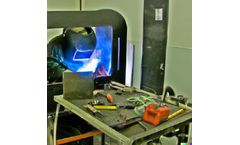
In an era where air quality and environmental health are paramount, understanding the significance of maintaining filtration systems in industrial, commercial, and residential settings is crucial. Regular upkeep of systems like fume extractors, mist collectors, dust collectors, and electrostatic filters not only ensures air pollution control but also prolongs the ...
The pressing need for cleaner, breathable air has given rise to numerous air pollution control mechanisms. Amidst this arsenal of tools, two stand out due to their popularity and efficiency: electrostatic filtration and mechanical filtration. Both these systems have their unique advantages, especially when applied to environments where pollutants like fumes from welding or soldering are ...
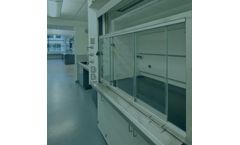
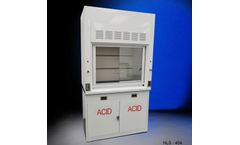
The primary purpose of a fume hood is to provide protection to lab workers while working with toxic fumes, gases, and chemicals by filtering the air inside the laboratory. ...

Before making an investment, you’ll want to be aware of which piece of equipment will be the right choice for your lab. Fume Hoods and Biological Safety Cabinets The primary purpose of a chemical fume hood is to protect the user by limiting exposure to hazardous or toxic fumes and vapors. ...
Used for substances that require the utmost purity, such as harmful, disease-causing organisms, air is moved through a high-efficiency particulate air (HEPA) filter and pushed in a laminar flow through the work area. Unlike fume hoods, which only work to protect lab personnel, flow hoods protect both personnel and the materials involved. ...

Fume Hood Sashes: What Are They? The sash refers to the front window or “door” of a fume hood. ...
Such fumes consist of more than 25 different molecules and particles that can potentially cause harm to people, including the development of cancer, and other maladies over time. Obviously, it was a top priority to prevent the fumes from entering the hospital and harming already critically ill patients. ...

By definition, a fume hood is a ventilated enclosure that is designed to limit exposure to hazardous or toxic fumes, vapors, or dusts. ...