
Refine by
Gas Detection Industry Articles & Analysis
33 articles found
Propane (C3H8) is widely used in industrial facilities as a fuel and process gas, particularly in LPG storage, manufacturing, and chemical operations. Due to its flammability and tendency to accumulate near the ground, uncontrolled propane leaks represent a serious explosion and fire hazard. Industrial propane gas sensors are ...
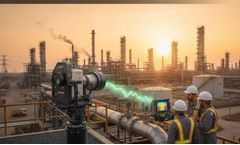
OGI, short for Optical Gas Imaging, has become one of the most influential technologies in industrial gas detection. What started as a visual inspection method has evolved into a core capability for safety, emissions control, and regulatory compliance across multiple industries. Today, OGI is no longer viewed as ...
ByOPGAL

Introduction: Why OGI Systems Are Becoming an Industry Standard Industrial gas detection is undergoing a fundamental shift. As safety, environmental accountability, and regulatory oversight continue to intensify, operators are moving away from isolated measurement tools toward integrated detection platforms. OGI ...
ByOPGAL
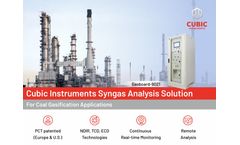
A national target of 100 million tonnes of coal gasification per year by 2030 has also been outlined, reinforcing the growing emphasis on expanding gasification capacity and accelerating technology adoption across industrial sectors. The Challenges: Process Variability and Gas Quality Instability in Coal Gasification Coal gasification proceeds through a series ...
Introduction: Reliability When It Matters Most Industrial facilities rarely operate in controlled, comfortable conditions. ...
ByOPGAL
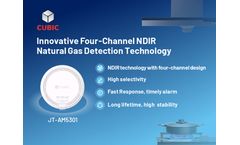
With the implementation of NFPA 715, the performance standards for residential and commercial natural gas alarms have become significantly more stringent. Under the context, choosing the appropriate gas sensing technology is critical to ensure accuracy, reliability, and long-term stability in natural gas leak detection. ...
In the world of industrial safety and environmental compliance, leak detection is no longer a reactive task – it is a proactive responsibility. ...
ByOPGAL
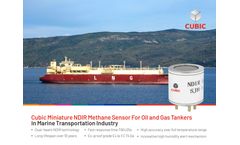
Therefore, it is very important to achieve stable and high-precision methane detection under conditions of limited space and complex environments. To provide accurate and stable detection for methane leakage, Cubic, as a leading manufacturer of gas sensors and gas analyzers, has leveraged its mature NDIR technology to specially ...
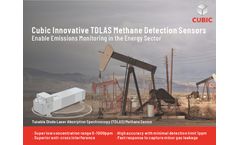
From 2022 to 2023, methane emissions from the oil industry grew by 2% to reach 49 Mt, while methane emissions from the natural gas industry grew by 4% to reach 29 Mt. ...
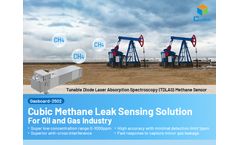
Cubic, a leading manufacturer of gas sensors and gas analyzers, has leveraged a mature technology platform of Tunable Diode Laser Absorption Spectroscopy (TDLAS) and has innovatively developed a superior and reliable methane gas sensor, Gasboard-2502, which could be applied for methane leaks detection in oil and ...

Industrial gas detectors are crucial in many industries, such as mining, refining, petroleum extraction, and manufacturing. ...
ByJXCT
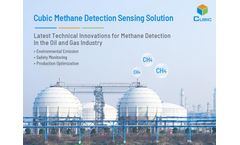
To meet the goal of methane emissions reduction by at least 30% below 2020 levels by 2030, many countries have set stricter regulatory rules, including EPA Methane Emissions Reduction Plan, UN OGMP2.0 and EU Fit for 55, which required greater transparency and accountability from the industry in methane emissions measurement. Therefore, to detect, localize, and ...
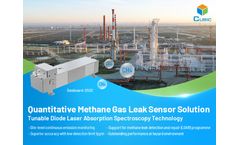
The new law is the first piece of EU legislation aimed at cutting methane emissions and covers direct methane emissions from energy sector, including oil and gas industry. It is worth noting that obligations of operators from oil and gas industry for methane leak detection have been strengthened. ...

Start a journey to understand NDIR-GFC gas sensor technology. Grasp what makes it special. Explore its various facets. By the end, a solid knowledge of this key technology will be ...
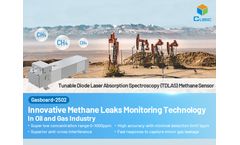
The oil and gas industry is the largest industrial source of methane emissions in the United States, responsible for approximately one-third of total U.S. methane emissions. The Environmental Protection Agency (EPA) has implemented regulations under the Clean Air Act to help reduce methane emissions from oil and gas ...

The conductivity changes in direct proportion to the concentration of methane gas in the air. Application program CH4 gas sensors are used in a variety of applications including: Industrial safety: Methane gas sensors are commonly used in the oil and gas industry to detect and ...
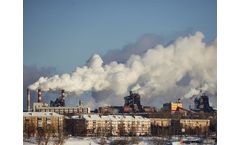
Industrial pollution monitoring and robust instrument solutions: Fixed gas detection from ION Science As news around the changing climate and how to reduce the impact of industrial activity dominates the headlines, the pressure is on for businesses to act. Effective monitoring of emissions and gases from ...

These substances endanger your employees, causing injuries, illnesses, and even accidental death. The following industries are among those that face hazardous exposure every day: Mining and Quarrying While naturally occurring gases are essential to life, some can quickly rob you of yours. ...

In the construction industry, various building materials can become a source of volatile organic compound (VOC) emissions. ...
In the construction industry, various building materials can become a source of volatile organic compound (VOC) emissions. ...