
Refine by
Gas Leak Detection Articles & Analysis
118 articles found
Methane (CH4) monitoring is a key element of industrial safety, environmental control, and process supervision. Due to its flammability and wide explosive range, methane requires continuous and reliable concentration measurement in both confined and open industrial environments. In addition to explosion hazards, methane emissions are subject to increasing regulatory control because of their ...
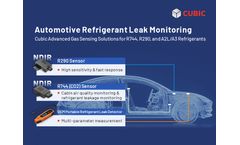
The evolution is reinforced by regulatory mandates such as EU Regulation 2024/573, which requires the progressive reduction of fluorinated greenhouse gas emissions by enforcing tighter leak detection standards. In addition, the adoption of new generation refrigerants introduces new challenges—not only in terms of system redesign, but also ...
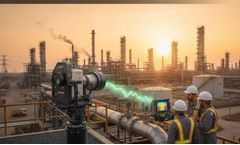
OGI, short for Optical Gas Imaging, has become one of the most influential technologies in industrial gas detection. What started as a visual inspection method has evolved into a core capability for safety, emissions control, and regulatory compliance across multiple industries. Today, OGI is no longer viewed as a standalone camera technique. It is increasingly embedded within broader monitoring ...
ByOPGAL
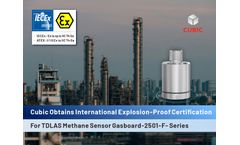
Cubic Gasboard-2501 is developed based on Tunable Diode Laser Absorption Spectroscopy (TDLAS) technology and is engineered with a modular tunable laser source, optimized gas chamber, and precision optical path, which ensures exceptional accuracy, stability, and selectivity in methane detection. ...

Using gas cameras and leak detection cameras to protect workers, prevent accidents, and strengthen regulatory compliance Introduction: Safety at the Frontline of Industrial Operations High-risk industrial zones – including refineries, petrochemical plants, offshore platforms, power generation facilities, chemical processing units, and ...
ByOPGAL
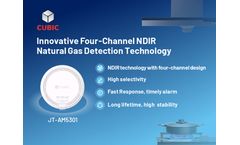
With the implementation of NFPA 715, the performance standards for residential and commercial natural gas alarms have become significantly more stringent. Under the context, choosing the appropriate gas sensing technology is critical to ensure accuracy, reliability, and long-term stability in natural gas leak ...
Introduction: From Leak Detection to Industrial Transformation Optical Gas Imaging (OGI) has long been associated with gas leak detection, especially in the oil and gas sector. ...
ByOPGAL
Introduction: Why Camera Leak Detection Matters Gas leaks pose significant safety, environmental, and financial risks. ...
ByOPGAL
Introduction: What Is an OGI Camera? Optical Gas Imaging (OGI) has transformed how industries detect and manage gas leaks. A camera OGI makes the invisible visible by capturing emissions such as methane, VOCs, and refrigerants that cannot be detected by the naked eye. These leaks pose serious ...
ByOPGAL

Introduction: Why Leaks Are a Hidden Threat Leaks, whether from gas pipelines, industrial equipment, or fluid systems, represent a significant risk for businesses worldwide. ...
ByOPGAL
Invisible to the naked eye, these leaks not only waste valuable product but also drive significant greenhouse gas emissions with major climate impacts. ...
ByOPGAL
In the world of industrial safety and environmental compliance, leak detection is no longer a reactive task – it is a proactive responsibility. ...
ByOPGAL
In the evolving landscape of environmental regulation, staying ahead of new standards is essential for any company operating in the oil and gas sector. Among the most important updates issued by the Environmental Protection Agency (EPA) in recent years are the NSPS Subparts OOOOa, OOOOb, and OOOOc — each building upon the last to increase stringency in emissions monitoring ...
ByOPGAL
In high-risk industrial environments, gas leaks can mean far more than lost product - they can result in environmental harm, operational shutdowns, regulatory penalties, and severe safety risks. That’s why more and more facilities are turning to infrared camera leak detection as a frontline strategy for emission control and ...
ByOPGAL
OGI - short for Optical Gas Imaging - has rapidly become a cornerstone of modern emission monitoring and leak detection strategies. ...
ByOPGAL
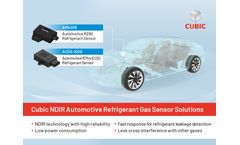
R290 belongs to Class A3 highly flammable refrigerants, and its leakage monitoring needs to meet extremely high sensitivity and response speed to avoid potential safety hazards.Facing the challenges of R744 and R290 refrigerant gas leak detection, Cubic, as an automotive Tier 1 supplier, leveraged its mature R&D and manufacturing experience ...
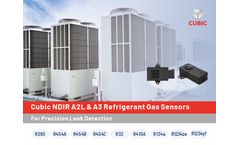
Cubic NDIR A2L&A3 refrigerant gas sensors provide high-precision measurements even at low concentrations, particularly valuable for detecting A3 refrigerant gas including propane, enabling early leak detection for safety and reliability. Cubic NDIR refrigerant gas sensors adopt special ...

To mitigate the risks, it is very essential to apply effective refrigerant leak detection solutions in HVAC&R and heat pump applications. Currently, gas sensing solution for leak detection is one of the most effective methods. ...
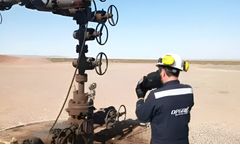
The ability to see gas leaks in real time has revolutionized leak detection. What was once a reactive process relying on handheld sensors and periodic inspections has now become a proactive, visual practice-thanks to the advent of optical gas detectors and imaging cameras. ...
ByOPGAL
The landscape of industrial leak detection is undergoing a dramatic transformation, and 2025 marks a new chapter in this evolution. ...
ByOPGAL