
Gas Warning System Articles & Analysis
12 articles found

With the increasing reliance on natural gas in both residential and commercial settings, the risks associated with gas leaks have become more prominent. To mitigate the risk, the US National Fire Protection Association (NFPA) introduced NFPA 715 – Standard for the Installation of Fuel Gases Detection and Warning Equipment, the first comprehensive ...
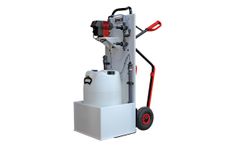
Lutz-Jesco will demonstrate the possible structure of a system solution using a chlorine wall at this year’s Ecomondo. A pressurised cylinder of chlorine gas is used to introduce this dangerous gas into water under a vacuum, so that the gas is unable to escape following a leakage. ...
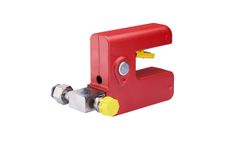
The new VakuStop is a safety shut-off valve combined with a vacuum regulator that enables waterworks to handle chlorine gas cylinders more safely. Users can fit the VakuStop to the valve of a gas cylinder in just a few simple steps and connect it to a gas warning device. ...
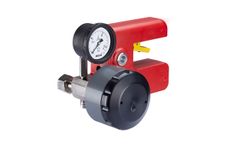
Users can fit the VakuStop to the valve of a gas cylinder in just a few simple steps and connect it to a gas warning device. ...
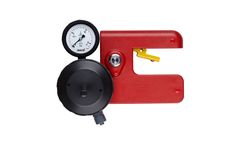
To further improve occupational safety during use, Lutz-Jesco has developed the VakuStop – a vacuum regulator for dosing systems that is equipped with an emergency stop function to prevent uncontrolled chlorine gas leaks directly at the chlorine gas tank in the event of an emergency. ...

Concerning the safety risks of thermal runaway events and regulatory requirement of 5-minute early warning, gas detection technology can be an effective way to provide timely warning for thermal runaway events in compliance with regulatory requirement. Normally, at the early stage of thermal runaway events, a significant number of hazardous ...

Keeping your gas equipment properly calibrated is the only way to ensure they’re performing at their best – making gas calibration equipment essential. This article explains why you should be using gas calibration equipment and how often you should be calibrating your gas equipment. A huge range of sophisticated ...

Can I let you in on a secret? Your current method of measuring dioxins is probably not giving you the whole picture about your dioxin emissions. A typical waste incineration plant will run for about 8000 hours per year. Many waste incineration plants are still using the old method of periodic sampling. With periodic sampling, dioxins are only measured for 6-8 hours at a time. You don’t need ...
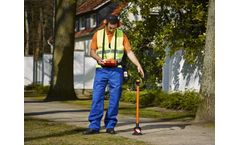
Wide range of network inspection packages The SEWERIN network survey division’s extensive range of services for public and industrial pipe network operators is based on 80 years of experience. One invaluable advantage for practical work is the regular feedback from those carrying out network inspections to SEWERIN’s product management. This permanent exchange means that existing ...
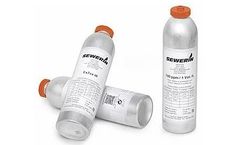
Test gases are used to calibrate SEWERIN's gas leak detectors. Like aerosols or spray tins of paint, they are categorised as a pressurised gas packaging according to UN 1950. These packagings are characterised by a maximum volume of one litre and a maximum pressure of 12 bar. As they comprise a "limited volume", there is no problem with sending them by mail. Designed to be disposable, ...

What is the purpose of gas detector tubes? The gas detector tube system is a complete sampling and analysis system for determining hazardous gas and vapour concentrations quickly and easily. ...
Bya1-cbiss

Much of the water supply industry has implemented online monitoring and warning systems for chemical or biological contaminations. When a contamination is detected, further investigations are necessary to confirm or to cancel the initial alarm. ...