
Refine by
Geotextile Protection Articles & Analysis
51 articles found
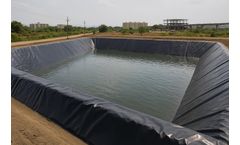
Urban township projects require integrated water management, subsurface protection and long-term durability to support residential, commercial, and utility networks. In the TATA Township Project in Khopoli, Maharashtra, Ocean HDPE Liner (1 mm) was deployed as a geomembrane barrier to support water containment, drainage control, and subgrade protection, ...
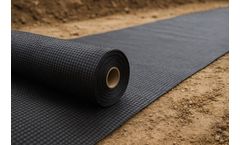
Filament-woven geotextiles deliver high strength, durability, and filtration in geosynthetics applications, enabling safer, longer-lasting roadbeds, coastal defenses, and containment systems. This guide summarizes core functions and the specifications engineers should consider for diverse projects.Applications of Filament Woven GeotextilesRailways & Highways: Reinforcement and ...
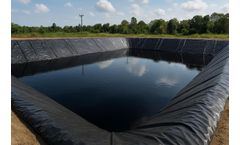
In Agartala, characterized by high rainfall, permeable soils, and environmental sensitivity, robust geomembrane systems are critical.For this project, a dual-layer HDPE geomembrane system using 1000 micron and 1500 micron liners was implemented to provide primary and secondary containment, reducing the risk of leakage and environmental impact.Engineering Role of HDPE Liners in Oil ContainmentHDPE ...
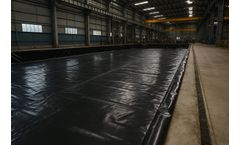
In this project, Ocean HDPE Liner – 300 Micron was deployed as a geomembrane containment and protection system to create an impermeable barrier between operations and the subgrade, enabling leak prevention, moisture isolation, and long-term environmental protection within the facility. ...
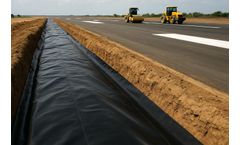
The HDPE geomembrane serves as a critical barrier and protection layer in airfield infrastructure due to its low permeability, high tensile strength, chemical resistance, and durability. ...
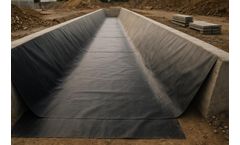
The scope covered 2,857 square meters of liner installation as part of protective and separation layers within RCC works.HDPE liners in RCC infrastructure HDPE liners provide a moisture barrier, seepage control, chemical protection, and subgrade separation to enhance long-term performance of RCC elements exposed to moisture, aggressive soils, and dynamic ...

Project Background Mongolia, located in the Central Asian metallogenic belt, is rich in gold resources. It is estimated that its gold reserves may exceed 3,000 tons, distributed across several mineralized belts, including the South Gobi, East Gobi, Kentish Mountains, and Khangai Mountains. As a country rich in mineral resources, Mongolia has seen a surge in gold mining projects in recent years. ...

Floods are one of the most devastating natural disasters in India, causing not just environmental degradation but also massive economic loss. According to the Central Water Commission, India loses nearly ?6,000 crore every year due to floods and river erosion (CWC Annual Report 2022). West Bengal, owing to its extensive riverine network and monsoonal rainfall, is one of the most flood-prone ...

Today, the construction industry is constantly evolving with various materials and engineering solutions offered by technology. One of these developments is the use of geotextiles in ground engineering. Geotextile is a versatile material used in various textures and structures and provides a number of benefits on the ...
Geomembrane and geotextile are two commonly used geosynthetic materials, and they have the following similarities: Material properties and uses Material properties: geomembrane and geotextiles are geosynthetic materials, are made of polymer materials, such as polyethylene, polypropylene and other polymer materials. ...

It is highly permeable and ideal for filtration, drainage, and separation applications.the production capacity is big and the price is cheap. Thermally Bonded Non Woven Geotextile: Produced by applying heat to bond the fibers together, this type offers a smoother surface and is often used for applications requiring lower permeability, such as protecting ...
Although both geogrid and geotextile are geosynthetics, they have obvious differences in physical form, function and application scenarios: Geogrid is a geosynthetic material, usually made of high molecular polymers such as polypropylene and polyvinyl chloride through thermoplastic or molding processes. It presents a two-dimensional grid shape or a three-dimensional grid structure with a certain ...
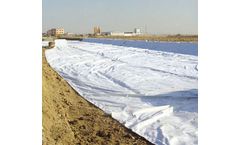
Introduction Woven geotextile, a remarkable engineering material, has gained significant attention due to its diverse applications in various fields. From coastal protection projects to agricultural irrigation systems, woven geotextile proves to be a versatile solution that offers a wide range of benefits. This article explores the ...
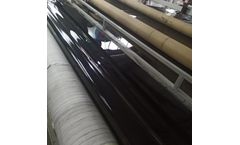
The service life of the geomembrane is at least 50 years. High-density geotextiles are used to protect geomembranes from mechanical damage. The technical characteristics of geomembranes make it possible to use geomembranes in various fields, such as industry and civil engineering, geotechnical engineering and environmental engineering. ...
Geotextile is a kind of geosynthetic material, it is used in many kinds of engineering projects. Shandong Dajin Geosynthetics Co.,ltd is a manufacturer of geotextile, has 20 years of geosynthetic industry experience, and can produce Polyester PET or Polypropylene PP material. Our nonwoven geotextile workshop can make geotextile weight from 100gsm to 1400gsm, and woven geotextile can make 100gsm ...
What is geotextile? What are the features and differences between woven geotextile and non-woven geotextile? The following article is a detailed introduction to woven geotextile and non-woven geotextile. ...
Considering this, we could cover the bed with soft soil or sand to protect the liners before laying the first layer of the liner materials. Also, we could use other kinds of materials like geotextile to replace the sand. The geotextile is not only protecting the liners but also helps the soil reinforcement in case the water flows ...
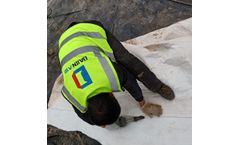
The main functions of geotextiles are filtration, drainage, separation, reinforcement protection, and erosion control. ...
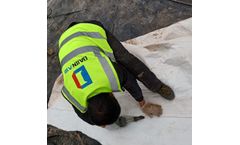
Waterproof and thermal insulation: There are many specifications for geotextiles. For geotextiles with relative thickness, a layer of interlayer will be formed after bonding with the viscous oil layer of the asphalt pavement, thereby protecting the foundation. 3. ...
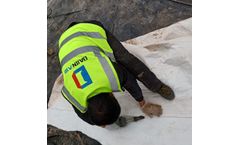
Also, the combination of geotextile and geomembrane can also form a composite anti-puncture interlayer to strengthen and protect the substrate. ...