
Refine by
Gnss Articles & Analysis
40 articles found

Global Navigation Satellite System (GNSS) GNSS modules, including GPS, GLONASS, or BeiDou, help determine the real-time location of the RMG crane. While GNSS is more commonly used in RTG (Rubber Tyred Gantry) cranes, it can also support RMG cranes, especially in large open yards.2. ...

Dingyao GNSS Antennas for Defense Anti-Jam Antenna: DY-AJ5592A; DY-AJ5597A; DY-AJ5601A; DY-AJ7602V; DY-AJ0596A; DY-AJ0602A; DY-AJ0603AHigh-Precision Anti-Jam Antenna: DY-AJ9598A; DY-AJ9597VHeat Resistant Anti-Jam Antenna: DY-AJ4600ARF Device: DY-MH3598AAnti-Jam Antenna with Receiver: DY-AJ4608ABeidou Navigation Antenna: DY-AN4603A; DY-AN5605VBeidou One-line Antenna: ...
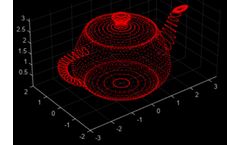
A GPS-Aided INS comprises an inertial measurement unit (IMU) containing three-axis accelerometers, gyroscopes, and a GNSS receiver. After initial orientation and bias estimation, data from the IMU and GNSS receiver get fed through a robust Kalman filter algorithm, in which the unit will begin outputting correct and accurate orientation, position, velocity, and ...
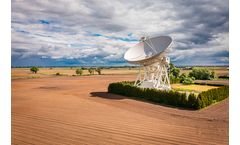
Global Navigation Satellite System (GNSS) and Satellite Navigation Explained Abstract Global Navigation Satellite System (GNSS) technology is a collection of satellite positioning systems with worldwide coverage. ...

Users can choose a configuration with a camera, a LiDAR model, and a GNSS receiver. The standard configuration is designed for use on drones and other types of sUAS (small, unmanned aircraft systems).After the flight, the raw data must undergo post-processing—thanks to this procedure, a georeferenced point cloud is formed. ...

Real-time location systems (RTLS) enable a user to track the location of physical assets or people using either radio frequencies or global positioning systems (GPS)/global navigation satellite systems (GNSS). This helps businesses and organizations know where their important assets are accurately and in ...
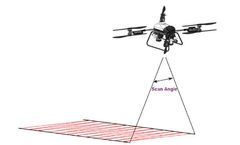
This compact device is fully customizable to accommodate various applications, offering options such as camera inclusion, LiDAR model selection, and GNSS receiver. These configurations are commonly utilized for drones and other small, unmanned aircraft systems (sUAS). ...
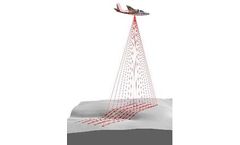
This compact device is fully customizable to accommodate various applications, offering options such as camera inclusion, LiDAR model selection, and GNSS receiver. It’s commonly utilized for drones and other small, unmanned aircraft systems (sUAS).After data collection by LiDAR payloads like RESEPI, it is crucial to subject the raw data to post-processing before generating the ...
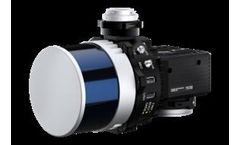
It offers a LiDAR model, camera installation, and GNSS receiver. Thus, the user pays only for what they need. Data collected by RESEPI Payloads are not usable without post-processing. ...
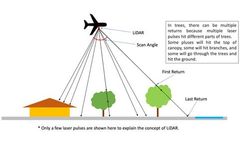
Users can choose configurations that include a camera, LiDAR model, and GNSS receiver. It is most used on drones and small unmanned aircraft systems (sUAS). ...
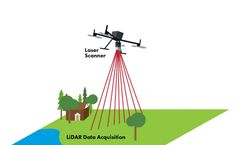
This compact device is fully customizable to accommodate various applications, offering options such as camera inclusion, LiDAR model selection, and GNSS receiver. It is commonly utilized for drones and other small unmanned aircraft systems (sUAS). ...
Users can select a configuration with a camera, LiDAR model, and GNSS receiver. The most common use is on drones and other types of sUAS (small, unmanned aircraft systems). ...
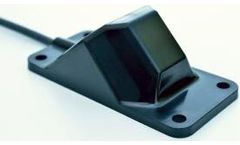
While the positioning accuracy from STL signals is lower than that of traditional GNSS signals, the hybrid approach of utilizing both receivers is an added benefit that complements GPS/GNSS outages. ...
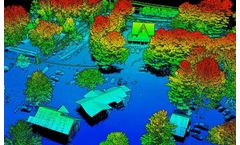
Our engineers tirelessly work on system integration and advanced navigation in the GNSS-denied environment. Inertial Labs technologies represent a cornerstone in the arsenal of technologies employed for effective disaster management. ...

Our Partner, EJtech, provided an updated bridge structural health monitoring system for Gwangan Bridge, which is located in Busan, South Korea. It spans 7,420 meters, making it the second longest bridge in the country. The structural health monitoring system they implemented included instrumentation from ...
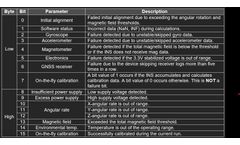
Inertial Navigation Systems (INS) use a combination of Inertial Measurement Units (IMU) with external sources of information like GNSS to provide users with the carrier object’s position, orientation, and velocity. ...
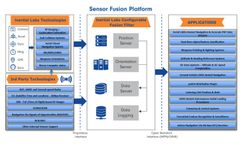
In an era of electronic warfare, GNSS jamming and spoofing are more apparent than ever, which prompts the need for an infrastructure-less, resilient, alternative Position, Navigation, Timing (alt-PNT) solution that can continuously deliver accurate navigational information and time synchronization outputs within GPS/GNSS outages for prolonged periods. ...
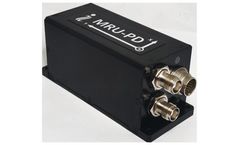
This is due to its integration with a single or dual-antenna GNSS receiver. MRU-BS and MRU-PDS: These models differ from their counterparts in that they are wrapped in a subsea enclosure for fully submerged ocean applications. ...
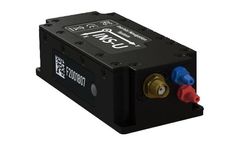
By fusing data from various sources, aided inertial navigation systems can maintain high navigational accuracy even when GNSS signals are weakened or absent, such as in urban canyons or dense foliage environments. ...
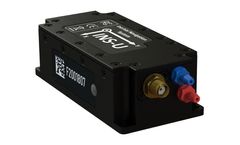
-Robustness in GPS-denied Environments UAVs may often find themselves in GNSS-denied environments such as urban canyons, dense forests, or electronic warfare operations. ...