
Grain Loss Articles & Analysis
19 articles found
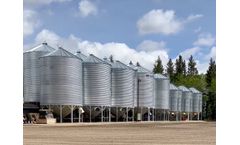
The evolution of bin management systems has been marked by continuous innovation aimed at improving the efficiency, reliability, and profitability of farming operations. Traditional methods, which largely depended on manual labor for monitoring and managing stored grain, have gradually given way to more sophisticated, technology-driven solutions. These advancements, including automation, are ...
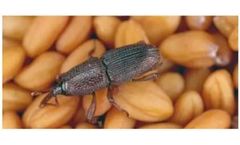
The loss of grain in storage relating to or resulting from living things such as insects, pests, rodents, and fungi and form physical rather than biological such as temperature or moisture lead to global losses that exceed 80 million metric tons in grain storage. ...
Physico-Chemical Treatment. In Encyclopedia of Grain Science (pp. 254–263). Shiferaw, B. et al. (2019). Crops that feed the world 10. ...
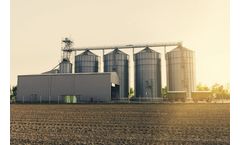
Maintaining the quality of stored grain is crucial, both to ensure the quality of the final food products, and to prevent economic losses for farmers. ...

Farmers should continue to monitor the condition of each field and be prepared to make adjustments in prioritization as they harvest to minimize risk of grain loss. Drying can be expensive, but a deteriorated crop may leave more revenue in the field. In addition to causing revenue loss, grain left in the field this fall will turn ...

Maintaining the quality of stored grain is crucial, both to ensure the quality of the final food products, and to prevent economic losses for farmers. ...

What caught my attention in New Delhi right away was the condition of that year’s grain crop. The Indian government officially estimated grain demand for 1965 would be 95 million tons. ...

But there are those who argue that the world already produces enough food — it just needs to be distributed more efficiently, equitably and with less waste. Grain storage specialist Digvir Jayas offers a strong case for making waste reduction a policy priority. Investing more in well-managed storage to preserve grain harvests can cut losses ...
One reason that policymakers and politicians are not focusing on reducing losses might be because grains are not treated as a national asset, and wastage is not seen as a national loss. ...
Food waste The FAO’s 2011 report Global Food Losses and Food Waste is a comprehensive review of the extent of the problem, its causes and prevention measures. ...

- Ignored the impact on the society in general- polluted elements getting mixed with soil, water and air and entering in the human body in the form of fruits, vegetables, grains, water and air. - Ignored the loss of commodities- burning, leaching processes destroys the commodities once for all and this has a direct impact on our ecological balance. ...

To date, and especially in Europe, there is little information on the critical period of weed control in grain corn. In Mexico, a weed-free period of 50 d from seeding was required to prevent corn grain yield loss. ...
“The Saudis are unique in being so wholly dependent on irrigation,” says Brown in Plan B 4.0. But other, far larger, grain producers such as India and China are facing irrigation water losses and could face grain production declines. A World Bank study of India’s water balance notes that 15 percent of its grain harvest is ...
Kernel shattering can cause severe grain yield loss in wheat (Triticum aestivum L.). Evaluation of kernel shattering in the field could be difficult because of environmental effects and the influence of other agronomic traits. ...
Most commercial cultivars of rice (Oryza sativa L.) are susceptible to sheath blight (SB), a devastating fungal disease causing significant losses in grain yield and quality. There are limited sources of genetic resistance adapted to U.S. growing conditions, and no commercial long grain cultivar of rice is currently available in the United States ...
Resistance was evaluated using bioassays on replicated F2:3 progenies. Grain damage (GD), grain weight losses (GWL), MW susceptibility index (Dobie index [DI]), and numbers of adult progeny (AP) were evaluated on grain from F2 lines across two environments. Grain hardness and pericarp/grain ratio ...
Investigating critical nitrogen concentration (CNC) in grain and straw provides insights into N nutrition, and can serve as a guide to improved agricultural practice. This regional study evaluated the relationship between N fertilization rate and grain yield, N concentration, potential N loss, and determined critical grain and ...
Merr.] rotation from 1996 to 2005 was evaluated with the Root Zone Water Quality Model (RZWQM) for crop yield, grain N, annual N loss in tile drainage flow, and residual soil NO3–N under high (H, 199 kg N ha –1), medium (M, 138 kg N ha–1), and low (L, 69 kg N ha–1) N application rates shortly after planting, and a split (S, 69 kg N ha–1 shortly after planting and ...
Findings showed that: (i) plants responded to N and water simultaneously; (ii) N fertilizer increased water use efficiency (170 kg vs. 223 kg grain cm–1 in 0 and 112 kg N ha–1 treatments, respectively); and (iii) water increased the ability of corn to use N derived from soil (67.7 and 61.6% efficient in high and moderate water regimes, respectively, P = 0.002) and fertilizer (48 ...