
Refine by
Grain Management Articles & Analysis
22 articles found

Yo! It's time to put an end to climbing bins. Knowing the volume and value of what is stored in grain bins is surprisingly simple and inexpensive. Installing a solution that measures grain bin levels automatically and lets you access to inventory from your phone or computer can improve inventory accuracy, save time, and keep employees safe. ...
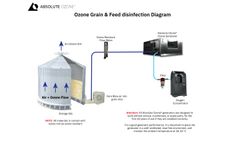
Protecting Your Stored Grains: How Ozonation Solved a Farmer’s Battle with Grain Weevils I remember conversing with a farmer a few months ago. He was facing a severe problem. His grain storage had been infested with grain weevils. And after trying everything he could think of, he was still losing more of his harvest to these tiny, destructive pests. I told him that he wasn’t the ...

Background The customer is a leading Australian grain company managing the entire gamut of grain supply chain including bulk storage, handling of grains and oilseeds, road transportation of bulk commodities and containerization of grain including packing and delivery to port. The grain leader ...
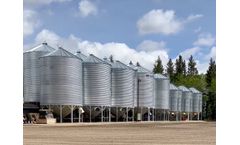
The evolution of bin management systems has been marked by continuous innovation aimed at improving the efficiency, reliability, and profitability of farming operations. Traditional methods, which largely depended on manual labor for monitoring and managing stored grain, have gradually given way to more sophisticated, technology-driven solutions. ...

This prevents overfills and underfills, ensuring optimal production efficiency and quality. Inventory Management: Level sensors help with inventory management by providing real-time data on the levels of materials in storage tanks and silos. ...

Seamlessly connect to your grain bins to help manage grain quality and time It’s been a tough growing season and growers have been working hard for every bushel this year. ...

At Sinar we take your moisture seriously - Moisture is one of the most important factors impacting the quality and value of grain. For this reason, grain moisture testing is integral to growers, traders and end users producing, storing & marketing high-quality grain, and is a task that demands accurate and affordable measuring equipment. By evaluating moisture content before, after, ...

ohn Pruss, general manager at United Farmers Mercantile Coop (UFMC)in Red Oak, IA (712-623- 5453), would be the first to admit that weather during fall harvest in south- western Iowa isn’t always conductive to heavy grain dryer usage. ...
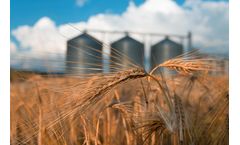
Insects and mould are dependent on the temperature and moisture of the stored grains, with mould being the more common of the two for grain spoilage. ...
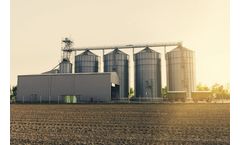
Once spoilage is detected, the manager of the storage facility can address the problem by aerating, turning, or selling the grain. ...

The persistent wet weather this fall has created conditions favorable for disease on ear or in the grain. Effectively drying and managing grain will help to ensure those conditions are not transferred to the grain bin or end users. ...

Once spoilage is detected, the manager of the storage facility can address the problem by aerating, turning, or selling the grain. ...

A CO2 gas detector can alert brewery staff to escaped gas, preventing a workplace catastrophe. Agriculture - Since grain gives off carbon dioxide gas in the silo environment, grain elevators have a need for CO2 detectors for worker safety and quality control. Even low levels of carbon dioxide can indicate grain spoilage. Early detection can not ...

Significant ( p ≤ 0.05) differences in weeds management were observed under the tested rate of Roundup Turbo compared to un-weeded control plots. The average grain yield from conventionally tilled plots was 3.6 t ha –1 . This did not differ significantly from those of herbicide-managed plots. Low-grain yield (0.1 t ha –1 ) ...
This research article mainly focused on the feasibility and management of distillers grains produced from ethanol industries using high solid anaerobic digestion systems. A significant barrier for distillers grains in the anaerobic process are its low pH (3.80–4.16) and high C/N ratio (37/1–42/1). According to distillers grains ...

But there are those who argue that the world already produces enough food — it just needs to be distributed more efficiently, equitably and with less waste. Grain storage specialist Digvir Jayas offers a strong case for making waste reduction a policy priority. Investing more in well-managed storage to preserve grain harvests can cut losses ...
In poorly managed storage systems, such as those leaving grain unprotected on the ground or storing grain without drying, losses can routinely reach 30 per cent, whereas in well-managed systems they are less than one per cent. ...

It is only within the last 60 years or so that rising yields have replaced area expansion as the principal source of growth in world grain production. The transition was dramatic. Between 1950 and 1973 the world’s farmers doubled the grain harvest, nearly all of it from raising yields. ...

Improved wheat grains storage management SmartScan25 was installed at the Israeli large flour mill to improve wheat grains storage management, save costs and reduce material losses. ...

When net return estimates are made using only neighboring elevator prices (no government programs or organic price premiums), we found that the no-till corn-soybean system [Zea mays L. and Glycine max (L.) Merr.] was the most profitable grain system, and management intensive rotational grazing (MIRG) the most profitable forage system. When government programs and ...