
Refine by
Grain Moving Articles & Analysis
12 articles found

Agriculture is a challenging profession. Its dangers and risks occur throughout the world and are not isolated to a single country or region. Starting in 1969, Brazil began keeping detailed statistics on agro-industrial accidents. It was disclosed that nearly 18% of all industrial workers (including ag professionals) suffered accidents. Preventive measures helped reduce that to 3.84% in 1984. ...
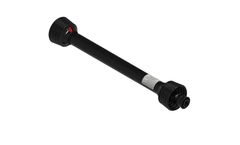
Telescoping sleeves The 6- Series PTO shaft is constructed with a telescoping sleeve which allows it to be adjusted in length according to the need. This lets the shaft move upwards and downwards without making the shaft bind or break. 5. ...

Stations and ports are few and far between; but as the twenty-first century approached, every municipality in the country was close enough to a highway exit. Trucks began to pick up grain directly from, or close to a farmer’s field. Pick-ups, as well as deliveries, could be arranged to meet the needs of carriers moving crops and growers offloading them. ...

Every year we hear about tragedies and injuries in grain bins. Grain storage continues to get larger and large bins are used regularly on farms and commercial agriculture businesses. They are a necessary piece of equipment, but safety needs to be top of mind whenever entering a grain bin. Make safe entry a ...

In a world that moves too fast, it’s nice to know some people don’t believe in shortcuts. ...
In a world that moves too fast, it’s nice to know some people don’t believe in shortcuts. ...

In the late 1900s, as per-acre grain yields moved to 3 metric tons per hectare in South and Southeast Asia and Latin America, 5 metric tons per hectare in China, and 10 metric tons per hectare in North America, Europe and Japan, there’s one place where production stagnated big time: sub-Saharan Africa, where loss of soil fertility on small farms trapped ...
ByEnsia

When meat consumption falls in the United States, as it recently has, this frees up grain for direct consumption. Moving down the food chain also lessens pressure on the earth’s land and water resources. ...
When an Indian official was asked by a reporter about the adequacy of the country’s grain stocks, he responded, “Our reserves are in the grain elevators in ...

In unconsolidated sediments, capillary pressure in the pore space may be large enough to move grains apart during drainage. This motion alters the pore throat sizes which control subsequent displacement in the sediment. ...
On the demand side, those trends include the ongoing addition of more than 70 million people a year; a growing number of people wanting to move up the food chain to consume highly grain-intensive livestock products [see “The Greenhouse Hamburger,” by Nathan Fiala; Scientific American, February 2009]; and the massive diversion of U.S. grain to ...

A study consisting of three sequential experiments (laboratory bench, combine test stand, and field) was conducted to evaluate the performance of an in-line, NIR reflectance spectrometer, referred to as the ProSpectra Grain Analyzer, possessing a factory calibration model. In the laboratory bench experiment, the instrument was mounted to a circulating impeller apparatus designed ...