
Refine by
Green Building System Articles & Analysis
22 articles found
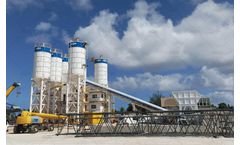
In water-stressed regions or on sites with restricted drainage permissions, a self-sufficient water recycling system can be the difference between project approval and rejection. Treat water not as waste but as a recoverable resource, and the plant's cost structure improves materially.The Business Case That Sustainability Actually Builds Winning Tenders in an ...
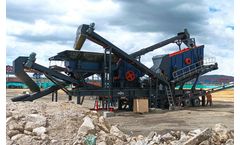
By adopting environmentally responsible practices and obtaining appropriate certifications, a well-designed aggregate crusher plant(planta de trituración de agregados) can transform from a commodity supplier into an essential node in the green building materials supply chain. This transition not only opens new markets but also commands premium pricing for ...

The U.S. Green Building Council (USGBC) has developed The Leadership in Energy and Environmental Design (LEED) Green Building Rating System to encourage and accelerate the practice of sustainable green building and development. There are a variety of categories in the LEED' ...
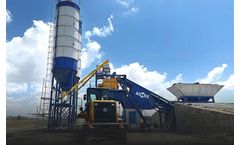
These systems can offset up to 40% of grid power demand while maintaining consistent production temperatures.More revolutionary still are plants employing kinetic energy recovery from aggregate conveyor systems. ...
Logged readings and attached operator notes (audio, text, photos, etc.) are all easy to access. Green Buildings Remotely check GrayWolf monitoring systems deployed in buildings undertaking LEED, WELL or other green building certifications to determine when TVOC, HCHO, CO, PM 2.5, PM10, O3 ...

“Green” Buildings are built and operated to be very energy efficient and make the most of the surrounding environmental conditions whether desert, damp, hot, cold, windy, or tropical, but not always achieving optimal conditions for all occupants. Some tenants may be comfortable while others are suffering a variety of maladies—and not just the ...
You can actually measure, at every point of the design and project development, where you are and systematically build upon the performance of the building, where you want to be. If you want to see how you can go up the ladder of sustainable performance, you would want to use a suitable green rating process. Click to Read ...

But plastic pipes have lurked under many people’s radar, even as they have become an increasingly popular alternative to copper for delivering drinking water into homes and buildings. Although copper remains common inside buildings, there are compelling reasons why new projects frequently use PEX. ...
ByEnsia

To this end, in the literature, studies on 'green building rating and assessment systems' aiming more liveable places through less carbon emissions and more environmentally friendly construction materials gained significant importance. Among such rating systems, leadership in energy and environmental design (LEED) and ...

This move toward sustainability is transforming the way the industry designs, constructs and operates buildings. Evidence of this shift abounds, whether it’s the growth of green roofing systems atop office buildings in major international cities or the steady rise in green construction in the residential ...
But private initiatives have grown in importance, as evidenced by the successes of the U.S. Green Building Council’s LEED (Leadership in Energy and Environmental Design) green building rating systems. ...
This is attributed to the fact that construction of green buildings requires stricter norms in terms of environmental conservation, carbon emission, construction footprint, pollution, etc. which can cause an addition to 'cost and duration'. This paper describes a systematic way to identify and quantify uncertainty in the green construction ...

"Green buildings give us an opportunity to fix this, but only if buildings perform," said Richard Fedrizzi, president of the World Green Building Council and a member of the Abu Dhabi conference panel. The Green Building Council has formulated a rating system to ...

There are various ways to implement sustainable options. The U.S. Green Building Council’s (USGBC) Leadership in Energy and Environmental Design (LEED®) Green Building Rating System™ for New Construction and Existing Buildings—the LEED® rating ...
In the 1990s, development of the Leadership in Energy and Environmental Design (LEED) Green Building Rating System® (“LEED”) by the U.S. Green Building Council helped immensely to bring awareness of green building standards into the public consciousness. More recently, standards ...
Twenty years ago, few people recognized the need for concern about the negative environmental impact of building construction and the contribution that existing buildings make toward environmental pollution in the course of their regular, daily operations. Nevertheless, the damage done by the twentieth century’s burgeoning boon of construction was there for all ...

This long term view of cost vs. benefits is essential in planning and executing a green building conversion program, especially one as massive as a makeover of a 102 story trophy office tower. On a smaller scale, EWMA has found that an important first step to a green conversion program is understanding your building’s current ...

Green buildings are commonly perceived to be considerably more expensive (design and construction) than conventional buildings and often not worth the extra cost. ...

Untitled Document EXECUTIVE SUMMARY This is the final report of the exploratory phase of a study of durability and service life issues related to green building. The overall objective of the project is to determine how service life considerations can be appropriately included in green building rating ...
This algorithm establishes a reference tool to compare conventional air conditioning systems with alternative HVAC systems, which can directly operate with low-exergy alternative energy resources. The cost of exergy waste in conventional heating, ventilating, and air-conditioning systems (HVAC) is included in terms of the difference between ...