
Refine by
Groundwater Contamination Articles & Analysis
820 articles found
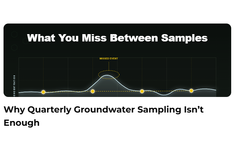
Groundwater contamination doesn’t move in neat, predictable intervals. ...
ByLiORA

We are proud to have exhibited at the Joint WasteMINZ and Australasian Land & Groundwater Association (ALGA) Conference in May 2026. Kimberley Saflian and Rebecca Thomas had an unforgettable time networking with fellow peers in the waste and contaminated land and groundwater industry in New Zealand. Kimberley took to the stage to present ...

Groundwater contamination is rarely a sudden crisis. It is a slow-moving, often invisible process; one that becomes exponentially more expensive the longer it goes undetected. For operators, regulators, and environmental managers, the real risk isn’t just contamination itself. It’s the delay in understanding it. Early detection ...
ByLiORA
Introduction: Why Chloride Plumes Behave Differently Chloride contamination presents a unique challenge in groundwater systems. Unlike many organic contaminants, chloride does not degrade, volatilize, or readily bind to soil. Once introduced into the subsurface, it moves with groundwater, often persisting for decades. ...
ByLiORA
Groundwater contamination is often framed in terms of what can be removed, degraded, or naturally attenuated over time. But chloride behaves differently. Unlike many organic contaminants, chloride does not break down, bind easily to soils, or dissipate quickly. Once introduced into an aquifer, it can persist for decades—moving with ...
ByLiORA
Chloride contamination is one of the most persistent, and often underestimated, threats to groundwater. Unlike many contaminants that degrade over time, chloride remains in the environment, moving with groundwater and accumulating across large areas. ...
ByLiORA

Background Storage and pumping of jet-fuel have caused a severe contamination of soil and groundwater at a military facility in Denmark. The contamination was detected in 2001. The Danish Defence has conducted a series of investigations and set up a skimmer system, that has recovered approximately 25 m of jetfuel. ...

Traditional disposal methods, including landfilling and open incineration, contribute to soil degradation, water contamination, and the emission of hazardous gases. Pyrolysis plant technology offers a scientifically grounded solution by transforming diverse industrial waste streams into recoverable energy and materials while minimizing ecological impact.Reduction of Landfill ...

This case study highlights significant savings from risk-based closure strategies, achieving $400,000 in sampling costs with the deployment of 16 sensors + LiORA Insights over just two ...
ByLiORA
Achieving $49,500 in annual savings by transitioning from quarterly to annual sampling utilizing 6 sensors for enhanced groundwater dynamics correlation and reduced operational ...
ByLiORA
This case study highlights our ability to effectively assess complex hydrocarbon plumes with 50-foot groundwater fluctuations at a multi-plume industrial site using 20 sensors and LiORA Insights to monitor and assess 3 distinct ...
ByLiORA
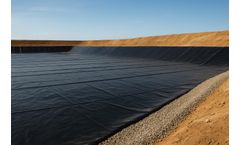
The 2.00 mm thickness is selected to satisfy requirements for physical safety, chemical stability, and environmental compliance.Puncture and tear resistance under rough subgrades and high hydrostatic pressures; the 2.00 mm thickness provides robust mechanical strength against sharp gravel.Enhanced chemical resistance for acidic and alkaline tailings and leachates; the thicker barrier mitigates ...
Additionally, improper tire disposal contributes to mosquito breeding, groundwater contamination, and long-term environmental degradation. As global vehicle ownership continues to increase, the volume of end-of-life tires generated annually has reached unprecedented levels. ...
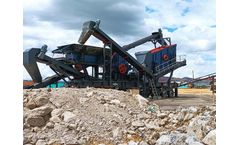
Landfills produce methane. They consume land. They contaminate groundwater. The caring argument is that the linear model externalises costs. ...
Mitigation of Soil and Water Contamination The improper disposal of oil sludge poses a severe threat to the environment, especially to soil and water quality. When oil sludge is dumped into landfills or released into the environment, it contaminates soil and groundwater, creating long-lasting ecological damage. The oil-based ...
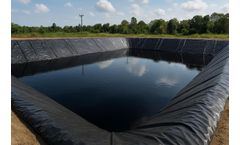
Oil handling and storage infrastructure demands reliable containment to prevent hydrocarbon leakage, soil contamination, and groundwater pollution. For the Oil Pit Project in Agartala, Tripura, a dual-layer HDPE geomembrane system with 1000 micron and 1500 micron liners was implemented to provide primary and secondary containment.Project OverviewProject Name: Oil ...
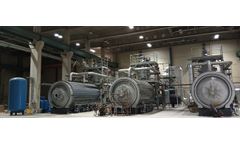
This contributes to better land use planning and reduces the long-term environmental impact of landfills, such as the contamination of soil and groundwater from leachate. Additionally, plastic waste in landfills can generate harmful methane gas, a potent greenhouse gas that contributes to climate change. ...
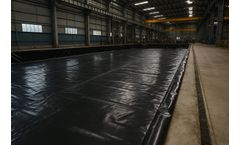
Industrial EV manufacturing in India presents design challenges for environmental safety, structural durability, and contamination control due to exposure to process chemicals, lubricants, wastewater streams, and thermal variations. ...
Moreover, biochar can neutralize acidic soils and immobilize heavy metals and pollutants, reducing their bioavailability to plants and preventing contamination of groundwater and surrounding ecosystems.Another notable advantage of biochar is its role in promoting circular economy by valorizing agricultural and forestry waste. ...
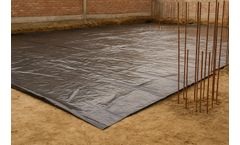
While reinforced cement concrete provides structural strength, it remains vulnerable to moisture ingress, capillary rise, and subsoil contamination, particularly in fine-grained alluvial soils typical of Siwan, Bihar. ...