
Refine by
Groundwater Mapping Articles & Analysis
40 articles found
Vista Clara is pleased to play a key role in the comprehensive East River Experimental Watershed study conducted near Crested Butte, Colorado by providing advanced NMR geophysical investigation capabilities, including GMR™ non-invasive NMR surface measurement, along with both Javelin® and Dart™ portable NMR borehole logging. The study, which began in 2014, supports the collective ...

Synopsis: Developers can struggle to build homes that balance efficient water use with a comfortable way of life, especially in areas without much water. Application: The BioBarrier® Membrane Bioreactor is a proven water reuse technology that treats both Graywater and blackwater to a high enough quality for nonpotable household ...
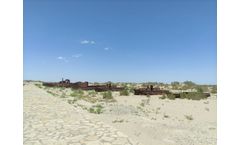
The shrinking of the Aral Sea is the visible result of the destructive mismanagement of water resources in Central Asia. The Aral Sea was once the fourth largest lake in the world at 68,000 square kilometers, but has now shrunk to 10% of that size. It has fragmented into several water bodies, the largest of which are the North Aral Sea, which only receives water from the Syrdarya River, and the ...

Kassenaar The identification of significant groundwater recharge areas (SGRAs) was an important element of recent Source Water Protection initiatives in Ontario. Under SWP, the term “significant recharge” has been taken to be synonymous with high volume recharge. However, simply mapping areas of high recharge (HVRAs) may not be enough to protect the ...
Gail Soo Chan, P.Geo., Director – Groundwater Resources, 100 Whiting Avenue, Oshawa, ON L1H 3T3 (905-579-0411 x139) Key Personnel: E.J. Wexler The identification of significant groundwater recharge areas was a key element of recent Source Water Protection initiatives in Ontario. ...
Findings may be used to guide water management decisions, such as adoption of water reuse When water is pumped from aquifers, it can be replaced either naturally or artificially through groundwater recharge. Natural recharge comes from the slow infiltration or percolation of precipitation or surface water, and artificial recharge increases the rate through human-controlled ...

Nuclear Magnetic Resonance (NMR) is a powerful technology for groundwater investigations, leveraging the same physics as medical MRI imaging to directly detect water and characterize subsurface hydrogeologic parameters. In geophysics, surface NMR methods can be used to non-invasively map groundwater aquifers and borehole logging NMR tools can be ...

These alluvial sediments have the potential to host significant groundwater supply in paleochannels filled with porous coarse clastic material which can to be used for supporting a graphite ore processing. The HVSR data were acquired by local field operators, and then processed and depth converted using a Vs of 370m/s, with the modelled bedrock surface ranging in depth from The ...

Implications for U.S. Groundwater Management Some Western states like Arizona manage groundwater and surface water separately, but the current study gives a more holistic picture of their interconnectedness. ...

A former gas station’s property may be more expensive to perform a Phase I ESA due to the potential for soil and groundwater contamination from a leaking tank or spills. Also, an industrial site—especially a closed one—could be even more than $4000 due to the potential for asbestos, lead, abandon equipment, spills, illegal dumping, hazardous waste, soil ...
A former gas station’s property may be more expensive to perform a Phase I ESA due to the potential for soil and groundwater contamination from a leaking tank or spills. Also, an industrial site—especially a closed one—could be even more than $4000 due to the potential for asbestos, lead, abandon equipment, chemical spills, illegal dumping, hazardous waste, soil ...
Clean-up may not just be on your property but any other property including surface and groundwater that may have originated on your property. A Phase I ESA provides the appropriate level of “due diligence” in the transaction. ...

To monitor the effects of the remedial actions, the Engbertsdijksvenen groundwater monitoring network was established. 59 monitoring wells were installed for this purpose within a 1.5-kilometre radius all around the nature preserve. ...
The construction of a tunnel has significant consequences on groundwater extraction and general soil moisture patterns. Many old to extremely old trees are located in the adjacent plots. These trees could suffer from dehydration as a consequence of reduced groundwater levels. To map out the effect of the tunnel construction on trees Copijn has ...

Installation of the vertical system began in 2007 and the system operated from 2008 through 2011, and successfully treated the on-site contamination beneath the facility. Site map depicting overall groundwater flow direction. Remedial Challenges Over the decades, groundwater flow toward the south transferred contamination diagonally across the ...

The assessment of groundwater vulnerability to pollution has proved to be a useful tool to delimitate zones affected by groundwater contamination. For this reason, development of groundwater vulnerability maps became a useful tool for protecting groundwater resources from pollution. ...
Typically, advanced treatment technologies — reverse osmosis and ultrafiltration, as well as other membrane-based technologies — are needed to purify and desalinate brackish groundwater before its use. Brackish groundwater can be directly used as cooling water for power generation, in aquaculture, and for drilling and hydraulic fracturing in the oil ...

Marcus Gary of the Edwards Aquifer Authority, conducted a hydrogeology workshop focused on groundwater exploration. Why groundwater exploration? This workshop’s purpose was important: As water—especially groundwater—becomes more and more scarce (and thus, valuable) knowing exactly where and how to find it will become more ...
However, groundwater can be polluted by almost any land use. Consequently, many governments have acquired groundwater information in the aim of protecting the resource. ...
These methods use different parameters explaining the different results in the vulnerability degrees in the Aghereb–Chaffar–Mahres aquifer system. The vulnerability map to contamination as well as vulnerability to seawater intrusion showed three classes of vulnerability: low, moderate and high, depending on the intrinsic properties. In addition, the risk ...