
Refine by
Groundwater Quality Articles & Analysis
248 articles found

The water source is a newly built groundwater well, a vital source for the region’s domestic water supply. Due to geological conditions, the local groundwater generally suffers from high calcium and magnesium ion content and excessive hardness. ...

Why Do Static Monitoring Networks Waste Money? Most groundwater monitoring programs operate under networks designed years or decades ago. These networks persist unchanged despite accumulating data that could inform more efficient sampling strategies. The result represents a hidden cost that compounds annually, with typical contaminated sites paying 20 to 40 percent more than necessary for ...
ByLiORA
The Well Redundancy Problem Every groundwater monitoring network includes wells that cost money but provide no commensurate value. This statement reflects reality at contaminated sites worldwide, not a criticism of the hydrogeologists who designed these networks. Contamination plumes evolve over time, and our understanding of subsurface conditions improves as data accumulates. A well that ...
ByLiORA

Fast Dissolved Gas Analysis for Groundwater Age, Recharge and Flow Paths Mass spectrometry for groundwater studies provides real-time detection of transient events and supports reliable, efficient groundwater quality monitoring to help ensure the safety and sustainability of water supplies. ...

The metropolitan area of Greater Sudbury, located within a striking geologic basin thought to have been created by meteoritic impact approximately 1.8 billion years ago, is home to over 300 lakes, ponds and waterways. Some 130 years ago, the earliest settlers to the region capitalized on the region’s nickel-copper ore deposits, launching an industry that would play a significant historic ...
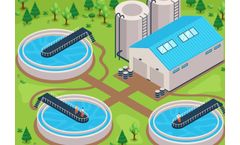
In Zuarinagar, Goa, a sanitation water filtration project was initiated to improve water quality and prevent groundwater contamination. Ocean Non Wovens was proud to contribute to this project by supplying and installing 1000 SQM of Ocean HDPE Liner 2000 Micron, ensuring long-term water safety and filtration efficiency. ...

Whether it’s monitoring groundwater quality, air pollutants, or contaminant levels at a remediation site, detecting trends helps professionals identify risks, evaluate changes, and ensure regulatory compliance. ...
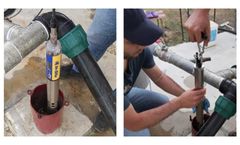
Chief among the project’s aims, as laid out in the initial press release, is to “secure the availability and quality of groundwater reserves in Mediterranean coastal areas, which are amongst the most vulnerable regions in the world to water scarcity and quality degradation.” MEDSAL identifies groundwater ...
As climate change intensifies, summer droughts have become more frequent and severe, posing significant challenges to agriculture, water supply, and ecosystems. In the quest to combat these droughts, innovative technologies and materials are playing an increasingly critical role. One such material is fluoropolymer tubing, known for its exceptional chemical resistance, durability, and flexibility. ...
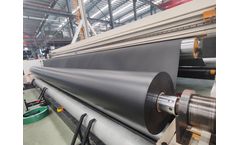
The anti-seepage engineering of manure tanks in cattle farms is very important, and geomembrane is a commonly used anti-seepage material. In the construction of manure tanks in cattle farms, geomembranes can effectively prevent manure leakage, thereby avoiding problems such as groundwater pollution and soil erosion. When choosing a geomembrane, you need to consider the following aspects: ...
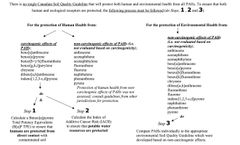
The Canadian Soil Quality Guidelines provide a comprehensive framework for addressing soil contamination by Polycyclic Aromatic Hydrocarbons (PAHs) to protect environmental and human health. ...
The resultant soil pollution poses significant risks to terrestrial ecosystems, groundwater quality, and public health. The heterogeneous nature of crude oil contamination, characterized by a mixture of hydrocarbons, heavy metals, and organic pollutants, necessitates innovative remediation strategies. ...

The presence of hydrocarbons in soil can disrupt ecosystems, affecting plant life and groundwater quality. The Innovations in Oilfield Drilling Waste Recycling 1. ...

To validate and expand upon these findings, further studies should be conducted on a larger sample size, temporal scale, and across diverse locations to assess the long-term effects of greywater irrigation on plant health and soil and groundwater quality. More studies are still needed about these systems. ...

Improved Crop Health and Yield: By optimizing irrigation, smart soil sensor systems promote healthy plant growth and development. This leads to improved crop quality, increased yields, and enhanced resistance to pests and diseases. 4. ...
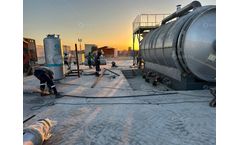
Additionally, it poses a threat to groundwater quality and adversely affects local flora and fauna. Understanding Pyrolysis as a Treatment Method Overview of Pyrolysis Pyrolysis is a thermal decomposition process that subjects organic materials, such as crude oil contaminants in soil, to high temperatures in the absence of oxygen. ...
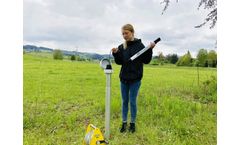
Monitoring the conductivity of groundwater and surface water is an essential task for maintaining the quality and safety of our water resources. Continuous monitoring of conductivity can help identify long-term trends and seasonal variations in water quality, which are used to predict changes in water availability and ...

Groundwater derives from fresh water, such as rain or melted snow. It seeps under the Earth’s surface level into the pores between rocks, sand and soil. The water can be stored in these pores for many years or released into a river or the sea when the storage area becomes saturated. Because groundwater can quickly become contaminated, ...

Chloride dust control products are short-lived, wreak havoc on our environment and come with costly long term consequences. With its advanced organic material technology, DUST/BLOKR® is revolutionizing the global dust control industry by achieving results that traditional chloride methods just can’t match. On top of being 100% safe for the environment, this next-generation solution ...

Sampling from the piezometers showed that the groundwater quality differs with varying depth in the aquifer.Nitrate levels, pH and thermo tolerant coliform levels were some indicators which varied with depth. In addition, groundwater quality was found to vary at different monitoring bores around the campus.Ongoing monitoring of ...