
Refine by
Gyroscope Articles & Analysis
28 articles found
A GPS-Aided INS comprises an inertial measurement unit (IMU) containing three-axis accelerometers, gyroscopes, and a GNSS receiver. After initial orientation and bias estimation, data from the IMU and GNSS receiver get fed through a robust Kalman filter algorithm, in which the unit will begin outputting correct and accurate orientation, position, velocity, and timing. ...
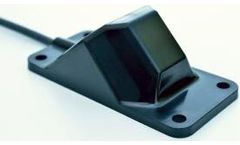
Key products include: Inertial Measurement Units (IMUs): These devices combine accelerometers, gyroscopes, and magnetometers to measure orientation, velocity, and gravitational forces precisely. ...
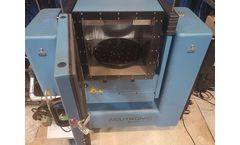
All Inertial Labs IMUs (Inertial Measurement Units) consist of robust MEMS-based accelerometers and gyroscopes. Fundamental Design of MEMS Accelerometers and Gyroscopes Fundamentally, all MEMS accelerometer sensors commonly measure the displacement of a mass with a position-measuring interface circuit. ...
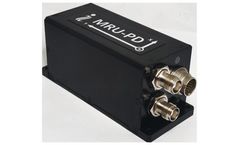
Core Components of an MRU An MRU primarily consists of gyroscopes, accelerometers, and a barometric sensor. These sensors collectively provide crucial data for various applications: Gyroscopes provide real-time rotation measurements about three axes, essential for determining orientation and aiding in navigation computations. ...
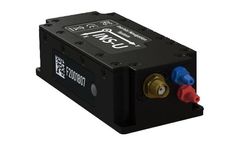
Inertial sensors, including accelerometers and gyroscopes, serve as the primary instruments measuring linear acceleration and angular velocity, respectively. ...
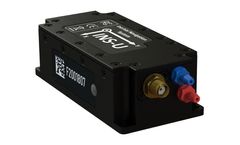
Introduction to Inertial Navigation Systems An INS is a self-contained mechanism that uses accelerometers, gyroscopes, and occasionally magnetometers to continuously calculate a moving object’s position, orientation, direction, and speed without external references. ...

These systems consist of accelerometers and gyroscopes that measure changes in velocity and orientation with high precision. ...

Inertial navigation, on the other hand, relies on accelerometers and gyroscopes to measure changes in velocity and orientation. By continuously tracking these changes, inertial navigation systems can determine the position of a vehicle or object within a known starting point. ...
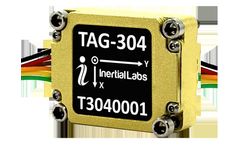
Unbeknownst to early observers, this resistance resulted from what we now call gyroscopic precession. Understanding Gyroscopic Precession Gyroscopic precession is the reaction exhibited by a spinning object when its axis of rotation is tilted. ...

These systems leverage state-of-the-art sensor fusion algorithms that combine data from gyroscopes, accelerometers, and magnetometers, resulting in highly accurate orientation measurements.What truly sets Inertial Labs apart is the versatility of their AHRS systems. ...
The IMU-P Tactical features three MEMS gyroscopes, three MEMS accelerometers, and a temperature-compensated compass. ...
The Kernel-100 The Kernel-100 is a compact and lightweight Inertial Measurement Unit (IMU) and Digital Tilt Sensor (DTS) comprising precision tri-axis MEMS accelerometers and tri-axis MEMS gyroscopes. This industrial-grade IMU measures linear accelerations and angular rates with low noise and good repeatability. ...
ZAP Surgical Systems, Inc. today announced it has received CE mark clearance to the new EU MDR for its ZAP-X® Gyroscopic Radiosurgery® platform. The CE mark makes it possible for healthcare providers to begin treating patients with the ZAP-X system in the European Union. ...
ZAP Surgical Systems, Inc. today announced it has received Shonin approval from the Japanese Pharmaceuticals and Medical Devices Agency (PMDA) for its ZAP-X® Gyroscopic Radiosurgery® platform. As part of the approval, ZAP-X is now cleared for clinical use in Japan. ...
ZAP Surgical Systems, Inc. today announced ZAP-X® Gyroscopic Radiosurgery® patient treatments have commenced at MedStar Georgetown Cancer Institute at MedStar Southern Maryland Hospital Center in Clinton, MD. ...

Many consumer and medical wearables contain three-axis accelerometers and three-axis gyroscopes, providing continuous readings of individual movement which holds significant promise as a means of overcoming the current limitations of physician identified performance status. ...
An INS estimates the position, attitude, and velocity using the gyroscopes and accelerometers contained inside an inertial measurement unit (IMU). ...
This device, which kept an accurate time, made it possible for voyagers to keep track of there geographical position with an accuracy that began to commercialize marine travel. Gyroscope Compass Max Schuler was responsible for the first seaworthy gyrocompass that was used for maritime navigation in 1908. ...
The most important component in this task is the ...
By using the IMU as a reference for orientation, optical data can be used to mitigate drift of the gyroscopes. Inertial Labs has been continuously developing next generation systems that can use a combination of day and night operation cameras to stabilize heading. ...