
Refine by
Hap Emissions Articles & Analysis
57 articles found

This research began in 2000 and continued until December 17, 2001, when the U.S. Court of Appeals issued a ruling in favor of the State of New Jersey. Lakes Environmental Software was hired, on a sole source basis, to develop unique Environmental Justice solutions. The American 1964 Civil Rights Act – Title VI mandates that all federal fund transfers be suspended from States that ...
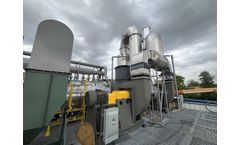
This presents a significant challenge for manufacturers striving to meet air quality regulations and limit carbon output. Emission streams that contain nitrogen bearing hazardous air pollutants (HAPs) cannot be thermally treated in a traditional oxidizer system without forming additional NOX, making adherence to an air permit difficult or impossible. ...
Catalytic Products International (CPI) installed a Regenerative Thermal Oxidizer (RTO) with +99% DRE at a Northeastern USA web coater for the abatement of Volatile Organic Compounds (VOCs) and Hazardous Air Pollutants (HAPs). The 60,000 SCFM Triton II-60.97 Regenerative Thermal Oxidizer (RTO) will control VOC and HAP emissions from three (3) web ...

Colt's Dallas based Air Quality Control Group received an order for a 3 chamber MAXIM™ RTO system to control the Volatile Organic Compound (VOC) and Hazardous Air Pollutant (HAP) emissions from a municipal sludge dryer. This order followed the year long repair and maintenance of a competitor's 2 chamber RTO which had been causing outages monthly since its ...

One thing we do know for sure is that Carbon Dioxide (CO2) is a contributing factor in global warming and humans are responsible for a large portion of these emissions. These days, many individuals and businesses alike are trying to reduce their environmental impact and GHG (Green House Gas) emissions. ...

The major consumers of natural gas at this facility were the main system of boilers which supplied steam energy throughout the facility and two Regenerative Thermal Oxidizers (RTOs) which controlled the Volatile Organic Compound (VOC) and Hazardous Air Pollutant (HAP) emissions to the atmosphere. One of the RTOs controlled the emissions from the ...
These sources have actual or potential emissions above an established threshold for any air pollutant, with a default value of 100 tons annually. HAPs have a threshold of 10 tons per year for a single HAP, or 25 tons per year for any HAPs combination. ...
The major consumers of natural gas at this facility were the main system of boilers which supplied steam energy throughout ihe facility and two Regenerative Thermal Oxidizers (RTOs) which controlled the Volatile Organic Compound (VOC) and Hazardous Air Pollutant (HAP) emissions to the atmosphere. One of the RTOs controlled the emissions from the ...

These manufacturers need to obtain permits and report emission calculations to demonstrate compliance. This involves the expensive testing of each product for VOC content or the review of all relevant formulation components and thus multiplying the VOC/HAPs content by the consumption of the product. This is a daunting task for manufacturers in the paints and ...

ALL4’s project experience often involves industrial clients that are subject to one (1) or more of the National Emission Standards for Hazardous Air Pollutants (NESHAPs) for source categories (40 CFR Part 63). NESHAPs regulate emissions of hazardous air pollutants (HAPs) either directly or through the use of a surrogate pollutant (e.g., ...
A facility must be a major source of HAP emissions Process units that: Produce organic chemicals that are not subject to other MACT standards Process, use, or produce organic HAP or hydrogen halide and halogen HAP Batch process vents from HON process units Once qualifying in the NESHAP, a facility must group the ...
New EPA regulations classifies "oxidizers" as "incinerators", meaning if this is not changed, the emissions standards and regulatory requirements associated with operating oxidizers become much more complex because incineration rules specify extensive recordkeeping, monitoring and reporting requirements. ...

(Skyworks) selected CK to perform a compliance emissions testing program to determine the control efficiency of a new Roto-Concentrator followed by a thermal oxidizer (RC/TOx) used to control volatile organic compounds/hazardous air pollutants (VOC/HAP) from multiple manufacturing processes. A facility air permit condition required compliance testing of the ...
These systems can include: Catalytic, thermal, regenerative oxidizers, or concentration devices designed to destroy VOC/HAP emissions and satisfy state or federal clean air act permit requirements. ...

The proposed rules mandate the use of emission controls as well as work practices through two different air regulatory programs – New Source Performance Standards (NSPS) and National Emissions Standards for Hazardous Air Pollutants (NESHAP). ...

Ultimately it will be one or two non-mercury HAPs that will determine the emission control fate of the coal- and oil-based power plant fleet. ...
Cellulosic Biofuels meets National Emission Standards for Hazardous Air Pollutants A multitude of new cellulosic bio-fuel processing facilities across the country are now faced with having to meet new National Emission Standards for Miscellaneous Organic Chemical Manufacturing. ...
The applicability of meeting this NESHAP is: A facility must be a major source of HAP emissions Process units that: Produce organic chemicals that are not subject to other MACT standards Process, use, or produce organic HAP or hydrogen halide and halogen HAP Batch process vents from HON process units Once qualifying in the ...
Cellulosic Biofuels meets National Emission Standards for Hazardous Air Pollutants A multitude of new cellulosic bio-fuel processing facilities across the country are now faced with having to meet new National Emission Standards for Miscellaneous Organic Chemical Manufacturing. ...
Today many companies are faced with unique air pollution control problems arising from their coating operations. Not only are vented emissions required to be controlled, but now a more pressing issue is how to treat fugitive emissions. Fugitive emissions are the VOC and HAP releases that occur at the coating process or in a ...