
Refine by
Hazard Sensor Articles & Analysis
19 articles found

Due to its flammability and tendency to accumulate near the ground, uncontrolled propane leaks represent a serious explosion and fire hazard. Industrial propane gas sensors are therefore an essential element of safety systems in hazardous areas. ...
Environmental Sensors Advanced safety systems often include environmental monitoring sensors. ...
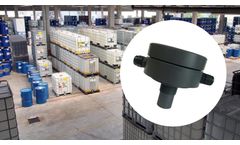
What is a level sensor? A level sensor is a device used to measure the level or height of liquids and solid materials in various environments. ...
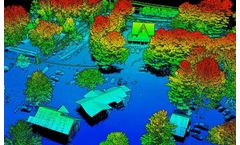
Inertial Labs’s CheetahNAV can enable vehicles to navigate treacherous terrains and provide visual and sensor data for structural assessments. The Federal Emergency Management Agency (FEMA) emphasizes the use of Unmanned Aircraft Systems (UAS) equipped with INS for infrastructure assessment in their guidelines (FEMA, 2018). ...

On-the-ground sensors In addition to satellite data, the AQI is informed by a vast network of ground-level sensors. ...

These systems use a network of gas sensors strategically positioned to cover expansive areas and detect the presence of hazardous gases that may pose risks to personnel and property. ...
ByJXCT
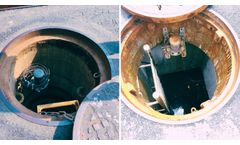
ABM's non-contact ultrasonic and radar level sensors are ideal for monitoring water levels in manholes. ✅ ABM Online Support: Gain peace of mind with ABM sitting virtually next to your level sensor. Unlike any other remote level monitoring solution, ABM provides 24/7 online support for set-up, sensor performance optimization, filtering of ...

Unlike conventional wind sensors, which rely on moving mechanical parts, ultrasonic sensors use sound waves to detect wind speed and direction. ...

Gas leak Sensors are a crucial piece of equipment. Not only do they ensure the safety of workers in several industries, but in many settings, such as the food industry, gas sensors also monitor gas levels to ensure the products maintain high quality and standards. ...
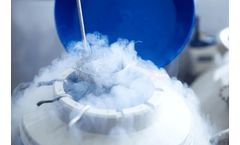
Dry ice safety is paramount to reduce the risk of injury during the various uses of dry ice as there are potential hazards associated with the use, handling and shipping of dry ice. In this article we will explore the uses of dry ice, dry ice hazards and the solutions Edinburgh Sensors can provide for dry ice safety. ...

Intel have predicted that the global market for IoT technology will reach $6.2 trillion by 2025. The Internet of Things Sensors As the Internet of Things (IoT) industry grows, so does the opportunity to utilise sensors. ...

The solution thus contains both PAA and hydrogen peroxide, and both will contribute to the vapor, but PAA is the more hazardous component. The PAA sensor thus needs to detect PAA selectively and not respond to hydrogen peroxide. PAA and hydrogen peroxide are both strong oxidizing agents and so the bare sensor will respond to both of them, ...

Here are five Dos which, if followed, will keep your sensor and its diaphragm performing great. DO 1: Know Your Sensor's Pressure Ratings (Over Pressure And Burst Pressure) Many pressure sensors have an over pressure rating of at least 2X (or, twice the full scale pressure of the sensor). ...

Besides, entry to confined spaces is often infrequent and the danger is related more to oxygen deficiency than a hazardous substance. When the sensor detects a toxic or combustible gas or a lack of oxygen, it will alarm and warn the worker that they need to get out. Safety Planning When organising a hazardous substance safety program for your ...

A hydrostatic pressure sensor is an example of a Transducer. INSTRUMENT – is the combination of sensors or transducers into a communication device that may transmit a signal, display a variable and provide control functions. ...

The use of wireless sensor networks emerged in this field as a compliant solution to these issues. In this paper, we will present a monitoring system that uses heterogeneous WSN to monitor a freight train transporting hazardous materials. The sensors interact through a security platform in order to share different information. We illustrate some ...

Indoor and outdoor gas hazards that exist in open areas are usually monitored using diffusion-type sensors. A diffusion sensor has no active sample-drawing system; diffusion sensors rely on the ambient air movement and pressure to deliver the sample to the sensing element. Diffusion-type sensors are a reliable ...
Keywords: virtual environments, transport, pollutant dispersion, concentration fluctuations, wind fluctuations, validation methodology, p–values, air pollution, dispersion modelling, hazardous release, virtual chemical sensors, biological sensors, meteorological sensors, wind vector fluctuations, agent concentration, wind ...

Key Features Include: Humidity resistant PID Diffusive monitoring - no pump required Selectable detection range of 0 - 100 ppm or 0 - 1000 ppm Scaled 4-20 mA analogue output Includes a 10.6 eV lamp Detector life extended using patent pending feature Intrinsically Safe for use in hazardous areas Easy access PID sensor for very simple servicing Digital ...