
Headspace Sample Articles & Analysis
23 articles found

For applications where portability is not required, such as stationary sampling in a lab environment, the Model 905 is the preferable choice due to its rugged metal enclosure and form factor. An operator will have better visibility of the oxygen concentration reading on the front display of the Model 905 when sampling packages. The other main difference is that ...
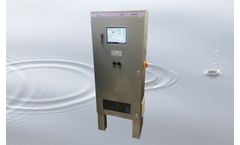
This Mcerts certified solution measures and analyzes VOCs and BTEX (Benzene, Toluene, Ethylbenzene and Xylene) dissolved in liquid matrices. Chromatotec presents a headspace sampling system (following US EPA method 502-2) designed to extract representative samples from a liquid phase. The vaporized sample can be preconcentrated ...

Where positive indications of accelerant residue are discovered, grab samples can be taken and carefully stored for subsequent analysis using headspace sampling and gas chromatography (GC). During headspace sampling, debris is collected in a part-filled, sealed jar and allowed to stabilise as debris is collected ...

In the USP 467 method, the dynamic headspace technique was used as the Gas Chromatography (GC) sample introduction method. ...
Where positive indications of accelerant residue are discovered, grab samples can be taken and carefully stored for subsequent analysis using headspace sampling and gas chromatography (GC). During headspace sampling, debris is collected in a part-filled, sealed jar and allowed to stabilise as debris is collected ...

It is important to note that sample evaporation will be enhanced under vacuum and thus, if your experiments are highly sensitive to sample concentration, it might be necessary to determine the sample concentration after degassing, especially for small volume samples. 3. ...

Hexanal content is also used to measure the oxidative status of foods rich in omega-6 fatty acids. Dynamic headspace sampling differs from static headspace sampling in that the headspace above the sample is swept with a gas onto an adsorbent trap, rather than allowing a sample ...

The instrument was then allowed to sample for a minimum of 10 minutes in auto sample mode, sampling once every minute, to ensure the instrument was able to read less than 0.10μg∙m-3 consistently. ...

For analysis of BAC, headspace GC with FID detection is typically used. Headspace GC allows the quantitative analysis of alcohol directly from blood samples. Standard headspace systems use nitrogen for vial presurization, with helium typically used for GC carrier gas. ...

The VOC methods are all run using the purge-and-trap (P&T) sample introduction technique; headspace is not allowed for drinking water or wastewater compliance testing in the US. ...

Abstract: Monitoring methanol (MeOH) concentration in wastewater treatment processes is important because methanol is a widely used carbon source for denitrification. Headspace solid-phase microextraction (HS-SPME) and direct liquid injection coupled with gas chromatography and mass spectrometry (GC/MS) were studied to analyze methanol in municipal wastewater ...
As more and more chemical spill incidents occurred and uncontrolled chemical sites were discovered and designated hazardous, efforts to characterise these sites generated increasingly larger numbers of air, soil and water samples. By the mid 1980s, EPA‟s Certified Lab Program facilities were stretched beyond capacity, and clean-up actions were often delayed for months. To ...

Samples may be hermetically sealed in the headspace vial at the point of sampling. ...
There are a number of methods that can be used to extract volatile organics from soil samples. EPA method 5035 is a purge-and-trap technique for the determination of low-level volatile organic compounds (VOCs) in soils. ...
To increase profits and meet customer needs, many environmental laboratories need to analyze more samples faster, increasing throughput. Achieving high levels of throughput in Method 8260 requires labs to maximize the efficiency of many different steps of the analysis, of which the most important is the GC/MS portion. The technique presented here utilizes modifications to typical ...
At the time the HNU PI101 was the only commercial available PID. The growth of PID in headspace sampling As more and more chemical spill incidents occurred and uncontrolled chemical sites were discovered and designated hazardous, efforts to characterise these sites generated increasingly larger numbers of air, soil and water samples. ...
The Teledyne Tekmar HT3™ headspace instrument however has an upper sample heating temperature of 300°C. ...

Each hole of the VialTweeter is made to hold vials of the most common sizes, brands and designs, such as * vials and test tubes of 0.5ml, 1.0ml, 1.5ml or 2.0ml volume, e.g. 12x32mm or 15x45mm * vials made by Eppendorf, Sun-SRI, Greenwood or compatible * vials with snap top, crimp top or screw thread finish * vials with/without limited volume inserts * vials with/without ...
Abstract This application note presents method development using classical headspace sample preparative techniques for the analysis of fuel oxygenates in a soil matrix. Fuel oxygenate compounds were analyzed using the HT3TM Automated Headspace Analyzer in conjunction with a Gas Chromatograph/Mass Spectrometer (GC/MS) system. Normal method ...
The referenced EPA Method 5021, allows for the introduction of VOCs from solid samples by automated static headspace. The static headspace method permits the prescreening of samples to minimize over saturation of the chromatography system. The Teledyne Tekmar HT3 static and dynamic headspace methods were used to ...