
Refine by
Hearing Damage Articles & Analysis
27 articles found
How WG Safety & Environmental uses the Casella dBadge2 dosimeter to drive business compliance in occupational health and safety. Noise-induced hearing loss (NIHL) is the most common, yet preventable, occupational health hazard.[1] It is estimated that by 2050 over 700 million people worldwide, equivalent to one in every ten, will have disabling hearing loss.[2] NIHL can seriously affect the ...
ByCasella
But it’s not just about health; poor air quality also damages airport equipment, shortens its lifespan, and can even lead to costly regulatory fines. ...
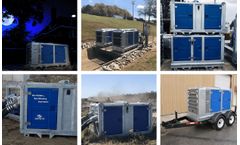
In this blog, we explain why sound attenuation has long since ceased to be the only reason to choose a sound attenuated pump. There are so many more advantages in pump canopies that we would like to explain in this blog. First a quick ...

As with any large equipment or machinery, safety is critical when planning to operate mulch and bark blowers. It begins with practicing proper landscaping safety techniques. The first step to ensuring both the site and the team at work are as safe as possible is to thoroughly read the Operations Equipment Manual (OEM) for the specific bark blower or mulch blower that will be used. Each model of ...

Indoor entertainment noise can have a significant impact on our hearing, stress levels and overall health.Exposure to high levels of noise over an extended period can lead to permanent hearing damage, tinnitus, and other adverse effects.You can read more about these regulations here. ...

Excessive noise can start out as a slight annoyance and eventually become the cause of hearing loss, stress and high blood pressure. Damage to hearing may occur when noise levels exceed 85 decibels, especially if the noise is ongoing. ...

Have you ever tried to finish a report with construction noise outside? Almost everyone can attest to the stress caused by repeated loud noise in the workplace. Besides unwanted headaches, permanent hearing loss is a real ...
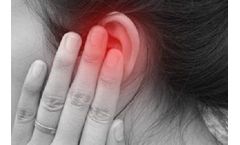
Living or working in continual loud noise can be annoying – but did you know it’s bad for your mental health too? Whether you live next to a busy main road, with the constant hum of traffic, or you work in a noisy factory; excess noise can negatively impact your wellbeing. It can make you feel stressed and annoyed and it can also cause a lack of sleep, especially if it goes on for 24 ...
This may seem to be a rather negligible period, but in a usually calm and peaceful environment, a single, extremely loud noise can also cause sufficient hearing damage. These types of noise are most commonly linked to the demolition and construction industry. ...
When considering industrial environments, farms, bars, and even cafeterias, noise is, shockingly, the most common health hazard, with permanent hearing damage being a primary concern. Interference in verbal communication and stress and general annoyance are among the main problems encountered in noisy environments. ...

Hearing Conservation Program Whether they are subjected to constant din or sporadic bursts of loud sounds throughout the day, employees in noisy workplaces are at risk of permanent damage to their hearing and employers face possible OSHA citations. For a noisy workplace, establishing a Hearing Conservation Program is imperative ...
If the sound is high pitched, the hair cells have very little time between sound waves to recover their normal, upright position causing damaged hair cells in the ear. Noise-Induced Hearing Loss When sound is both loud and high pitched, these inner ear nerve cells never get the chance to recover, and they die. If enough of them die, hearing ...
It’s fairly simple to control personal exposure to noise by limiting exposure time or using hearing protectors like ear plugs or ear muffs. Engineering controls are usually applied to the machinery that produces noise. ...
OSHA requires a noise dosimetry survey to determine if workers are exposed to noise that could damage their hearing. To satisfy OSHA’s requirement for Noise Surveys (29CFR1910.94 for General Industry, 29CFR1926.52 for Construction) involves attaching a noise dosimeter to a worker for a work shift when there is a possibility that person and persons ...
It has been clearly established that exposure to noise in the workplace over an extended period of time can lead to hearing loss. Noise exposure above 90 dB at a job can definitely lead to hearing loss. In fact, exposure at or above 85 dB is likely to lead to permanent hearing loss in some individuals. OSHA requires a noise dosimetry survey to ...
OSHA requires a noise dosimetry survey to determine if workers are exposed to noise that could damage their hearing. This is more than just using a sound level meter to take some noise readings. ...
Firstly, measurements must be taken based on a workers’ average exposure over a working day. This protects employees from damage to hearing over the span of their working lives. Secondly, instantaneous damage can occur to hearing from high levels of impulsive noise. Damage caused from this type of exposure ...
ByCasella
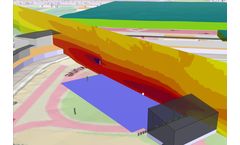
Part of the attraction of festivals is the loud music but this can damage hearing and also be nuisance to those in the surrounding area. ...

The availability of this new test will have a dramatic effect on the management of hearing loss prevention programmes… New technology has become available that provides companies with data that they can use to check the real world performance of their hearing conservation programmes very quickly and very easily. ...

The risk of hearing loss increases with the magnitude and exposure time and the frequency of the noise; with higher frequencies doing more damage. Hearing loss makes up between 30% and 40% of occupation-related illnesses. ...