
Refine by
Heated Sampling Articles & Analysis
105 articles found
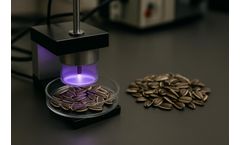
Mass scans covered 1 to 50 amu. Gas sampling used a heated 200 °C quartz capillary coupled to a three-stage differentially pumped inlet to minimise recombination and adsorption, enabling accurate detection of plasma-generated species under atmospheric conditions.Ozone (O3) was the dominant long-lived reactive molecule detected. ...

Temperature Programmed Reduction (TPR) with quadrupole mass spectrometry (MS) addresses a long-standing challenge in catalyst characterisation: the inability to distinguish between hydrogen consumption mechanisms during reduction. Conventional temperature programmed reduction reveals when a material responds to hydrogen, but rarely explains how or why that response occurs. If quadrupole MS is ...

Shifts in H₂, CO, CO2, CH4 and O2 concentrations often occur within seconds, long before temperature readings or alarms indicate abnormal behavior. Delayed sampling prevents timely recognition of deviations and allows reaction imbalances to propagate, altering heat-release patterns, burner performance and overall conversion efficiency. ...

The following is a detailed description of its components and working principle: I. System Components Heating system: A graphite heating bath is used to ensure the accuracy, uniformity and stability of the temperature, and to prevent the sample from being damaged by overheating. ...

Utilizing Cubic’s proprietary non-dispersive infrared (NDIR) gas sensing technology, Gasboard-9031EX delivers high-resolution measurements of CO, CO2, and CH4 concentrations simultaneously, assisting accurate carbon potential calculation and rapid adaptation to dynamic process changes, and avoid the delays and estimation errors in traditional indirect methods. Designed for demanding ...
Fully automated microwave digestion systems utilize the properties of microwaves to achieve rapid sample digestion. Microwaves are high-frequency electromagnetic waves that can penetrate samples and cause rapid vibration and rotation of polar molecules, generating a large amount of heat energy. During digestion, the sample is ...
Obtaining precise results in X-ray fluorescence (XRF) analysis requires thorough and proper sample preparation. For liquid samples, meticulous preparation ensures high accuracy and reproducibility of measurement outcomes. This article covers essential aspects of liquid sample preparation and handling procedures for XRF ...
The advent of fully automated microwave digestion systems has revolutionized laboratory sample pre-treatment, significantly improving laboratory efficiency and analytical accuracy. ...
Fully automated microwave digesters, as a sample pre-treatment device, are becoming an important tool in laboratories due to their speed, efficiency, and precision. ...
Microwave digestion offers significant advantages in sample preparation, including rapid heating, high digestion efficiency, minimal reagent use, and reduced elemental loss. In this application, we utilize microwave digestion to efficiently prepare automotive coating samples for heavy metal ...
Graphite heating plates, as efficient and stable laboratory heating equipment, are widely used in experimental scenarios such as sample digestion, evaporation and concentration, and material heat treatment. ...
In the field of modern analytical chemistry and sample pre-treatment, intelligent microwave extraction instruments have emerged as a prominent technology, providing strong support for the efficient extraction of target components from complex samples. ...
“Special gases” consist of high-purity, electronic and standard gases. Especially the electronic gases are a vital raw material for the electronic industrial production, such as integrated circuits, display devices or solar cells. Besides being a weak anesthetic gas, for instance in the context of dentistry, Nitrous Oxide (N2O) is also essential for the Semiconductor production ...
Working Principle and Fault Classification of Graphite Digestion Apparatus Graphite digesters achieve rapid heating through a graphite heating element, combined with programmed temperature control for acid digestion of samples. ...
In modern laboratories, sample pre-treatment is a crucial part of the analytical testing process. ...

The process begins with the denaturation of double-stranded DNA, which involves heating the sample to separate the strands. Following denaturation, the temperature is lowered to allow primers—short sequences of nucleotides that are complementary to the target DNA—to bind to the specific regions of interest on each strand. After primer annealing, the ...

The full-process high-temperature heating design effectively prevents the loss of soluble gas SO2 that may affect measurement accuracy, and condensation issues that could corrode metal components. To ensure long-term durability, the entire gas sampling path of Gasboard-9085, including the sampling probe, inline filters, heated ...

This method can measure the thermal behavior of proteins when heated, especially the heat released or absorbed when their structure changes. DSC can provide vital information about protein folding and stability, which is invaluable in fields such as drug design, biotechnology, and disease research.DSC works by comparing the difference in heat ...
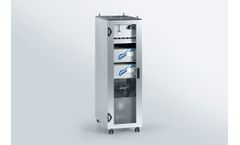
LaserCEM® operates with LPS® (low-pressure gas sampling) and a heat-traced sampling line, only maintained at maximum 80 °C, to avoid condensation and guarantee accurate, consistent measurements. ...

The detailed steps are as follows:Protein Sample PreparationFirst, the target protein sample needs to be prepared. ...