
Refine by
Heating Energy Articles & Analysis
944 articles found
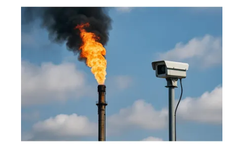
The Role of Thermal Imaging in CAM VerificationAutomated thermal imaging uses forward-looking MWIR sensors to detect heat energy emitted by the flare region. Calibrated infrared cameras visualize the flame with high spatial precision, remaining effective in smoke, steam, or changing daylight conditions. ...
ByOPGAL

The Importance of Reactor Design Production equipment plays a decisive role in determining operational efficiency. Reactor configuration affects heat transfer rates, material flow, energy consumption, and product consistency. ...

The answer depends primarily on airflow volume and VOC concentration.RCO for Medium-to-High Concentration Exhaust Regenerative Catalytic Oxidation (RCO) is suitable for:Medium airflow Medium-to-high VOC concentrations Solvent-dominated exhaust streams Advantages:Thermal recovery efficiency above 95% Lower operating cost High VOC destruction efficiency Stable long-term operation Zeolite Rotor ...

Propane (C3H8) is an efficient and versatile fuel used in heating systems, industrial applications, and residential energy solutions. ...
Key Technical Advantages High Purification Efficiency The zeolite rotor concentrates low-concentration and large-volume scattered VOCs into high-concentration and small-volume airflow, greatly improving the efficiency of catalytic oxidation treatment. Energy Saving and Consumption Reduction Built-in heat recovery and waste heat recycling system ...
As the global electric vehicle (EV) and energy storage markets continue to expand, China has become one of the world's leading lithium-ion battery manufacturing centers. ...
While these materials contain considerable energy and carbon potential, they are frequently underutilized or improperly disposed of. ...
Stage 3: SCR DeNOx System for Final Polishing Following thermal oxidation, the flue gas enters the Selective Catalytic Reduction (SCR) system.The SCR unit is responsible for removing residual nitrogen oxides, including:Nitric Oxide (NO) Nitrogen Dioxide (NO₂)Using catalyst-assisted reactions between ammonia and NOx, the system converts pollutants into harmless nitrogen and water vapor.One of ...

Volatile Organic Compound (VOC) emissions are among the most significant environmental challenges facing tire and rubber manufacturers worldwide.As environmental regulations continue to tighten across Europe, North America, and Asia-Pacific, manufacturers are under increasing pressure to reduce emissions, improve energy efficiency, and support long-term sustainability goals.As a ...
However, waste heat recovery can significantly improve project economics.Benefits include:Reduced natural gas consumption Lower operating expenses Increased steam production Faster investment payback Improved sustainability performance For facilities with high CO concentrations, recovered combustion heat often becomes a valuable secondary energy ...
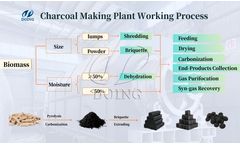
Subsequently, using the pelletizer or briquetting machine, they undergo high-pressure physical extrusion, either at ambient temperature or under heat, to be formed into dense pellets or briquettes. Biocoal Key Characteristics: The physical structure of biocoal becomes more compact and its density increases, facilitating storage and transport. ...

Through customized engineering solutions, advanced treatment technologies, and comprehensive project support, Cadair helps businesses achieve reliable VOC emission control while optimizing energy consumption and operating costs.This guide explores the characteristics of printing exhaust gas, the most effective VOC treatment technologies available today, key design considerations, ...
The optimal solution depends on: Air volume VOC concentration Production schedule Coating materials Local emission regulations Energy costs Available installation space For many medium and large furniture manufacturing facilities, Zeolite Rotor Concentration combined with Thermal Oxidation technology is widely adopted because it can effectively concentrate low-concentration VOC ...
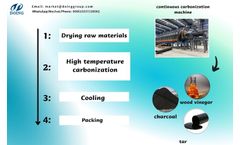
Impact on the Thermal Efficiency of Carbonization Equipment If the moisture content of the raw material is excessively high, the biomass carbonization machine must expend a significant amount of thermal energy during the initial stages of operation solely to facilitate the "evaporative dehydration" of the material. ...
Stable Product Quality: Constant operating conditions result in more uniform tyre oil and carbon black quality, which is essential for commercial markets. Energy Efficiency: Heat from pyrolysis gas can be reused continuously, lowering fuel costs and carbon footprint. Automation: Modern continuous plants often feature automated feeding, heating, ...
Following project completion, VOC purification efficiency improved significantly, enabling stable compliant emissions while reducing overall energy consumption. The project received high customer satisfaction. 4. ...
Different plants employ varying thermal transmission methodologies, including direct heating, indirect heating, and externally insulated heat circulation systems. ...
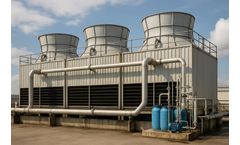
Temperature and system performance Summer heat increases thermal and mechanical loads within facilities. Heat absorbed by process water is circulated to cooling towers, where open-air cooling reduces the water temperature before returning it to service. ...
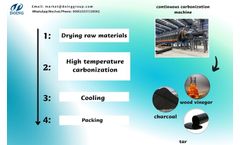
Enhancing Carbonization Efficiency and Reducing Consumption Excessive moisture within agricultural waste implies that during the heating phase of the carbonization furnace, additional thermal energy must be expended to evaporate this water. ...
Core Technology System CADAIR has built a systematic governance system centered on proprietary RTO technology: RTO Technology: ≥99% purification efficiency and ≥95% heat recovery efficiency. Its proprietary "chemical heat cascade utilization" uses CO oxidation heat for SCR denitrification, achieving "waste-to-waste treatment". ...