
Refine by
Hplc Column Articles & Analysis
38 articles found

High-Performance Liquid Chromatography (HPLC) High-performance liquid chromatography (HPLC) is a highly precise technique for separating complex mixtures of biomolecules. HPLC can be used for the final purification of LPS to achieve high purity. l Procedure: After initial extraction and concentration, the sample is passed through an ...

High Performance Liquid Chromatography (HPLC) can be either Normal Phase HPLC or Reverse Phase HPLC, depending on the nature of the chromatographic column and the mobile phase used.Normal Phase ChromatographyIn Normal Phase HPLC, the column packing material is polar (e.g., silica gel), and the ...

Sample Preparation(1) Protein Extraction: Proteins are extracted from biological samples.(2) Protein Digestion: Proteins are digested into peptides using enzymes (like trypsin).2. Peptide Separation(1) HPLC: Appropriate column and gradient conditions are selected, and mixed peptides are separated by High Performance Liquid Chromatography ...
UV-light), physico-chemical methods {e.g. spectrophotometer and chromatography (Paper, Column, TLC, HPTLC, LC, HPLC, GLC – MS)} and immuno-enzyme methods, e.g. ...

This method is simple to operate and suitable for rapid screening.High-Performance Liquid Chromatography (HPLC)Sialic acid is derivatized before the column, then separated by HPLC and quantified by UV or fluorescence detector.Colorimetric MethodDetection is carried out using sialic acid-specific binding proteins or chemical reagents (such as ...
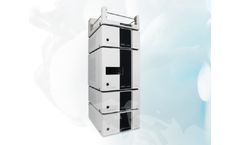
To ensure long term reliability and efficiency of the SCION Instruments LC6000 it is vital that considerations are taken when operating the HPLC system. SCION Instruments have now released their LC6000 Good Practice Handbook, a necessity for any HPLC user. ...

What is HPLC technology? High performance liquid chromatography (HPLC) is also called "high-speed liquid chromatography", "high-resolution liquid chromatography", "modern column chromatography" and so on. ...

Verulam Scientific offer the state of the art electrochemical detector for HPLC – the Decade Elite. Please visit our Antec Scientific product page for more details. ...

Filtering organic solvents for applications such as HPLC buffer prep can be challenging in order to ensure chemical compatibility with filters (PVDF, Nylon, or PTFE), preserving longevity of an HPLC column, or containment of toxic fumes, but finding a suitable and comprehensive vacuum system is now easier than ever. Sterlitech is now offering a ...

Sample filtration protects your HPLC column and preserves data quality. Read our tips on filter and solvent selection and the use of tools to save time in HPLC prep, improve lab efficiency, and better your analytical chemistry techniques. ...
ByCytiva

They are so important to clogging because just as they are the right size to let liquid through but not the particles in the column, they allow your HPLC mobile phase pass though when you connect the column to your HPLC. Now keep in mind the particles inside an LC column are very small. A typical ...

Here are my tips/best practices for column and HPLC/UHPC/UPLC system maintenance. Maintaining your LC columns Proper storage of HPLC columns will increase longevity and performance. ...

Glyphosate and its metabolite AMPA (aminomethylphosphonic acid) are usually determined by HPLC with post-column derivatization and subsequent fluorescence detection (EPA Method 547), or alternatively by ion chromatography coupled with a mass-selective detector. ...

ELSD is one of the most common detectors used with HPLC and is preferred to other detection methods for analyses such as carbohydrate, natural sugars and polymer analysis as well as being used for a wide range of other applications. ...
ELSD is one of the most common detectors used with HPLC and is preferred to other detection methods for analyses such as carbohydrate, natural sugars and polymer analysis as well as being used for a wide range of other applications. ...
The ACQUITY Arc System, enabled by Arc Multi-Flow path™ technology, is designed to replicate established HPLC methods developed with 3.5 – 5 µm particle columns onto a state-of-the-art LC platform, while strictly adhering to the guidelines and regulations set forth in USP Chapter 621. ...

The prepurification of the mother tincture was performed on a reversed phase flash column by the means of dry loading. The target compound was identified by its characteristic UV-VIS spectra and the retention time determined by running a standard. Subsequently, the purification of the pre-purified fraction of the target compound was performed with a 10 μm reversed phase ...
ByBUCHI

The eluate was collected and diluted for HPLC analysis. Figure 1. Results From Cleanup using Supel Tox AflaZea SPE Cartridges HPLC Conditions column: Ascentis Express C18, 10 cm x 2.1 mm I.D., 2.7 µm (Product No. 53823-U); mobile phase: (A) water, (B) acetonitrile, (C) methanol (700:120:120,A:B:C) with 0.780 g potassium bromide and ...
Subsequent studies using the 10 cm x 2.1 mm, 2.7 µm Ascentis Express C18 column indicate a maximum 10 µL injection should be used to maintain good column efficiency and sample peak shape. ...

This study concerned determination of Sb(III), Sb(V), As(III), As(V), MMA, DMA, AB, Cr(III) and Cr(VI) with high-performance liquid chromatography-inductively coupled plasma-mass spectrometry (HPLC-ICP-MS). The following columns were used: Dionex Ion Pack AG7 to determine chromium forms, Hamilton PRP-X100 to separate antimony species and Dionex Ion Pack AS7 to ...