
Refine by
Hydro Generator Articles & Analysis
51 articles found

Core Components of an Off‑Grid System Every robust off‑grid installation hinges on four essential building blocks: Energy Generation: Solar panels, small‑scale wind turbines, or micro‑hydro units convert natural resources into DC electricity. ...

Reivax upgrades GE EX2100E exciter for 226MVA generator Learn how Reivax designed, manufactured, installed and commissioned a front-end control upgrade on a GE EX2100E static excitation system. ...
Learn how Reivax REIVAX performed four (4) front-end control upgrades on aging ABB UNITROL F excitation systems at the Fort Gibson hydro plant in Oklahoma. The scope included design, manufacturing, removal/installation and commissioning. ...
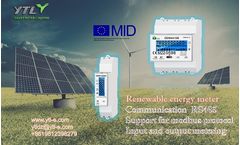
The main sources of power generation include hydroelectricity, solar energy, and wind power. Hydro power generation refers to large-scale projects such as hydroelectric power stations, which are directly connected to the grid and do not require special renewable energy meters in this power generation process.Today, we will focus ...

Reservoirs of larger rivers were and still are being used to produce drinking water, as water reservoirs, for flood protection or to generate electricity through hydropower plants. The latter poses as an important renewable energy source, especially in times of the current energy crisis. ...

There are numerous initiatives in place including: net zero emissions (including carbon and other greenhouse gas releases); energy self-sufficient treatment plants (using renewable energy through solar, mini-hydro, biogas generation, cogeneration and wind); reducing non-revenue water (NRW); reducing air pollution and odour; and recovering nutrients from ...
A recent major refurbishment of the water wheel gave scope for implementing the latest hydraulic technology to improve what was the trust’s first and largest hydro-electric scheme, generating electricity for the visitor centre and to feed the National ...

Some project key facts and findings: Isolated grid system with peak load of 378 MW supplied by multiple generation sources (diesel, biomass, hydro, solar PV, wind) Currently 22% renewable energy with near-term target of 35% and longer term target of more than 50% Grid integration technologies and distributed generation in the form of ...
Overview: Lake Rottach / Lake Gruenten Case Study Summary Application Monitoring groundwater level in dams Location Kempten, Germany Products deployed A850 Telemetry Gateway A723 addIT RTU A753 addWAVE RTU OTT PLS Customer Wasserwirtschaftsamt Kempten Parameter recorded Groundwater level Intro The two bodies of water that we are talking about in this project, lake Rottach, covering 300ha, ...
In 2004, Great Bay Hydro Corporation acquired four generating facilities in Vermont, including the West Charleston Hydro plant which had been out of operation and abandoned for a number of years. ...

For more than 100 years, predicting stream flow has been important for hydro-power generation, irrigation, water supply networks, and aquatic habitat protection. ...

Two massive LANDY hydropower Archimedes screw turbines have been shipped to Totnes UK for the new Totnes Weir hydro-electric project. The scheme will generate green energy for some 400 households. ...
This marks significant progress considering coal generation was more than twice that of wind, solar and biomass just five years ago, with these three energy sources providing 12% more electricity in 2017 than in 2016. ...

As more and more reservoirs are built, concentrated water releasing in the dry season will bring about additional flow compensation and the joint operation of cascade hydro plants is quite important. This paper discusses the water level decline strategy of four cascade hydro plants in the Jinsha River and analyses the relationship between guaranteed output ...

“System costs can be further reduced if wind farms are sited where the timing of wind generation matches electricity demand rather than in areas that maximize wind energy production,” Wu said. “These cost savings are due to avoided natural gas, hydro, or coal generation capacity.” For example, the researchers found that ...
This research identifies 52 mid-winter break-up events in western Canada (1950–2008) and Alaska (1950–2014) and evaluates the hydro-climatic drivers including temperature and precipitation. The identified mid-winter break-up events are primarily located in the temperate zone, defined as the region between 400 and 1,000 winter (December–February) freezing degree-days. Further ...
CO2 from public electricity and heat production (– 70 million tonnes or – 6%) Emission reductions in this category were mainly caused by an increase in renewable energy, especially in a higher share of hydro electricity generation and reduced electricity demand. CH4 from managed waste disposal sites (– 7 million tonnes or – 7%) ...
Analysis of emission trends needs to include climatic factors which can affect behaviour and energy demand. 2014 was the warmest year on record in Europe. Winter in Europe in 2014 was generally much warmer than it was in 2013 (6). Higher winter temperatures in most Member States led to lower heating demand and lower emissions from the residential and commercial sectors. ...

National Renewable Energy Laboratory (NREL) to assist in the design of micropower systems and to facilitate the comparison of power generation technologies across a wide range of applications. HOMER models a power system's physical behavior and its life-cycle cost, which is the total cost of installing and operating the system over its life span. ...
The study investigated the impact of three of the factors influencing water quality in these rivers: impoundment for hydro-electric power generation; agricultural land use; and the presence of glacial and periglacial areas. ...