
Hydrogen Catalyst Articles & Analysis
55 articles found

The first fuel cells were invented in 1838 but they were not used commercially until the NASA space program developed a program using fuel cells to generate power for satellites and space capsules. Discover in this article how the MASS-VIEW® can be used to create a fuel cell. ...
The advancement of green hydrogen technology has positioned it as a cornerstone in the transition to sustainable energy. Central to ensuring the efficacy and quality of green hydrogen is the use of mass spectrometry (MS). This analytical technique is indispensable for verifying purity, confirming isotopic composition, monitoring production processes, enhancing performance, ensuring quality ...

Synthesis of Polycaprolactone Polycaprolactone is a high molecular organic polymer formed by ring-opening polymerization of ε-caprolactone (ε-CL) monomer under the catalysis of active hydrogen initiator system, cationic catalyst, anionic catalyst, coordination polymerization catalyst, etc., by controlling the ...

Catalyst research offers a vital contribution to the production of hydrogen energy. Green hydrogen has so much potential to make an impact on the productivity and efficiency of future sustainable energy sources. So, there is merit in understanding what opportunities could come from catalyst advancements and ...

In the laboratory, ammonia gas is made by heating a mixture of ammonium chloride and hydrated lime, which also produces calcium chloride and water.At high temperature, it will decompose into nitrogen and hydrogen, with reducing effect. It can be oxidized to nitric oxide in the presence of a catalyst.Ammonia can be directly synthesized from nitrogen and hydrogen ...

Electrochemical experiments are generally performed in cells with quiescent electrolytes. This means that the motion of molecules and ions is imparted by the natural convection process. However, forced convection is sometimes necessary in electrochemistry. In these situations, the use of rotating working electrodes is beneficial to generate forced convection. With forced convection, hydrodynamic ...
During the thermal processing of polyvinyl chloride (PVC), a small amount of molecular chain breaks before reaching the melt flow and releases hydrogen chloride, and hydrogen chloride is a kind of catalyst that will accelerate the molecular chain breaking reaction. Therefore, if the newly decomposed hydrogen chloride is not ...
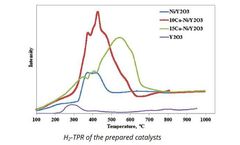
Nickel supported on yttrium oxide and promoted with cobalt were prepared by the wet-impregnation method respectively and characterized using SBET, XRD, FTIR, XPS, TPR, and HRTEM/EDX. CO2 hydrogenation over the Ni/Y2O3 catalyst was examined and compared with Co-Ni/Y2O3 catalysts, Co% = 10 and 15 wt/wt. ...

Nitrogen in Selective, Wave or Reflow Soldering With the help of an innovative gas generation waste heat concept, N2 generation becomes a decarbonization system and protects the environment and your wallet at the same time. In-house generation is also part of the sustainability strategy, which leaves a significantly lower CO2 footprint. Nitrogen (N2) is used in electronics production because it ...
New Technologies in Nitrogen Production On site self production is an environmentally friendly and at the same time inexpensive way of supplying nitrogen. With new hydrogen and heat recovery technologies, the balance can be improved even further. In the chemical and oil and gas industries, nitrogen (N2) is used as an inert and process gas to avoid fires and explosions as well as undesirable ...

Green hydrogen, produced from water electrolysis using renewable energy sources, is being explored as a strategy to reduce the dependence on fossil fuels and decarbonize chemical processes. ...

Green hydrogen, produced from water electrolysis using renewable energy sources, is being explored as a strategy to reduce the dependence on fossil fuels and decarbonize chemical processes. From an environmental standpoint, this approach is extremely attractive given that mild conditions are used during electrolysis and there are no greenhouse gases produced when using the hydrogen in a fuel ...
ByB&W Tek

Platinum catalysts can be very effective at removing hydrogen from air. Platinum promotes the irreversible reaction of hydrogen with oxygen to make water: H2 + 1/2 O2 –> H2O, a reaction that can take off, at great rates, even at temperatures well below freezing. ...

Cobalt occurs mainly as smalite, and cobalt compounds can be used as a catalyst to speed up reactions. NICKEL Atomic symbol: Ni Atomic weight: 58.6934 Atomic number: 28 Electron configuration: 2-8-16-2 Oxidation states: +2, +3 State of matter: solid Heavy metal, ductile Discovered in 1751 by Baron Axle Fredrik Cronsted Boils at 2732°C, melts at 1453°C Notes: Nickel is a ...

Hydrogen – clean and green? Due to its high gravimetric energy density and zero pollution emission, «green hydrogen» is a clean and sustainable energy carrier which is expected to become one of the fuels of the future. Green hydrogen is produced with renewable energy sources, and it can help to mitigate global warming by using cleaner ...
ByB&W Tek

Targets for the re-use of plastic from the recycling of waste are increasingly ambitious: in this regard, chemical recycling is a set of technologies now being developed by researchers that enhances the value of Plasmix but also non-packaging hard plastics. Plasmix, a mix of plastic waste from packaging recycling plant selection processes, is currently mainly converted into energy or goes to ...

Operando spectroscopy is a critical tool in the field of catalysis. It takes its name from the Latin word for “working” as it covers spectroscopic analyses of catalytic reactions under working conditions. This differs from standard spectroscopic methods by combining spectroscopy of the catalyst under working conditions with on-line reaction monitoring. By combining these methods ...
Innovative Solutions Enable Environmental Protection and Economic Efficiency at the Same Time In addition to economic performance, companies are increasingly focusing on sustainability. Energy-saving processes are finding their way into business practice more frequently in order to protect the environment and the climate. But the use of sustainable processes also offers economic advantages. By ...
HYDROGEN Atomic symbol: H Atomic weight: 1.00794 Atomic number: 1 Electron configuration: 1 Oxidation states: ±1 State of matter: gas Alkali metal Discovered in 1790 by Henry Cavendish Boils at-252.8°C, melts at-259.14°C Notes: Hydrogen is a colorless, odorless, tasteless gas that can be flammable or explosive when mixed with air, ...
Inmatec's new KomPact system for self-generation of N2 with a purity of 6.0 includes a PSA nitrogen generator as well as a hydrogen catalyst, housed on a platform to save space. The innovative combination ensures a very low air factor and thus reduces compressed air requirements and energy costs to a considerable extent. ...