
Refine by
Hydrogen Separator Articles & Analysis
25 articles found

In this context, the pyrolysis machine for sale often comes equipped with integrated systems designed to maximize energy recovery and reduce reliance on external power sources. Hydrogen Production Hydrogen, one of the cleanest fuels available, is a key product derived from the combustible gas in pyrolysis. The gas, primarily composed of methane and other ...
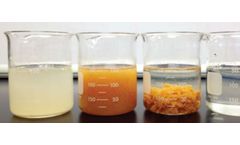
What is hydrogen? Hydrogen is one of the lightest, most abundant chemical elements on the earth. ...

During the smelting process of aluminum alloy, molten aluminum, air and water vapor react to produce hydrogen and dissolve into the molten aluminum. When the molten aluminum solidifies, the hydrogen will be separated from the molten aluminum. ...
All alloying options are designed as multi-functional products, so in addition to their main application, they decrease hydrogen content in the melting process and assist in removing separating non-metallic impurities. ...
Electrolysis has been gaining momentum in recent times as an option for carbon-free hydrogen production from both nuclear and renewable sources. Electrolysis uses electricity to separate water into hydrogen and oxygen inside a unit called an electrolyzer. ...
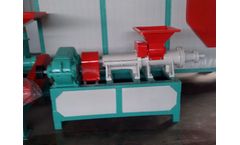
The second is the smoke-free environment, which can separate and filter the smoke generated during the carbonization process. The contained wood vinegar, wood tar, water vapor, and other swimming ions are separated. And at the same time, the generated flue gas is harmlessly treated. ...

CalBio’s technology also separates hydrogen sulfide from the biogas. The biogas is then converted to renewable electricity in a Bloom Energy Server through an electrochemical process. ...
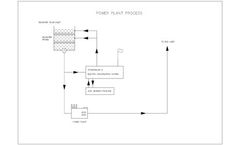
Electrolysis process takes place within the electrolytic cell as per the following equation: At the anode: 2 Cl - 2 e → Cl2 At the cathode: 2 Na+ 2 H2O + 2 e→ 2 NaOH + H2 Overall: 2 NaCl + 2 H2O → 2 NaOCl + 2 H2 Through the electrochlorination in power plant process the package produces the required amount of sodium hypochlorite together with the by-product, ...

Peak Scientific hydrogen generators generate hydrogen via electrolysis. Electricity is provided to a proton exchange membrane cell within the hydrogen generator to split deionized water, into oxygen and hydrogen. Oxygen and hydrogen are successfully separated because the proton exchange membrane ...
Flammable cylinders should be stored separately from oxygen or hydrogen cylinders. 2. Be careful when moving the cylinder and removing the cylinder cap. ...
A Hydrogen generator uses a proton exchange membrane (PEM) to produce high purity hydrogen gas from water. ...

The solution: Next, industrial fuel is separated out of the used oil. Then vacuum distillation removes the lube cut (that is, the fraction suitable for reuse as lubricating oil) leaving a heavy oil that contains the used oil's additives and other by-products such as asphalt extender. The lube cut next undergoes hydro treating, or catalytic hydrogenation to ...

We receive questions of this sort frequently and the questioner is partly right. Peracetic acid (PAA) is formed in an equilibrium mixture with hydrogen peroxide and acetic acid, so in a mixture of PAA, hydrogen peroxide and acetic acid, PAA is being continually formed by the reaction of hydrogen peroxide and acetic acid, and peracetic acid is continually breaking down to reform hydrogen peroxide ...

In 1996 energy company Statoil initiated the world’s first commercial CCS project, pumping separated CO2 back into the undersea sandstone beds it came from. “They did the sums and decided it was cheaper to put the stuff in the ground,” explains geologist Peter Cook. ...
ByEnsia

The important factors that must be considered to obtain a suitable process are the source of the inoculum and its pre-treatment, types of substrates, the reactor configurations and the hydrogen partial pressure. Furthermore, to obtain high-quality hydrogen, it is necessary to integrate an effective separation procedure that is compatible with the ...
Despite the much higher carrier gas flow rates when using hydrogen carrier gas, critical separations were still achieved in most cases and in certain cases were even improved. ...
Laboratories that switch gas supply from helium to hydrogen can see a number of benefits including reduced overheads, faster throughput and even improved separations. ...
Many chromatography labs are therefore looking for alternative carrier gases and for many GC applications, hydrogen provides a good, in some cases better, alternative to helium. The perceived danger of having hydrogen in the lab can be mitigated by using a hydrogen generator which can fulfil the requirements of a lab whilst storing a fraction of ...

The efficiency improvement is understood by better charge carrier separation at the heterojunctions.Keywords: Ag2S nanoparticles, silver sulphide, CdS nanorod arrays, nanorods, cadmium sulphide, heterojunctions, photoelectrochemical water splitting, optical properties, morphology, structural properties, hydrogen, charge carrier separation, thin ...
Hydrogen is first separated from water before being purified. Many Hydrogen generators utilize proton exchange membranes (PEM) coupled with a hydrogen purification systems such as Palladium-diffusion or Pressure Swing Adsorption (PSA). Here we present four methods of hydrogen purification typically employed in ...