
Hydromulching Articles & Analysis
15 articles found

Hydroseeding is a cost-effective way to establish grass growth and generally has a higher success rate, with better-looking results, than traditional hand seeding. The term ‘hydromulching’ is often used interchangeably with hydroseeding, and while they are similar, hydromulching is a distinct process. Hydromulching describes a ...
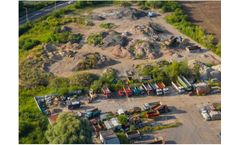
Hydroseeding, also known as hydromulching, involves the application of a slurry consisting of water and mulch that is sprayed over the top of the landfill with specialized equipment. ...
Most industry professionals will be familiar with hydroseeding, or hydromulching, which is the method of planting grass or other plants using a slurry of water, seed, fertilizer, and mulch. ...

While these blankets may require some maintenance, they can be an effective solution for protecting worksites from the effects of winter weather. Hydromulch What's hydromulch? Hydromulch is a mixture of water, mulch, and soil that can be sprayed onto problem areas to help stabilize the soil and prevent erosion. Although ...
Roots from grasses and other plant life can protect against such erosion, especially grass grown with particularly erosion-resistant hydromulch. Jet Agitation vs. Mechanical Agitation One of the biggest decisions you must make when purchasing a hydroseeding or hydromulching machine is what type of agitation system you will need. ...
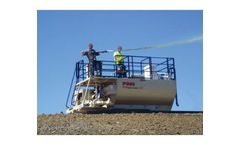
If you’re looking for a quick and effective way to seed a large area, get a lush, green, and healthy lawn, or re-establish vegetation in an area that’s been disrupted by construction activities or wildfire, hydroseeding, or hydromulching as it’s also commonly referred, has probably entered your radar. ...

Minimizing erosion enables the reduction of sediment when the wattles, sediment logs, silt fence, basins, hydromulch, erosion blankets, transition mats, vegetation, etc. are professionally installed & maintained. ...
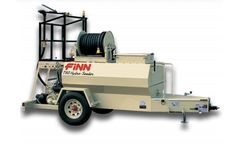
Cover the ground as evenly as possible, laying down a thin layer of hydromulch. For more control and precision, use lower RPMs while spraying, higher RPMs can help you cover more ground, more quickly. Step 5: Caring for Hydroseed After you’ve covered your area with hydromulch, you’ll want to allow about a day for it to dry before you begin watering. ...

Their central role was the installation of 4.5 million square meters (more than 1,100 acres) of hydromulch in rough terrain with difficult access to limit erosion of the soil slopes and minimize impacts to ...
Origin of Hydroseeding The concept of Hydroseeding or hydromulching as it is also known, is credited to Maurice Mandell of the Connecticut Highway Department in the 1940’s.1 Mandell’s simple concept was to mix seed and water and spray that on the areas around Connecticut highways and roads to sow grass after construction to prevent erosion of the soil. ...
And I have one of the biggest machines available. I could use it to hydromulch a landfill 10 times my size. The hydromulcher will substitute for much of the soil that has to be moved. ...
” On flat areas at the airport, High Country Hydroseeding is using its Bowie hydroseeding machines (made by Bowie Industries in Bowie, TX) to spray fertilizer and hydromulch to cover the seed. The seed is first planted with a tractor. ...

Verdyol was formed in Switzerland in 1971, and was responsible for developing the first patent on a cotton and agriculture fiber hydromulch. ErosionControlBlanket.com acquired the rights to the Verdyol name in North America in 2004, with the acquisition of Verdyol Plant Research. ...

Hydroseeding can also be referred to as hydraulic mulch seeding, hydromulching, or hydroseeding. How does it work? The machine that actually does all the work for you is called a hydroseeder. ...
It covers 7,200 square feet per load in a simple, one-step process using seed, fertilizer, and hydromulch. The Randall’s Island Park Alliance (RIPA) found the T60 to be their solution to a difficult challenge. ...