
Illegal Logging Articles & Analysis
23 articles found
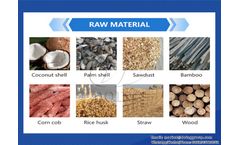
Requirement: Demonstrate the legal sourcing of raw materials, avoiding illegal logging or environmental destruction. The following are some biomass feedstocks suitable for biochar carbonization&pyrolysis: ① Agricultural Waste Crop Residues: Such as rice straw, wheat straw, corn cobs, corn stalks, rice husks, peanut shells, bean stalks, cotton stalks, etc. ...

The benefits to society overall is a reduction in - deforestation, illegal logging, costs of forest management, forest fires, and costs of forest mapping. ...

While originally established for safety purposes, the technology holds promise for helping reduce illegal fishing, boost ship compliance with emissions regulations and more accurately calculate environmental footprints of the products we purchase, 90 percent of which spends time on a ship at some point. ...
ByEnsia

In addition to the regulatory action already taken by the Commission – e.g. on illegal logging, extraction of minerals from conflict zones or corporate transparency on payments made to governments by extractive and logging industries – we will continue to promote sustainable sourcing in policy dialogues and partnerships with non-EU ...
Globally, 50-90 percent of the timber harvested in tropical countries can be attributed to illegal logging. In Ghana, where the study took place, illegal logging accounts for an estimated 80 percent of timber extraction. ...
ByEnsia
The biggest direct threats to reserves are habitat disruption from illegal deforestation, logging, fires and overharvesting caused by chronic poaching or overexploitation of fuelwood and other natural products. ...
ByEnsia

In the context of forests, a lack of transparency and accountability is often associated with problems such as illegal logging and corruption. Similarly, a lack of open and inclusive decision-making often contributes to the marginalization and impoverishment of forest-dependent communities and indigenous peoples. ...
” The EIA report follows a widely publicized April 2013 report from the World Wildlife Fund, Illegal Logging in the Russian Far East: Global Demand and Taiga Destruction, which analyzed Russian customs data to show that in 2010, at least half of the oak exported from Russia to China was stolen from Russia’s forests. ...
Despite these positive steps, illegal logging and associated trade in the Amazon continues. Beyond the negative social and environmental impacts, illegal logging poses a serious problem for businesses producing legal wood products. ...
The industry has long struggled to address the problem of illegal logging, which damages diverse and valuable forests and creates economic losses of up to $10 billion a year. In some wood-producing countries, illegal logging accounts for 50-90 percent of total production. But recent developments indicate that we may be turning a ...
Because of limited funds to cover fiber analysis, we focused on products that had few details about their supply chains, those from companies with controversial reputations, and those from countries where there are significant illegal logging claims. Choosing samples involved judgment calls, and we based our decisions on publicly available information and our ...
For example, some communities in Latin America are actively monitoring their forests and halting illegal logging. Halt the Illegal Timber Trade The forest industry can and should be part of the deforestation solution. ...

Brazil, where deforestation is seen as the main cause of carbon emissions, has set itself a voluntary goal to reduce illegal logging, annually, in the Amazon, to an annual maximum of 3,900 km2 by 2020. ...
Furthermore, forest products companies face new laws designed to crack down on the trade in illegal timber, such as the U.S. Lacey Act, the European Union Timber Regulation, and the Illegal Logging Prohibition in Australia. In a recent high-profile example, Gibson Guitar faced legal action under the Lacey Act for importing ...

Yet these resources are increasingly under pressure and threat due to land use change, rapid urbanization, poorly planned infrastructure development and resource extraction, illegal logging, wildlife poaching and trade, and other factors. In Sub-Saharan Africa, the World Bank has been a major global funder and supporter of biodiversity conservation in the past ...
Yet these resources are increasingly under pressure and threat due to land use change, rapid urbanization, poorly planned infrastructure development and resource extraction, illegal logging, wildlife poaching and trade, and other factors. In Sub-Saharan Africa, the World Bank has been a major global funder and supporter of biodiversity conservation in the past ...
The study describes two approaches used to minimize the risk of sourcing illegal wood. The first approach was to establish strong relationships with the suppliers and the second was to prefer certified wood. ...

Prevent further degradation of already degraded peatlands including: no further intensification of artificial drainage in already drained areas; installation of hazard monitoring and mitigation schemes to avoid and restrain uncontrolled fires and soil erosion; no further expansion of agricultural practices that require drainage (swap drained land use on peat, e.g. oil palm and pulpwood ...
If reducing emissions from deforestation and forest degradation (REDD) is to work effectively, developing countries will need support to build the capacities required for enforcing their own laws and regulations. At present, timber production that violates the developing country’s own laws both acts as a barrier to REDD and costs these countries billions of dollars per year. This paper examines ...

In early December 2004, Philippine President Gloria Macapagal Arroyo 'ordered the military and police to crack down on illegal logging, after flash floods and landslides, triggered by rampant deforestation, killed nearly 340 people,' according to news reports. ...