
Refine by
Industrial Decarbonization Articles & Analysis
27 articles found

As the global maritime industry accelerates its transition toward decarbonization and environmental stewardship, green marinas and eco-friendly shipyards are no longer futuristic ideals—they are business-critical operations that determine long-term commercial competitiveness.For decades, diesel-powered, fully hydraulic mobile boat hoists (Marine Travel Lifts) ...

Sustainable industrial development requires more than incremental improvements in energy efficiency or waste reduction. ...

As electric vehicle (EV) adoption continues to accelerate worldwide, the Li-battery system has become one of the most critical parts of automotive industry, directly influencing overall vehicle performance. At the same time, the increasing Li-battery energy density is making Li-battery safety a growing industry concern, particularly because lithium-ion batteries ...

Meta Description Discover how commercially available methane reduction technologies such as CADAIR’s GC-BLOCK system support coal mines and oil & gas operators in reducing methane emissions, utilizing ventilation air methane (VAM), and advancing industrial decarbonization initiatives. Introduction Methane reduction is increasingly discussed as an important ...
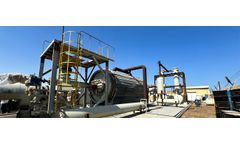
The global pursuit of decarbonization has intensified the demand for technologies that deliver verifiable emission reductions. ...
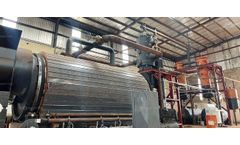
The global shift toward carbon neutrality has opened new economic pathways for industrial recyclers, particularly those operating a tyre pyrolysis plant. ...

Industrial decarbonization is a fundamental pillar in achieving global climate objectives, with water playing a key role in this transition. Its efficient and sustainable use can accelerate the shift towards a low-carbon industrial model, while inadequate management may pose significant obstacles. Water is essential in ...

As we have seen in previous blog posts, decarbonization, understood as the progressive reduction of carbon dioxide (CO2) and other greenhouse gas (GHG) emissions, is a crucial global challenge in mitigating the effects of climate change. In the industrial sector, this process represents a significant transformation, marked by technical, economic, and regulatory ...

Biogas Biogas is a renewable gas produced from organic waste (agricultural, urban, and industrial). Its primary applications are in sectors where electrification is challenging or where replacing fossil fuels is difficult, such as: Industrial processes: Used in high-temperature industries such as cement, steel, and chemical manufacturing. ...
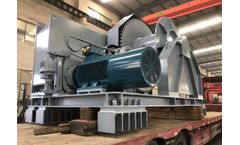
Integration of smart technologies, such as remote monitoring and predictive maintenance systems, is poised to revolutionize the way these winches are operated and maintained, enhancing efficiency and reducing downtime.Furthermore, the exploration of alternative power sources, including electric and hybrid propulsion systems, presents exciting opportunities to enhance the sustainability and ...
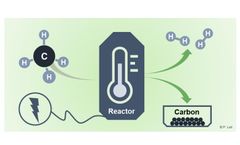
In this regard, hydrogen (H2) is considered as one of the most promising carbon-free energy carriers, since it is already nowadays vastly used in the chemical industry, for instance for refining processes or the production of key chemicals such as ammonia or methanol. In addition, H2 has a huge potential for decarbonizing the steel industry and ...

The United Kingdom has long been known for its robust and diverse industry sector, which has played a pivotal role in driving economic growth and creating employment opportunities. However, like any dynamic sector, the UK industry landscape is subject to constant evolution. In this article, we will explore the current state of the industry sector in the UK, including recent laws and data that are ...

“In DAC, it’s still very much an evolving field, and so I think it’s a very different landscape for universities to play a much more active role,” said Joseph Hezir, who served as chief financial officer and a senior adviser in Obama’s DOE. “Hydrogen hubs or industrial decarbonization, those programs are much more targeted to ...

Decarbonisation is a crucial stake for all companies, given that the industrial sector is responsible for 19% of greenhouse gas emissions in the UK. In 2021 it was directly responsible for emitting 9.4?Gt of CO2, accounting for a quarter of global emissions. While progress has been made in this sector since the 1990s, the manufacturing industry (part of the industrial sector) alone produced 78.4 ...

However, thermal energy storage is a key element in the decarbonization of industrial thermal processes, where more than 80% of the energy consumed in the world is involved. ...
While renewables and energy storage are the backbone of the energy transition to achieve Net-Zero by 2050 in the power sector …, the decarbonization of industrial energy demand remains being a technological challenge and lacks an established roadmap. ...

Summary The massive deployment of intermittent renewables to achieve the decarbonization targets set out in Paris Agreement by 2050, is arising power management concerns while integrating with the power system due to the variability and intermittency of their renewable energy sources. ...

Globally, every industry is accelerating decarbonization initiatives. Buildings and factories are becoming more electrified by replacing fossil-fuel-based heating and processes. As more renewable energy is progressively added to the power grid, the grid itself must take steps to decarbonize. The SF6 greenhouse gas currently has a unique use ...
As a result of global warming concerns, the pressure from governments, shareholders, customers, supply chain partners, and local communities on global cement manufacturing firms to decarbonize operations is mounting at an accelerating pace. Cement is a critical ingredient that feeds the construction industry across the globe. ...
Decarbonizing power generation is pivotal in the fight against climate change. Accounting for circa 30% of global energy related CO2 emissions, the sector is responsible for more emissions than any other industry. Decarbonizing how we generate energy is a mammoth task. Fortunately, we have the technology today to ensure that, with selective ...