
Refine by
Infrared Spectroscopy Articles & Analysis
478 articles found
PICVISA's Role in PLA Sorting The key technology for separating PLA is near-infrared spectroscopy (NIR), which identifies the chemical composition of materials with high precision. ...
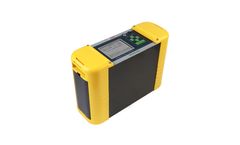
This state-of-the-art portable analyzer integrates Tunable Diode Laser Absorption Spectroscopy (TDLAS), Non-Dispersive Infrared (NDIR), and electrochemical gas analysis technologies to deliver accurate real-time measurements for: High concentrations of CH4 (Methane) Low concentrations of H2S, CO2, and O2 Automatic calorific value calculation Key Features: ...
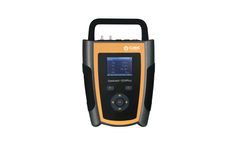
This state-of-the-art portable analyzer integrates Tunable Diode Laser Absorption Spectroscopy (TDLAS), Non-Dispersive Infrared (NDIR), and electrochemical gas analysis technologies to deliver accurate real-time measurements for: High concentrations of CH4 (Methane) Low concentrations of H2S, CO2, and O2 Automatic calorific value calculation Key Features: Highly ...

This study examines water interaction with Cu(211) step edges and how decorating these steps with Pt modifies adsorption behavior on Pt/Cu(211) surfaces. Techniques employed include infrared reflection absorption spectroscopy (IRRAS) and temperature-programmed desorption (TPD) to link surface structure and composition with water adsorption characteristics.Key ...
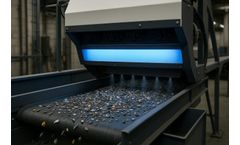
GME Recycling’s optical sorters combine near-infrared spectroscopy, AI-powered classification, and multi-sensor fusion to achieve material recovery rates of 95–99% at throughput capacities unattainable by manual processes. ...
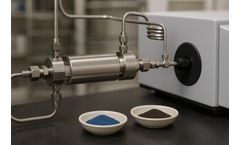
The study analyzes concurrent reactions that compete with the selective catalytic reduction of nitrogen oxides by ammonia (NH3-SCR), namely ammonia oxidation (AMO) and the formation of undesired by-products N2O and NO2, over Cu/SSZ-13 and Fe–Cu/SSZ-13 zeolite catalysts. It evaluates how the method of iron introduction and reaction conditions (dry vs. wet) influence catalytic activity, ...

Beyond mechanical and chemical recycling —which break fibres down at the molecular level— several disruptive technologies are reshaping the sector:Machine vision It uses cameras and algorithms to identify and classify textiles by type, color and pattern, automatically and efficiently.Near infrared spectroscopy (NIRS) Identifies the chemical composition of the ...

Utilising RemScan Technology for Effective Contamination Management The Kuwait Environmental Remediation Program (KERP) is a significant initiative led by the United Nations Compensation Commission (UNCC), Kuwait National Focal Point (KNFP), and Kuwait Oil Company (KOC). This program aims to address the extensive environmental damage from the Gulf War, focusing on both environmental and ...
The STEREO (Effective point-of-use Sterilization of medical equipment using Ethylene Oxide) project was an 18-month research initiative funded by GCRF, aimed at developing an innovative on-demand production system for ethylene oxide (EO) from ethanol. The project brought together researchers from the University of Cambridge (UoC), University of Johannesburg (UJ), and Botswana Institute for ...

The regulatory landscape for methane and industrial greenhouse gas emissions is shifting rapidly. The United States Environmental Protection Agency is strengthening requirements under the Subpart W proposed rule, part of the Greenhouse Gas Reporting Program. The new expectations focus on more accurate quantification, verified measurement methods, and continuous or near continuous detection of ...
ByOPGAL
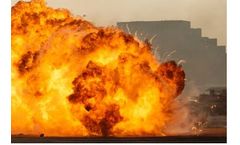
Blooms or bombs? As the global population steadily increases, it is important that sufficient crops are produced each year to provide enough food, clothing, and other products. Crops such as corn, wheat, soy, and cotton receive nutrients from the soil they are grown in. Fertilizers play a crucial role in providing these crops with the nutrients they need to grow ...
ByB&W Tek

l Fluorometric assays: Offer higher sensitivity using fluorescent derivatives. l Near-Infrared (NIR) spectroscopy: Allows rapid, non-destructive estimation of proline levels in intact tissues. ...
Introduction: The New Era of Smart Leak Detection In today’s industrial landscape, leak detection has evolved from a simple maintenance routine to a critical component of safety, compliance, and sustainability. With increasing pressure from regulators, investors, and the public, companies must now monitor and manage leaks in real time, with absolute precision. This is where the Ventus ...
ByOPGAL

Ongoing research is focusing on infrared spectroscopy and NMR (nuclear magnetic resonance) to better understand how structured water behaves in different environments. ...
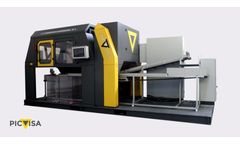
Other companies in the market also stand out for their innovative solutions, helping to improve the recovery of recyclable materials and reduce reliance on virgin resources.Como utilizan la IA los robots de reciclaje para mejorar la gestion de residuos Driven by AI breakthroughs, the waste management industry is undergoing an unprecedented transformation: robots guided by computer vision systems ...

For example, with textile waste, we use artificial vision, which captures and analyzes real-life images, combined with near-infrared spectroscopy (NIR) to identify composition. This technology, mainly represented by our ECOSORT TEXTIL, enables the administration of thousands of tons of textiles annually. ...

This state-of-the-art portable analyzer integrates Tunable Diode Laser Absorption Spectroscopy (TDLAS), Non-Dispersive Infrared (NDIR), and electrochemical gas analysis technologies to deliver accurate real-time measurements for: High concentrations of CH4 (Methane) Low concentrations of H2S, CO2, and O2 Automatic calorific value calculation Key Features: ...
Future Directions Emerging techniques such as liquid chromatography-mass spectrometry (LC-MS) and infrared spectroscopy are gaining traction for rapid and non-destructive fatty acid analysis. ...
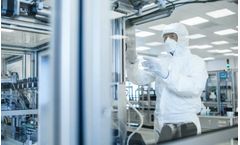
Ensuring workplace safety, environmental compliance, and process reliability requires advanced gas detection solutions. FTIR (Fourier Transform Infrared) spectroscopy offers a comprehensive approach by simultaneously detecting multiple gases, monitoring emissions, and ensuring a safe working environment for employees, even at trace levels. ...

Cut waste, catch problems early, and hit quality targets—biofuel producers use Fourier transform near-infrared (FT-NIR) spectroscopy to make that happen. This real-time tool measures key chemical properties in ethanol, biodiesel, and renewable diesel as production runs. ...