
Refine by
Infrastructure Data Articles & Analysis
114 articles found
Discover the top water tech trials bottlenecks that derail innovation, and learn practical ways to avoid them. This is the second of a three-part blog series on how the Trial Reservoirs Initiative is helping accelerate tech adoption in the water sector and beyond. Want to steal our model? Find out how in our first blog, here. The global water industry is experiencing a boom in tech trials ...
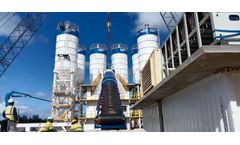
In plants already operating closed-loop wash water recycling systems, integration of scrubber water into the existing treatment infrastructure is technically straightforward.Suppression Technologies and Intelligent Monitoring Integration Dust suppression technologies complement containment and filtration approaches by reducing the dustiness of source materials before they enter ...
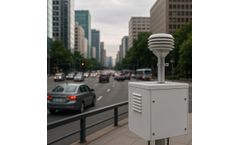
Urban planning increasingly treats air quality as an infrastructure input, leveraging multi-source data to reduce exposure, bolster resilience, and guide investment in healthier, more equitable cities.Key data types and their valuePollutant concentration data: monitoring commonly tracked pollutants include PM2.5, PM10, NO2, O3, ...
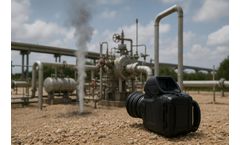
The introduction of EPA OOOOb for new, modified, and reconstructed sources and OOOOc for existing sources represents a 400% increase in the regulated infrastructure and data collection burden.The “Super Emitter” Response Program SERPThe EPA has authorized certified third parties to identify large methane releases using satellite data, aerial ...
ByOPGAL

Modern digital infrastructure depends on fast, reliable data movement. As networks expand, traditional electrical transmission struggles with speed and distance. ...
The demand for high-speed data transfer is growing rapidly due to artificial intelligence, cloud computing, and modern data centers. Traditional optical transceivers are reaching their limits. This is where Co-Packaged Optics (CPO) emerges as a new approach to achieve higher bandwidth, better energy efficiency, and improved system ...
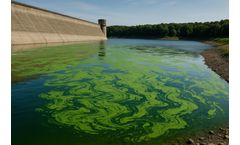
More than 60% of utilities report systems operating beyond their intended lifespan, prompting a shift toward predictive approaches that integrate real-time monitoring data with ecological modeling. In surface water utilities, this involves the deployment of biological digital twins that combine real-time sensor data, weather inputs, nutrient dynamics, and ...

The Tetra Tech High Performance Buildings Group’s white paper, “Computational Fluid Dynamics (CFD) as a Strategic Enabler for AI-Driven Data Centers” examines the application of CFD as an operational and planning tool to understand airflow, heat transfer, and cooling system behavior in modern data centers. ...
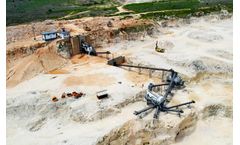
The workforce of today and tomorrow needs skills in data analysis, mechatronics, remote operations, and system troubleshooting. ...

Underground network inspection is a crucial step in ensuring the safety, durability, and efficiency of municipal and industrial infrastructures. Manholes, pipelines, and conduits must be regularly monitored to detect anomalies, prevent breakdowns, and plan preventive maintenance interventions. Thanks to RinnoVision’s advanced solutions, these inspections can now be performed quickly, ...
The inspection of sewer manholes and underground infrastructure represents a major challenge for municipalities and utility companies. ...
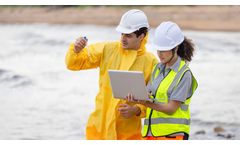
Modern land development, infrastructure, and remediation projects rely on two distinct but connected streams of information: engineering-focused ground data and environmental condition data. ...

The exponential growth of artificial intelligence, cloud computing, and edge computing infrastructure has pushed data center cooling systems to their operational limits. ...

Introduction: The Evolving Landscape of Methane Regulation Methane has long been a focal point in global climate policy — and in 2025, the U.S. Environmental Protection Agency (EPA) continues to sharpen its focus through updates to its Greenhouse Gas Reporting Program (GHGRP). One of the most significant developments is the Subpart W Proposed Rule, which updates the framework for reporting ...
ByOPGAL
The exponential growth of artificial intelligence and cloud computing has transformed data centers from background infrastructure into critical water consumers. ...
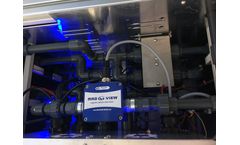
Effective cooling has become one of the most critical design factors for engineers in data center infrastructure and high-performance computing (HPC) ...

These events underscored the importance of real-time data collection and early warnings to mitigate overflow risks and protect both infrastructure and the environment. ...

For decades, Laboratory Information Management Systems (LIMS) have been the digital backbone of quality control, compliance, and traceability in industries such as Water & Environment, Food & Beverage, Chemical and Manufacturing. On-premises platforms have long been trusted for their control and ...
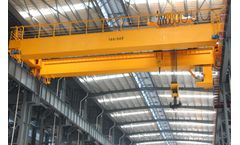
Data Acquisition and Communication Networks High-speed, reliable communication networks are crucial for real-time data feedback. ...

With existing suppliers, streamlined data sharing can help you and your suppliers improve data transparency and visibility. ...