
Refine by
Insect Feed Articles & Analysis
17 articles found

The physical and chemical attributes of the soil act as the initial determinant, influencing the scope of the community that plant roots can directly engage with. Environmental fluctuations, insect activity, and herbivorous feeding exert a significant influence on the microbial assembly accessible to the above-ground parts of the plant. ...
Moreover, these toxigenic fungi occur also in and / or on moist houses, libraries, air conditioners, feed mills, dust, air, insects, temples, banknotes, and computer disks and compact disks (Abdelhamid, 1998, 1999-b, and 2000-b). ...

Thrips, ah. the little insects that can pose annoying issues for cannabis cultivation. Thrips are minuscule, elongated insects that feed on cannabis plants’ sap, resulting in discolouration, crooked development, and decreased yields. ...

By doing so, they play a vital role in a circular economy, upcycling waste into resources that hold significant value for the feed, food, and agricultural industries. Not only can insects provide valuable proteins and fats for these sectors, but they also offer an environmentally friendly alternative to synthetic fertilizers in the form of insect ...
ByBESTMIX
The RICHI pet poultry fish animal pellet feed production line 5t/h is an automated feed plant that refines different feed resources into feed pellets according to the technological formula, as well as gives complete pellet feed for chicken, livestock as well as poultry, fish as well as shrimp. ...
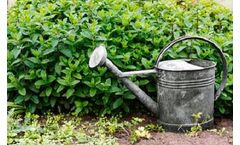
It might even attract some small garden birds for nesting sites once its established and will certainly be home to plenty of insects to feed the birds, so even though it’s not a UK native, we’ve ticked several boxes for adding biodiversity to our garden where there was otherwise just a blank wall. ...

They can attack all the parts of the plant, affecting plant growth in myriad ways and reducing the productivity of crops. They can be transmitted by insects, wind, water, and even people. Herbivores Herbivores can be small pests or mammals which feed on the leaves and other parts of the plant and can even damage entire crops in severe cases. Small pests ...
They can attack all the parts of the plant, affecting plant growth in myriad ways and reducing the productivity of crops. They can be transmitted by insects, wind, water, and even people. Herbivores Herbivores can be small pests or mammals which feed on the leaves and other parts of the plant and can even damage entire crops in severe cases. Small pests ...
Our world population is climbing, and agriculture must rise to the challenge of producing a much larger portion of daily food intake for that population. One option that is gaining popularity is aquaculture, which provides much greater yields at lower inputs than harvesting a dwindling wild population of edible fish. But rising feed ingredient prices are beginning to have an impact on the ...
ByBESTMIX

The chemical – which is an organophosphate insecticide – is primarily used to control foliage and soil borne insect pests on food and feed crops. Background Chlorpyrifos was introduced in 1965 by Dow Chemical Company, and has been used as a pesticide for both food and non-food purposes to control pests such as aphids, armyworms, beetles and various ...

Forest Service.iv A bat colony can take out up to tens of thousands of mosquitos in a night. Bats also prey on insects that feed on crops, saving the U.S. agriculture industry more than $3 billion a year in pesticide costs, according to a Boston University study.v Not only do bats control flying insects, they also pollinate commercial crops, ...

Depending on the current or wave action, this suspended sediment can travel small or large distances and affect water turbidity and marine life, including fish feeding behavior. For example, salmon need clear water to see their prey, such as aquatic insects, yet many of these prey feed on suspended organic particles that cloud the water. ...

Finally, Sanergy converts the waste into saleable products such as renewable energy, insect-based animal feed — the waste is fed to insects, which in turn are packaged as animal feed — and organic fertilizer, which it sells to farms. ...
ByEnsia

Fogging is the most efficient method of controlling these pests, as only small amounts of pesticides get used in the process. Flying Insects: Flying insects affect livestock and damage crops creating an adverse effect on agriculture. ...

Systemic neonicotinoid insecticides are used to control of turfgrass insect pests. We tested their transference into nectar of flowering lawn weeds or grass guttation droplets which, if high enough, could be hazardous to bees or other insects that feed on such exudates. ...
Around the world two billion people eat insects on a regular basis. The current hotbeds — or should we say, hot pots — of consumption include Latin America, central Africa and Southeast Asia. As we look for new ways to feed a burgeoning global population, will entomophagy spread to other corners of the ...
ByEnsia

The lysogenic bacteriophage APSE infects 'Candidatus Hamiltonella defensa,' a facultative endosymbiont of aphids and other sap-feeding insects. This endosymbiont has established a beneficial association with aphids, increasing survivorship following attack by parasitoid wasps. ...