
Refine by
Ion Exchange Articles & Analysis
529 articles found
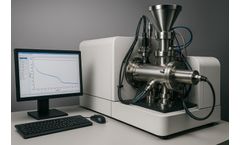
Secondary Ion Mass Spectrometry (SIMS) is a surface analysis technique known for high sensitivity and excellent depth resolution in the analysis of solid materials. It is routinely used to monitor impurities such as dopants in semiconductors and contamination at interfaces in thin films, including solar cells. In these applications, different elements are monitored; SIMS can also monitor isotopes ...

It may also include other steps such as ion exchange softening, lime softening, and special processes. Even with varying treatment processes, all wastewater treatment systems have one goal – to convert wastewater into an effluent that won’t pose any danger to both human health and the environment. ...
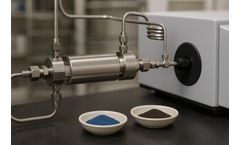
Ion exchange led to partial leaching of copper and the formation of segregated FeOx and CuOx species on the external surface, whereas impregnation preserved a higher intrazeolite copper content and resulted in a more favourable dispersion of iron. ...
Most treatment systems are designed to remove the majority of contamination early in the process. Solids are settled. Particles are filtered. Many dissolved metals are reduced along the way. For years, that level of treatment satisfied most discharge permits. Stricter mercury limits change the design challenge. When discharge thresholds fall into the parts-per-trillion range, the remaining ...
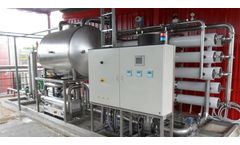
A comprehensive guide to sourcing, treating, reusing, and recovering water across industrial operations Industrial water management is under more pressure than ever. Water-stressed regions, rising production demands, and tighter regulations are forcing plants to rethink how they source, treat, and discharge water. Instead of treating water as a one-way resource that comes in, gets used, and goes ...

This potential difference is closely related to the hydrogen ion concentration in the solution. By applying the relationship between potential difference and hydrogen ion concentration, the pH value can be calculated. ...
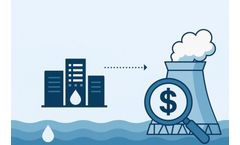
Your facility’s Water Usage Effectiveness (WUE) score looks acceptable on paper. Your cooling towers run reliably. Yet you’re hemorrhaging thousands of gallons of water daily through blowdown discharge while facing mounting pressure to achieve sustainable operations. If this sounds familiar, you’re confronting the hidden inefficiency built into conventional data center water ...

Protein A affinity chromatography is widely used for monoclonal antibody capture, but due to its high cost, researchers are investigating alternatives such as mixed-mode resins, synthetic ligands, and membrane-based affinity systems. Beyond capture, ion-exchange, hydrophobic interaction, and size-exclusion chromatography remain vital polishing steps to ensure ...
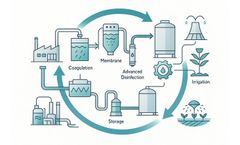
Water scarcity pressures and stricter discharge regulations are driving industrial facilities and municipal operators to implement comprehensive water reuse strategies. However, successful water reuse projects require methodical scoping that matches treatment technologies to specific water quality parameters and operational constraints. This systematic approach prevents costly oversizing, ensures ...

How IC is helping us provide more accurate, reliable, and insightful environmental solutions. Ion chromatography (IC) is an analytical chemistry technique to analyze ions and polar molecules via liquid chromatography. This is a separation technique that uses a liquid mobile phase to separate components of a mixture, based on their interaction with a stationary phase. IC is highly versatile, ...
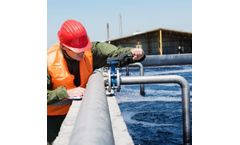
Manufacturing operations produce contaminated wastewater loaded with solids, chemicals, and organic matter that makes direct discharge or reuse impossible. Thankfully, wastewater is treatable using physical separation, biological digestion, and chemical reactions to remove contaminants at each stage. Progressive cleaning turns unusable wastewater into water clean enough for your processes or ...

Electrodialysis (ED) is a membrane-based separation process that uses electrical potential to move charged ions through selective ion-exchange membranes. It's widely used to remove salts or other charged species from solutions, especially in water purification and industrial applications. Role of Cationic Membranes in Electrodialysis ...
ByYASA ET

Common Application Cases of Nanocellulose Nanocellulose can also be used as various medical materials (drug sustained release, medical implants, biological tissue engineering, antibacterial agents, ), ion adsorption and exchange materials, biofunctional materials (immobilized enzyme carriers, DNA marker biosensors, bioimaging, endotoxin adsorbents), etc., and is ...
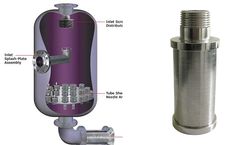
These filter nozzles are commonly manufactured with stainless steel wedge wire screens, offering superior mechanical strength and chemical resistance, which are critical for demineralized water systems, deionization, and water softening. The wedge wire ion exchange nozzle is one of the most reliable components used in ion ...

Modified mica surfaces, functionalized with amine or thiol groups, show promising results in capturing lead, mercury, and arsenic ions. This area of research continues to grow as sustainable materials for water purification become increasingly important. ...
ByMatexcel
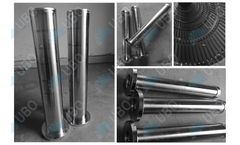
Whether in municipal water treatment plants, industrial filtration units, or ion exchange systems, the stainless steel water treatment resin trap, screen nozzle play a crucial role in maintaining system integrity and preventing media loss. ✔ Water Treatment Resin Trap A resin trap screen filter is a safety device designed to capture and retain media such as ...
Understand the sources, risks, and evolving technologies in the fight against forever chemicals in water treatment PFAS, better known colloquially as “forever chemicals” or “persistent organic pollutants” (POPs), stands for per- and polyfluoroalkyl substance(s). These chemicals contain multiple carbon-fluorine bonds, which are extremely strong and stable, allowing them to ...

Choosing the right eluent in chromatography is crucial—especially for ion exchange chromatography (also known as ion chromatography or IC)—as is the choice of the correct column. ...
ByB&W Tek
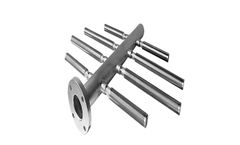
Additionally, wedge wire screen or Vee wire header lateral design ensures precision slot openings, promoting excellent filtration, backwashability, and minimal clogging. These features are vital for ion exchange, media filtration, and wastewater treatment. Hub and Header Lateral Typical Industrial Applications • Water Treatment: Used in multimedia filters, ...
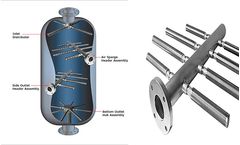
These wedge wire header lateral systems play a critical role in ion exchange, sand filtration, and resin bed regeneration, commonly found in sectors like petrochemical, power generation, and municipal water treatment. ...