
Refine by
Ion Selective Articles & Analysis
127 articles found

LiPo (Lithium-ion Polymer) batteries shredding & sorting machine is the core equipment for the resource recycling of waste lithium batteries. ...
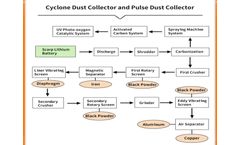
High-voltage (HV) batteries are recyclable. Primarily composed of lithium-ion cells, these batteries are typically utilized in applications such as electric vehicles and energy storage systems, characterized by their high capacity and high voltage. ...

Electrodialysis (ED) is a membrane-based separation process that uses electrical potential to move charged ions through selective ion-exchange membranes. It's widely used to remove salts or other charged species from solutions, especially in water purification and industrial applications. Role of Cationic Membranes in Electrodialysis ...
ByYASA ET

Introduction Ion channels are integral to various physiological processes, including muscle contraction, neurotransmission, and cardiac rhythm regulation. ...
Introduction Ion channels play a crucial role in various physiological processes, acting as gatekeepers for ions across cellular membranes. ...

The process begins with a high-resolution MS1 full scan, followed by the selection of specific parent ions for fragmentation in a collision cell, resulting in MS2 spectra. The quantitative feature is derived from the ion flow chromatogram of the extracted high-resolution parent ion, which reflects the abundance of the peptide ...

Mass spectrometry (MS) is one of the foremost analytical methods of the modern age. It involves ionizing chemical compounds to generate charged molecules or molecule fragments, which are then separated and detected based on their mass-to-charge ratios (m/z). The resulting mass spectrum provides detailed molecular weight, structure, and composition information. Accuracies of within 1-2 parts per ...

Mass Spectrometry Analysis(1) Ionization: Peptides are ionized in the mass spectrometer (such as by electrospray ionization [ESI] or matrix-assisted laser desorption/ionization [MALDI]).(2) Mass Analysis: Ionized peptides are subjected to mass measurement in the mass spectrometer (such as time-of-flight [TOF], ion trap, Fourier transform ion cyclotron resonance ...

Multiple Reaction Monitoring Mass Spectrometry (MRM)The principle of MRM is to set the parent ion information of the target protein in the first mass spectrometry, and set the corresponding daughter ion information in the second mass spectrometry. By selectively collecting the signal of the parent ion-daughter ...

Firstly, in the first stage mass spectrometry (MS1), mixed protein samples are ionized into charged molecules (ions), and then separated by mass-to-charge ratio (m/z). Then, specific ions are selected for the second stage mass spectrometry (MS2) analysis. In MS2, these selected ions are further broken down into ...

These fields together shape a pseudopotential surface that, when configured, allows all ions to pass or selectively allows only ions within a specific mass-to-charge ratio window to pass, thereby effectively separating the ions.TOF mass analyzers separate ions by accelerating them to a voltage of about 20 kilovolts and separating ...

The ion selection device automatically selects peptide ions with larger intensity for secondary mass spectrum analysis, outputs the secondary mass spectrum peak diagram of the selected peptide segment, and identifies the protein by comparing with the theoretical primary mass spectrum peak diagram and secondary ...

Tandem mass spectrometry technology combines two or more mass spectrometers to select and separate different ions at different mass spectrometry analysis stages, thereby improving the specificity and sensitivity of the analysis. ...

The Q-TOF (Quadrupole-Time of Flight) mass spectrometer is a mass spectrometry device that combines quadrupole and Time of Flight (TOF) technologies. It combines the selective ion transmission of quadrupole mass spectrometry and the high resolution, high precision measurement capabilities of Time of Flight mass spectrometry. ...

For more accurate identification of N-glycosylation sites, researchers usually use a technique known as tandem mass spectrometry. In tandem mass spectrometry, selected ions are further broken down and then subjected to mass spectrometric analysis. This technique provides researchers with more information about the selected ions, ...

DDA is a commonly used non-labeled quantitative method that relies on the data-dependent mode of the mass spectrometer to select specific precursor ions for further fragment analysis. This method does not require pre-chemical labeling of proteins or peptides, thus simplifying the sample processing process. ...

Tandem Mass Spectrometry (MS/MS)Through MS/MS technology, selected peptide ions can be further decomposed during the mass spectrometry analysis process to obtain more detailed sequence information, including the exact location of the modification. ...

Technical Principle De novo sequencing usually relies on mass spectrometry (MS) technology, especially tandem mass spectrometry (MS/MS), to determine the sequence of amino acids by measuring the mass differences of peptide molecules under specific fragmentation. In MS/MS experiments, peptide ions are selectively subjected to collision-induced dissociation (CID), ...
Chromatography Further purify the target protein by using techniques such as ion exchange chromatography, affinity chromatography, gel filtration chromatography, reverse-phase chromatography, etc. 2. ...
MS1 Stage Primary mass spectrometry scan to determine the parent ion mass-to-charge ratio of peptide segments. 2. MS2 Stage (Also Known As Tandem Mass Spectrometry, MS/MS) Select specific parent ions for fragmentation to generate daughter ions, and analyze the mass-to-charge ratio of the daughter ions. ...