
Refine by
Ir Analysis Articles & Analysis
68 articles found

Fluorescence and UV spectroscopy are limited to the structural analysis of proteins with chromophores (such as Trp, Tyr, etc.). IR, however, is not limited by functional groups, protein state, molecular weight, concentration, environment, and other conditions. ...

This technique utilizes the infrared absorption characteristics of specific functional groups in monosaccharide molecules to identify and quantify monosaccharides.Basic PrincipleIn ATR FT-IR analysis, infrared light passes through the sample, with some light being absorbed by the molecules in the sample and some being reflected. ...

FT-IR analysis, or Fourier Transform Infrared Spectroscopy, is an analytical chemistry technique used to obtain the infrared spectrum of a substance. This technique is primarily used to identify chemical substances or detect the presence of specific compounds.FT-IR analysis is based on the ability of substance molecules to absorb ...

In the first article in our series about near-infrared (NIR) spectroscopy, we have explained what NIR spectroscopy is. This article focuses on the difference between near-infrared and infrared (IR) spectroscopy, which is often also called mid-infrared (mid-IR) spectroscopy. We will also discuss why NIR spectroscopy might be more suitable than IR spectroscopy for your analytical challenges in the ...
ByB&W Tek

Characterization of mAb intermediates includes primary structure (amino acid sequence, N-terminal/C-terminal sequence analysis, peptide map), secondary or tertiary structure, protein fragments/aggregates, and charge variants, glycosylation modification, post-translational modification, target binding properties and biological activity, etc. ...
This blog post will highlight the basics of FTIR spectroscopy, discussing how it works and what the resulting FTIR spectrum can reveal about your sample. Infrared Spectroscopy Infrared (IR) spectroscopy is one of the most used spectroscopic techniques in analytical laboratories for both qualitative and quantitative analysis. It measures the interaction of ...
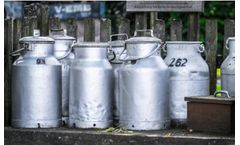
The study was able to give additional validation to the non-invasive IR gas analysis regimen and also compare methane production from different cow species on different diets. IR gas analysis has proven to be useful, inexpensive and rapid in providing accurate measurements for methane from ruminants [15]. ...

It utilizes a broadband (white) light source and the spectral analysis is made over a fairly wide wavelength window, typically some tenths of nanometres. ...
ByOPSIS AB
Several of OPSIS gas analyser types utilize the DOAS technology to establish the concentration of gases. To do so, we need access to absorption spectra in different wavelength regions. A fairly straight-forward way to record spectra is to use a spectrometer.However, the spectrometer device is generally at its best in ultra-violet (UV) and visible wavelength regions. It can also be used in the ...
ByOPSIS AB
The Fourier Transform Infrared Spectroscopy (FT- IR) technique, commonly employed in chemistry, has recently been utilized for structural examination in biomedical studies due to its benefits compared to other methods of analysis (Bazin and Daudon, 2012; Bunaciu et al., 2014). This spectral method is extremely fast, requiring just a very low amount of sample, is ...

The instrument automatically corrects for the color of the fluid, making it accurate for intrinsically light and dark-colored fluids such as in service engine oils. The role of IR spectrum analysis The basic operating principle of LNF is illustrated in Figure 1 below. ...

Traditionally these measurements have been predominantly made by infrared (IR) and gas chromatograph (GC) analysis techniques, supported by techniques for combustion and emissions analysis. However, recent advances in in-situ Tunable Diode Laser and in-line Tunable Filter infrared technologies have expanded the measurement technologies available ...
Spectro Scientific is proud to present our "Oil Analysis Fundamentals Course" presented in partnership with Noria Corporation. The Oil Analysis Fundamentals course provides comprehensive information regarding lubricant analysis and its critical role in increasing machinery life and uptime. The online training course is designed to assist reliability professionals in defining oil sample ...

The structure characteristics results of scanning electron microscopy (SEM), Fourier transform infrared spectrometry (FT-IR), thermo-gravimetric analysis (TGA), vibrating sample magnetometer (VSM), and Brunauer–Emmett–Teller (BET) shows that Fe3O4-CS-L has been successfully prepared. ...
From Fourier transform infrared spectroscopy (FT-IR) analysis, it is confirmed that the biomolecules of T. arjuna bark powder are involved in the biosorption process of Pr(III) metal ions. ...
Productivity and change in MaB-flocs concentration, measured as mixed liquor suspended solids (MLSS) between morning (MLSSAM) and evening (MLSSPM) were monitored and the substructure of the MaB-flocs matrix examined by biochemical analysis and Fourier transform infrared spectroscopy (FT-IR). Results show that MaB-flocs from HRAOPs are assemblages of ...
The materials were characterized by using transmission electron microscopy (TEM), X-ray diffraction (XRD), Fourier transform-infrared spectroscopy (FT-IR), thermogravimetric analysis (TGA), vibrating sample magnetometry (VSM), X-ray photoelectron spectroscopy (XPS) and Brunauer–Emmett–Teller (BET) adsorption. ...
S. hemiphyllum before and after MB adsorption was characterized by Fourier transform infrared spectroscopy (FT-IR), scanning electron microscopy (SEM) and X-ray photoelectron spectroscopy (XPS). ...
The treated and untreated sugarcane bagasse (biosorbent) were characterized by Fourier transform infrared (FT-IR) spectroscopy. Effect of initial dye concentration on percentage removal of dye, equilibrium adsorption of sugarcane bagasse, kinetic studies, breakthrough point equilibrium and desorption of dye from the column material were studied. ...
Infrared (IR) has been around for almost two centuries. It was first discovered by Sir William Herschel in the 1800s. ...