
Refine by
Ir Gas Detection Articles & Analysis
13 articles found
Monitoring carbon dioxide (CO2) is an established requirement in industrial safety systems and in applications where CO2 concentration is used as a control parameter. Most professional CO2 sensors rely on NDIR (Non-Dispersive Infrared) technology due to its measurement stability and long service life. This article explains the NDIR principle, outlines the main advantages and limitations of the ...

Thermal and infrared leak detection cameras are transforming industrial safety. Learn how these technologies enable early detection, regulatory compliance, and operational efficiency across ...
ByOPGAL
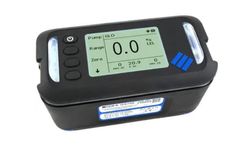
Teledyne Gas and Flame Detection is thrilled to announce the launch of an innovative cloud-based dashboard service tailored for their range of portable gas detectors. Teledyne GDCloud™ combines the power of cloud-based automation with a simple and straightforward user experience to enable fast and secure data sharing, straightforward compliance reporting, and simplified field data ...

Designing an Optical Gas Imaging (OGI) camera involves addressing various technical and functional aspects to ensure optimal performance. Below are general design guidelines for an OGI camera: Spectral Range: Choose an appropriate spectral range for gas detection based on the target gases. Consider the absorption spectra of the gases of interest to maximize sensitivity. ...
ByOPGAL
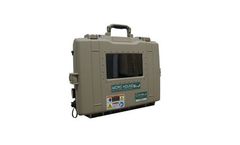
Cerex multi-gas FTIR analyzers are capable of detection of hundreds of gas compounds. ...

Cerex multi-gas FTIR analyzers are capable of detection of hundreds of gas compounds. ...

Introduction Despite the many similarities, there are also many differences between carbon dioxide and carbon monoxide. They are often understandably mistaken as the same gas, however, the distinction between them is crucial when it comes to gas sensing. Carbon Dioxide (CO2) is a chemical compound consisting of one carbon atom and two oxygen atoms. It is a colourless and odourless gas at room ...
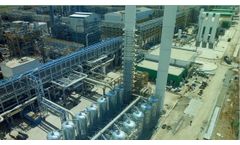
Many industries involve the usage or dismissal of gases as part of its daily routines. Leaks of Green House Gases (GHG) from process and transport systems in these industries contribute to global warming, expose employees to health hazards and risk of explosion, and represent enormous economic losses for the companies involved. “EyeCGas®” – Opgal’s innovative ...
ByOPGAL

One key element for optical gas detection is an IR-source providing a high and stable optical output power, based on low electrical power consumption. ...

The advanced Model IR400 Point IR Combustible Gas Detector from General Monitors features an industry-leading three-second T90 response time to the presence of combustible hydrocarbon-based gases, which allows plant operators to respond quickly to gas leaks and avoid potential accidents. ...

The operator will not know unless the flame is detected. Gas Detection Technologies Gas detection represents the first line of defense in the case of a hydrogen release. ...
For example, the typical maximum exposure limit for Hydrogen Sulphide is 10ppm in most countries. Gas Detection Technologies Catalytic/Combustible Gas Sensors (CGS) detect hydrocarbon and non-hydrocarbon gases. ...
Foremost of these new technologies are non-dispersive infrared (NDIR or simply IR) optical gas detection devices that sense the presence of flammable hydrocarbons based upon their tendency to absorb infrared energy in a certain wavelength. ...