
Refine by
Irrigation Management Optimization Articles & Analysis
14 articles found

By integrating climate information, sustainable land management practices, and innovative technologies, climate-smart agriculture promotes resilience and sustainability in agricultural systems. ...
ByJXCT

For instance, gardeners can plan their planting schedules based on weather forecasts, while hikers can determine the best time for their excursions. Optimizing Irrigation and Crop Management For agricultural applications, outdoor weather stations play a vital role in optimizing irrigation and crop ...
This granular information empowers farmers to make informed decisions regarding irrigation, fertilization, and crop management, optimizing resource utilization and maximizing yields. ...
Soil moisture levels fluctuate significantly over time and space, influenced by factors such as rainfall, evapotranspiration, irrigation, and soil type.Measuring soil moisture is crucial for various reasons:Optimizing irrigation schedules: Accurate soil moisture data allows farmers and gardeners to irrigate their crops and plants effectively, ...
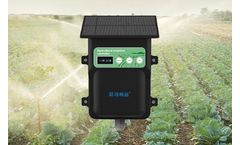
The V3 Irrigation Controller offers a cutting-edge solution that simplifies and optimizes irrigation processes. ...
Water quality sensors have revolutionized the way we manage and monitor water resources. They provide real-time data on various parameters that determine the health and suitability of water bodies, enabling efficient decision-making and effective resource management strategies. ...
This article explores the benefits and applications of water quality sensors in improving irrigation practices for optimal water management in agricultural settings. Leveraging Water Quality Sensors for Optimal Irrigation Practices 3 Understanding Water Quality Parameters: Water quality plays a significant role ...
Manna Irrigation offers a customized cloud-based, sensor-free software solution that helps growers and corporations optimize irrigation and monitor crop growth. Why Choose Manna Irrigation? Optimized Irrigation Maximize irrigation efficiency to enhance production ...

As viticulturists and grape growers know, understanding current and future soil moisture content is a prerequisite for taking actions to reduce crop variability, optimise water usage, and tackle irrigation problems. Adequate soil moisture is critical for ensuring fruit quality. Water stress and over-vigorous growing conditions can result in inferior fruit quality and reduce profitability. ...

Most farmers empathize with environmental concerns and have taken stewardship roles in water conservation and land management to reduce runoff. However, the farmer’s business mission is to optimize the yield and quality of their crops, which can be accomplished by optimizing water usage. For crop irrigation, ...

Estimating water requirements of plants cultivated in greenhouse environments is crucial, both for the design of greenhouse irrigation systems and the improvement of irrigation scheduling. Spinach is one of the main vegetables sold as ‘ready-to-eat’ bagged produce; it is very sensitive to water stress and thus requires accurate irrigation. In this work, a water balance model simulating the ...
Egypt’s water resources are severely constrained. This calls for increasing the water use efficiency by improving irrigation management practice, as the agriculture sector is the main user of water resources. Much of the irrigation infrastructure is elderly and in need of rehabilitation. The irrigation improvement program (IIP) is one of the large-scale projects to help Egypt to sustain its ...
Like many irrigation schemes in Central Asia, the one in Khorezm faces a two-fold challenge: on the one side, the severe problems inherited from the past need to be remedied and on the other side, the rising supply–demand gap driven by sharpening competition for water and climate change must be dealt with. Located in the lower part of the Amu Darya basin, Khorezm irrigation and drainage ...
Abstract Irrigation water management has to do with the appropriate application of water to soils, in terms of amounts, rates, and timing to satisfy crop water demands while protecting the soil and water resources from degradation. In this regard, sensors can be used to monitor the soil water status; and some can be used to calculate irrigation ...