
Refine by
Irrigation Optimization Articles & Analysis: This-Year
4 articles found
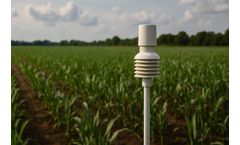
Humidity sensors measure atmospheric water vapor concentration to forecast crop water loss and optimize irrigation timing. As relative humidity declines, vapor pressure deficit rises, increasing crop transpiration and irrigation requirements. ...

Abstract Agricultural irrigation systems represent complex physicochemical environments capable of supporting persistent microbial populations. These microbial communities establish on wetted infrastructure surfaces and contribute to long-term system instability, including emitter flow restriction, biofilm formation, and infrastructure degradation. Oxidation-reduction potential (ORP) serves as a ...
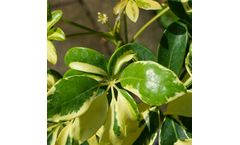
AbstractHuanglongbing (HLB), also known as citrus greening disease, represents one of themost severe biological threats to citrus agriculture globally. Caused by thephloem-limited bacterium Candidatus Liberibacter asiaticus, HLB disrupts vasculartransport systems and leads to progressive tree decline and mortality. Whiletransmission is primarily associated with the Asian citrus psyllid vector, ...
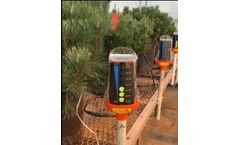
Dr. Alec Kowalewski, Professor of Sustainable Urban Landscapes, and Samantha Leffler, M.S. Student, at Oregon State University are studying plant stress responses to various irrigation schedules using SAGE, a soil water stress visual insight tool developed by Stevens Water Monitoring Systems. SAGE is a simple, innovative device powered by two AA batteries that connects a gypsum block in the root ...