
Refine by
Laboratory Data Management Articles & Analysis
100 articles found
Looking for alternatives to reduce rework in quality control? Rework in quality control is a reality faced daily by many food and beverage industries. Each step redone, each analysis repeated, and each batch retained generates extra costs, wasted time, and often delays in deliveries. Digitalizing quality processes can change everything. It’s a smart, effective way to take ...
In today’s high-stakes environment, there’s no room for guesswork—laboratories need precision, speed, and control. That’s where quality indicators and visual dashboards come in. These powerful tools are game-changers for industries where accuracy is non-negotiable—whether it’s environmental testing, food safety, or industrial analysis. Integrated into a ...

Digital transformation in laboratories has brought a new challenge to quality control teams: how to organize the large volume of data generated daily? Structuring laboratory data efficiently is no longer a competitive advantage – it is a necessity to ensure agility in responses, reduce rework and make more assertive ...

For decades, Laboratory Information Management Systems (LIMS) have been the digital backbone of quality control, compliance, and traceability in industries such as Water & Environment, Food & Beverage, Chemical and Manufacturing. On-premises platforms have long been trusted for their control and ...
In a bold move to reshape the global Laboratory Information Management System (LIMS) market, Confience has acquired Labsoft, a prominent LIMS provider in Latin America, bringing together two industry leaders with a shared vision, complementary technologies, and a relentless drive to lead. Labsoft brings several advanced product capabilities, and Confience will leverage the technology of both ...
In modern laboratories, efficiency, accuracy, and traceability are non-negotiable. ...

New features make the latest version of the OMNIS analytical data management system more powerful than ever Client/server networks for up to 1000 clients, working offline for 96 hours with automatic synchronization of your data to the server, and the possibility to use the services of Amazon and Microsoft to host OMNIS in the cloud are the ...
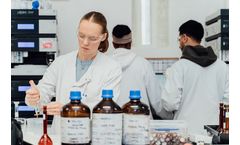
Data: Broughton’s data from multiple sites and clients can be accessed and managed from anywhere in LabHQ’s secure and compliant web-based platform Sample Management: LabHQ’s streamlined workflows and sample tracking ensure consistent sample management from submission to CoA release. ...
ByLabHQ

Laboratories today face mounting pressure: do more with less. The solution? Automation. By integrating a modern Laboratory Information Management Systems (LIMS) with instruments, enterprise systems, and automating calculations, labs can streamline operations and boost efficiency. This isn’t just about keeping up—it’s about gaining an edge. Automation modernizes workflows, ...

ESdat Data Management System for Environmental Professionals ESdat, developed by EScIS, is an intuitive and user-friendly solution that helps environmental scientists and engineers manage a wide range of environmental data. ESdat compiles data from laboratories, field programs, ...
The LIMS has not only reduced the workload on laboratory staff but also minimized downtime, enhancing overall productivity and operational continuity. Fieldale Farms, a family-owned business founded over 50 years ago in Northeast Georgia, has grown into one of the world’s largest independent poultry producers. Despite its growth, the company remains rooted within a 60-mile radius of its ...
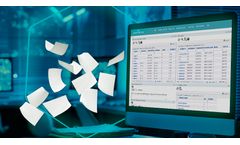
Quality Control (QC) Labs require stringent adherence to the identification and classification of samples, the rules of testing along with the historical tracking of data for evaluation and trending. A Laboratory Information Management System (LIMS) provides a host of features that are greatly beneficial to QC labs in virtually any industry. LIMS ...
EDDs are designed in specific formats to ensure data can be efficiently imported into environmental data management systems (EDMS) without manual re-entry or transcription errors. ...
Software as a Service (SaaS) laboratory information management systems (LIMS) have become increasingly popular for organizations across the industry spectrum. A SaaS solution allows an organization to deploy the LIMS without the need to invest in servers or ancillary software. This is highly beneficial for companies with limited IT resources, as the SaaS provider monitors and manages the ...

A manufacturing entity with a rapidly growing network of 20 sites globally and counting, faced major obstacles in streamlining its laboratory data management. Each of its laboratories relied on a disparate set of tools—from Excel and Google Sheets to custom databases, resulting in a lack of standardization. ...

The Pace Analytical Laboratory – Building Sciences Division, Pittsburgh location specializes in the isolation and identification of waterborne pathogens with expertise in testing for Legionella, the bacteria responsible for Legionnaires’ Disease. Water samples are received from all over the United States and ...

Many laboratories choose, or are required to, be certified to the standards of the NELAC Institute’s (TNI) NELAP regulatory compliance. TNI standards are modeled after ISO 17025, with a deeper focus on requirements specific to environmental laboratories. Compliance with either standard gives organizations a competitive advantage by demonstrating their ...

Good Manufacturing Practices (GMP), ensure manufactured products like food, cosmetics, chemicals and pharmaceuticals are consistently produced and controlled according to set quality standards. In the U.S., the FDA enforces these regulations. GMPs are far-ranging and apply not only to testing, but to the full lifecycle of a product, from manufacturing and processing to packaging. A Laboratory ...
What is traceability in food safety testing? Traceability means a complete understanding of today’s complex food chain and testing at control points where contamination is likely to occur. Understanding the source of all raw ingredients, the CoA (Certificate of Analysis) report, other test results, and all associated documentation is critical. Globally sourced food faces challenges in ...
Successful businesses are always concerned with maximizing resources, improving processes, and increasing profits. For busy laboratories, automation can help. Confience has led hundreds of clients through the design and implementation of Laboratory Information Management Systems (LIMS) to positively affect their bottom lines. One of the key advantages of a LIMS is its ability to create cost ...