
Refine by
Laboratory Fermenter Articles & Analysis
13 articles found

Microbial fermentation is a cornerstone of food science and biotechnology, enabling the production of diverse food products, from traditional fermented foods to modern functional ingredients. ...

As the demand for biopharmaceuticals, biofuels, and other bioproducts continues to rise, a deeper understanding of upstream processing in fermentation has become increasingly vital. The Role of Upstream Processing In the context of fermentation, upstream processing includes a variety of activities that occur before the actual fermentation ...

There are three primary methods of antibiotic production: natural fermentation, semi-synthetic, and synthetic. Natural fermentation involves the cultivation of microorganisms such as bacteria or fungi in a growth medium to produce antibiotics. ...
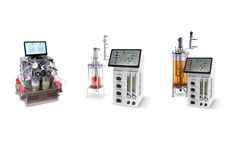
Are you looking for a custom bioreactor solution for your laboratory? Look no further than our range of benchtop bioreactors! Our bioreactors may be custom designed to create the ideal growth conditions for your application. ...

Biotechnology is a process that utilises enzymes and microorganisms to produce specific products through the use of fermentation under controlled conditions. Examples of products which are produced this way and are used within the beauty industry include hyaluronic acid and resveratrol.3 To obtain these compounds directly from plants would take a lot of water, energy, land and ...
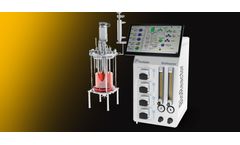
Our benchtop bioreactors are suitable for microbial fermentation (fungi, yeast, or bacteria) and cell cultivation (mammalian or plant cells) processes. ...

It’s no secret that one of the biggest challenges biotech companies face is mastering the jump from lab-scale development to full-scale manufacturing. Reaching full-scale production at the target price, quality, and timeline is a stumbling block all too common to the biotech industry and, in many cases, has meant that potentially world-changing products are never fully realized, even after ...

PFA (perfluoroalkoxy) tubing is a type of fluoropolymer tubing that many industries make wide and diverse use of. We can think of PFA tubing as a combination fluoropolymer that combines the strengths of both PTFE and FEP tubing, allowing users to leverage the attributes of both fluoropolymers. Because PFA tubing was specifically created as an improvement to existing fluoropolymer tubing, many ...

Volatile fatty acid (VFA) production stimulated by saponin (SP), an environmentally friendly bio-surfactant, was investigated during sludge alkaline fermentation in laboratory studies and pilot applications. The combined use of SP and pH 9 condition significantly enhanced VFA production to approximately 425 mg COD/g VSS, which was 4.7-fold of raw sludge and ...

The Cambridge, Massachusetts–based company where bioplastics take shape in laboratory-scale fermentation chambers is one of a growing number of businesses and institutions working to develop cost-competitive, more environmentally friendly replacements for conventional plastics, which are made from fossil fuels, fail to decompose and are turning our oceans ...
ByEnsia
A series of batch experiments investigating two different pH control strategies, initial pH adjustment and continuous pH control, have been carried out in large laboratory-scale reactors with working volumes of 30 L. In both cases, pH was varied between 5 and 7.5. ...

Six yeast strains that included; three Pichia anomala (P.aS12, P.aS14, P.aS16) and three Pichia kluyveri (PS7Y1, PkS4Y3, PkS13Y4); lactic acid bacteria (LAB) that included six strains identified as Leuconostoc/Weissella (BFE 6997, 6989), Homofermentative Lactobacillus spp. (BFE 6853, 6823), Lactobacillus spp. Heterofermentative (BFE 6812) and Enterococcus (BFE 6803) were used as starter cultures ...

Sampling techniques for different types of samples will also be described. Laboratory identification Microbiology laboratories initially place bacteria into specific groups based on Gram staining results. ...