
Refine by
Laboratory Fluid Articles & Analysis
11 articles found
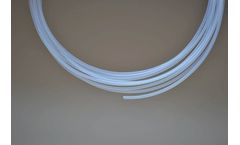
Fluoropolymers have long been the backbone of high-performance tubing solutions across multiple industries. While materials like PTFE and FEP tend to dominate discussions, one material that often goes unnoticed despite its excellent properties is ETFE (Ethylene Tetrafluoroethylene). Standard ETFE tubing offers a unique combination of strength, chemical resistance, and cost-effectiveness, making ...

Like microscopes, centrifuges come in many variations. It can be challenging to pinpoint precisely which kind of centrifuge you need when there are things like rotor type and size, tube capacity, unit size, speed and refrigeration to consider. We are here to help you learn about the differences in centrifuges, as C & A is a leader in medical equipment designed for ease of use and ...

Publication: Woodson, C.B., F. Micheli, C. Boch, M. Al-Najjar, A. Hernandez, L. Vera, S.G. Monismith and J. Torre. 2018. Harnessing environmental variability as a climate change adaptation for small-scale fisheries. Conservation Letters. e12609. ...

Some can be done with direct reading instruments, others may require obtaining a sample for laboratory analysis. Natural Gas The highest priority is if it smells like natural gas. ...

Especially when particular kinds of waste are involved, from solids to liquids like infectious sewage water and fluids coming from laboratories. As stated in the book “Greening Health Care: How Hospitals Can Heal the Planet”, published by the Oxford University Press: «While hospitals have perhaps the most complex waste streams of any industry - plastic, ...

The hydrodynamic parameters at the liquid/gas interface were calculated by computational fluid dynamics (CFD). In the laboratory-scale reactor, the O2 mass transfer coefficient was found to depend on the stirring rate (rph) as follows: KL,O2 = 0.016 + 0.025 N3.85. ...

Introduction PID is the abbreviation for “Photo-Ionization Detector”. A PID is a hand-held, personal, or fixed wall mounted detector that measures a broad range of volatile organic compounds (VOCs) and some inorganic compounds in the parts-per-million (ppm) to parts-per-billion (ppb) range. It gives a continuous read-out and can alarm when concentrations exceed user-defined set ...
These projections are based on quantitative projections of precipitation, potential evapotranspiration, and temperature trends driven by simulations from the latest IPCC AR4 climate models (Community Climate System Model (CCSM), Geophysical Fluid Dynamics Laboratory (GFDL), UK Met Office Hadley Model (HadCM3), and Parallel Climate Model (PCM)) under two specific ...
Applying PELHYDT technology, which allows for high rates of removal of mechanical obstructions, it is possible to achieve operating fluid pressures in the order of 103–104 bars, a velocity of 100 m/s, a deformation acceleration of the model material structure of 106–107 m/s2, and high-frequency hydraulic shock waves with a frequency of 103–104 Hz. The applicability of this ...

Army Construction Engineering Research Laboratory's (CERL) pyrolysis of energetic materials, U.S. Army Research Laboratory's supercritical fluid technology for nitramine recovery, U.S. Army Research and Development Engineering Center's (ARDEC) single- and multi-base propellant recovery technologies, Naval Surface Warfare Center (NSWC) ...

The flow pump can be used to infuse fluid into or withdraw fluid from a laboratory sediment specimen at a constant volumetric rate in order to obtain data that can be used to calculate permeability using Darcy´s law. ...