
Laboratory Membrane Articles & Analysis
34 articles found

What is Membrane Distillation? Membrane Distillation (MD) is a relatively new and promising separation technology that is an alternative to more energy intensive methods such as reverse osmosis or distillation. MD is a thermally driven process where only vapor molecules transfer through a hydrophobic (water repellent) microporous membrane. A typical membrane distillation ...
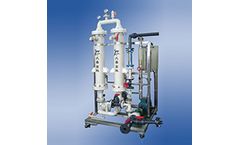
The membrane area of CMP pilot machine has the following types: 0.1 m², 0.2 m², 0.5 m², 1 m², 2 m², 3 m², 4.5 m², 5 m², 6 m², 6.5 m², 8 m², 9 m² FEATURES OF CMP PILOT MACHINE Due to higher membrane velocity, reduce the accumulation of pollutants in the membrane surface, increase membrane flux. Good chemical stability, strong acid, ...
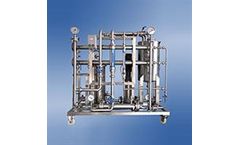
In order to meet the ceramic membrane manufacturers of scientific research institutes and enterprises in the early research and development of feed liquid amplification, and we specially design and develop small & pilot machine, which can easily avoid many uncertain factors in the transformation process. OVER VIEW OF OMP PILOT MACHINE OMP pilot machine includes ultrafiltration(UF), ...

In the second WWTP, the percentage of cultivable resistant E. coli did not display a considerable change. During laboratory-scale membrane filtration of WWTP effluents using ultrafiltration (UF) and nanofiltration (NF) membranes, all E. coli, including those resistant to antibiotics, were removed completely. ...

Non-distillation methods include ion exchange, and processes such as reverse osmosis, which uses membranes to filter salt. One concern associated with reverse osmosis technology is biofouling, the accumulation of microorganisms, plants, or algae on wet surfaces. ...

What Are Membranes? Membranes are filters used to separate different substances. They are used for a variety of applications throughout many industries, including wastewater treatment, food & beverage processing, pharmaceutical manufacturing and laboratory operations. “A membrane is a thin layer of semi-permeable ...
This study focuses on the use of fluidized glass beads as turbulence promoters in a laboratory-scale anaerobic membrane bioreactor treating municipal wastewater at 20 °C. The addition of fluidized glass beads into an external tubular ceramic membrane enabled the operation at low crossflow velocities of 0.053–0.073 m/s (mean fluxes between 5.5 ...
The work includes manufacturing ceramic membranes with dimensions of 15 by 15 cm and 2 cm thickness. The membranes were made from low cost materials of local clay mixed with different sawdust percentages of 0.5%, 2.0%, and 5.0%. ...
Extractive membrane biofilm reactor (EMBFR) technology offers productive solutions for volatile and semi-volatile compound removal from water bodies. ...
The effect of calcium removal by water softening (<1.0 mg Ca2+.L−1) under real-world drinking water conditions on biofilm formation was studied in a pilot plant with reverse osmosis (RO) membranes and in a laboratory-scale biofilm production unit (BPU) with plasticized polyvinyl chloride (PVC-P) and glass as substratum. The results showed a halving of the ...
The removal of 15 organic micro-pollutants (OMPs) in synthetic municipal wastewater was investigated in a laboratory-scale mesophilic anaerobic membrane bioreactor (AnMBR) using ultrafiltration and AnMBR followed by nanofiltration (NF), where powdered activated carbon (PAC) was added to enhance OMPs removal. ...

Abstract As it has already been published and demonstrated, one of the main causes of membranes failures is related to a poor plant pre-treatment. Data from more than 600 autopsies demonstrated that both biofilm and colloidal matter are the most common components on RO (reverse osmosis) membranes fouling, therefore, main lack on membranes ...
Genesys Membrane Products (GMP) laboratory has developed during last decade more than 600 autopsies of membranes from all over the world. ...
Abstract Within the lifetime of most reverse osmosis (RO) systems some fouling will adversely affect membrane performance.One of the major foulants identified on lead membranes during a decade of membrane autopsy at the Genesys Membrane laboratory is biological fouling (biofouling). ...
This study assessed an alternative concept for co-treatment of sewage and organic kitchen waste in Vietnam. The goal was to apply direct membrane filtration for sewage treatment to generate a permeate that is suitable for discharge. The obtained chemical oxygen demand (COD) concentrations in the permeate of ultrafiltration tests were indeed under the limit value (50 mg/L) of the local ...

Avista Technologies proposed off-site cleaning trials to determine the most effective cleaning regime. Laboratory Cleaning Study Membranes were sent to Avista Technologies’ laboratory in the UK for cleaning evaluation. ...
Pressure on scarce fresh water resources can be reduced by treating and reusing brackish water by advanced membrane treatment technologies. In this study, brackish water originating from effluent discharge of a local coal mine, seawater, groundwater and salt water swimming pool is treated by a laboratory-scale vacuum membrane distillation (VMD) ...
Real sewage was continuously treated by a laboratory-scale anaerobic submerged membrane bioreactor (AnSMBR) for over 160 days. Results showed that around 90% of chemical oxygen demand, and 99% of turbidity and total suspended solids in the sewage could be removed by the AnSMBR system. Membrane flux sustained at 11 L/(m2 h) was ...
In this study, three laboratory scale submerged membrane bioreactors (MBRs) comprising a conventional MBR (C-MBR), moving bed MBR (MB-MBR) and anoxic-oxic MBR (A/O-MBR) were continuously operated with synthesized domestic wastewater (chemical oxygen demand, COD = 500 mg/L) for 150 days under similar operational and environmental conditions. ...
A laboratory staged anaerobic fluidized membrane bioreactor (SAF-MBR) system was applied to the treatment of primary clarifier effluent from a domestic wastewater treatment plant with temperature decreasing from 25 to 10 °C. ...