
Refine by
Land Degradation Articles & Analysis
112 articles found

Degraded soils and declining land productivity have become pressing concerns in agricultural landscapes. ...

Why Sustainability Matters Now By 2050, food production will need to double to feed nearly 10 billion people. Yet resources are shrinking: Europe alone loses €28 billion in crops annually from extreme weather, over half from drought. Agriculture already consumes 70% of global freshwater, while the EU wastes nearly 59 million tonnes of food a year. For vegetable growers and processors, ...
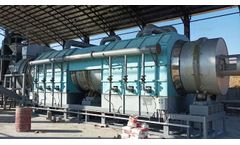
These emissions, if left uncontrolled in traditional burning methods, contribute to respiratory issues and ecological degradation. Some units incorporate flue gas recirculation and ceramic filtration, enabling compliance with international environmental standards. ...

Floods are one of the most devastating natural disasters in India, causing not just environmental degradation but also massive economic loss. According to the Central Water Commission, India loses nearly ?6,000 crore every year due to floods and river erosion (CWC Annual Report 2022). West Bengal, owing to its extensive riverine network and monsoonal rainfall, is one of the most flood-prone ...

When these materials are discarded improperly, they contribute to land degradation, air pollution, and increased greenhouse gas emissions. ...

Environmental compliance refers to the adherence to environmental laws, regulations, and standards that protect the environment from pollution, degradation, and over-exploitation. It requires industries to follow legal guidelines to minimize their environmental impact. 2. ...
This approach minimizes environmental degradation and allows for the regeneration of forested areas, thereby helping maintain ecological balance. 3. ...
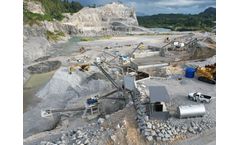
This contributes to greenhouse gas emissions and can have broader environmental implications. Land Degradation The extraction and processing of stone materials can lead to land degradation and soil erosion, affecting local ecosystems and biodiversity. 2. ...
Long-Term Impact: Biochar has long-lasting effects in the soil, with benefits persisting for several years after application. Its slow degradation rate ensures continuous improvement in soil quality and fertility over time, making it a valuable investment for sustainable land management. ...
The potential to produce biochar on-site allows for immediate application to fields, maximizing its beneficial effects on soil structure and microbial activity.2. Forestry and Land Management In forestry and land management applications, mobile biochar machines provide a sustainable means of utilizing forest residues, invasive species, and biomass waste for ...
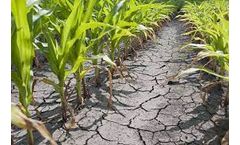
Imagine this: You are a farmer in the Middle East, where the sun burns like a relentless forge. Every day you hope for rain, but all that comes is dust and more heat. Welcome to water scarcity and agriculture in the Middle East, an everyday reality faced by millions. This is not just about farmers sweating under a scorching sun or barren fields stretching as far as eyes can see. It is also about ...
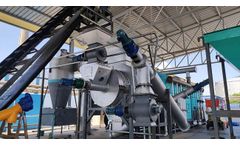
Improper disposal can lead to pollution and land degradation. As such, finding sustainable management solutions for EFBs is imperative. ...

A bit of a background The increase of food production across the years has been mainly due to higher yields resulting from greater inputs like fertilizers, water, pesticides, and other technologies of the “green revolution”. But even if those practices led to enormous gains in food and helped improve food security, they also had greater negative impacts on the environment, putting the ...

A safe and low-impact energy source Sunlight is free, infinite and easily accessible, unlike fossil fuels, which need to be mined, extracted and transported. These processes cause serious land and ecological degradation, and carry the risk of disasters such as oil spills. ...

Goal 15: Protect, restore and promote sustainable use of terrestrial ecosystems, sustainably manage forests, combat desertification, and halt and reverse land degradation and halt biodiversity loss Globally, one fifth of the Earth’s land area (more than 2 billion hectares), an area nearly the size of India and the Russian Federation ...
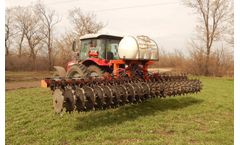
About 6.5 million hectares of agricultural land in Ukraine are either degraded or unproductive. Above mentioned data are provided by the Food and Agriculture Organization of the United Nations. ...
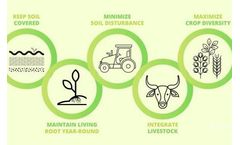
The term “regenerative agriculture” is gaining prominence in climate-related conversations. It dates back to the 1980s when Robert Rodale coined the term, “regenerative organic agriculture” as way to express that organic should be more than simply avoiding chemical inputs. The term has been defined and re-defined by many different authors, sometimes describing very ...
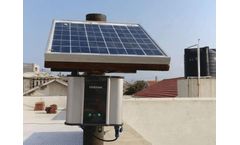
Overview Gujarat Tourism association wanted to monitor the effect of increased tourism on the air quality of the tourist spots in real-time. Oizom installed Polludrone at 5 major tourist spots. The solution gave data of particulates generated, harmful gases released and increase in temperature. Gujarat Tourism was able to analyze the environment’s effect on the tourists as well as the ...

Yolande Bain-Horsford, Grenada’s minister of Agriculture and Lands, recently said: [Island nations] must face the harsh reality of the challenges facing the [agricultural] sector, which include land degradation, lack of sustainable farming practices, climatic variations, and droughts. ...
The current projections only encompass the rest of 2019, but long-term concerns are arising over drought-associated land degradation and climate change in the Caribbean. These concerns were brought to the foreground by the United Nations Convention to Combat Desertification (UNCCD) on June 17, the World Day to Combat Desertification and Drought (WDCDD). UNCCD is ...