
Landfill Odor Articles & Analysis
28 articles found
Introduction to Industrial Odor Control Unpleasant odors are more than just an inconvenience. In industrial and commercial facilities, they can reduce employee productivity, harm visitor experience, and even create compliance issues with environmental regulations. That’s where industrial odor remediation becomes essential. By implementing ...
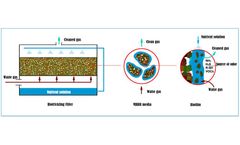
Biotrickling odor removal is a highly efficient and economical exhaust gas treatment technology suitable for treating low-concentration and large-volume organic exhaust gases, especially malodorous gases. This technology utilizes microorganisms to degrade organic pollutants and has the following advantages: High removal rate: Biotrickling odor removal can achieve a removal rate of over 95% for ...
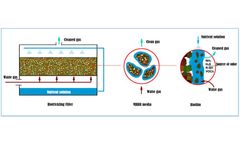
Biotrickling odor removal is a highly efficient and economical exhaust gas treatment technology suitable for treating low-concentration and large-volume organic exhaust gases, especially malodorous gases. This technology utilizes microorganisms to degrade organic pollutants and has the following advantages: High removal rate: Biotrickling odor removal can achieve a removal rate of over 95% for ...

During this process, odourless methane is produced along with several other odorous compounds, all of which make a mixture known as landfill gas (LFG). ...

This means at the end of each day, when the last of the day’s trash has been dumped into the site, the surface must be covered to prevent the spread of diseases, reduce odors, creature activity such as scavenging, and blowing litter. Landfill covers also reduce the possibility of dangerous fires. ...

Until recently, most jurisdictions have simply buried all their waste in landfill sites - essentially big holes in the ground covered when filled to capacity. ...

It is formed when liquid passes through a landfill and gets mixed with degraded waste and suspended materials. Leachate has high levels of odor-causing compounds. ...
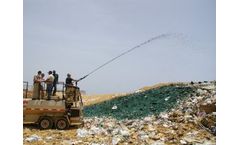
Traditional landfill management includes the application of a daily cover - typically and historically soil - to maintain as safe and hazard-free landfill site as possible. Alternative Daily Covers (ADCs) were introduced in 1993 when the Environmental Protection Agency (EPA) outlined federal regulations for using landfill covers other than soil. These ‘alternative’ daily covers are ...
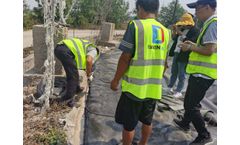
Covering geomembrane is a very important part of landfills, its main purpose is to control diseases, flying garbage, odor, improve road traffic, and improve the landscape. disease control. ...
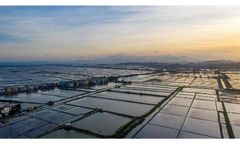
·Oxidation induction time Geomembranes have been used in the following environmental, geotechnical, hydraulic, transportation, and private development applications: · As liners for potable water · As liners for reserve water (e.g., the safe shutdown of nuclear facilities) · As liners for waste liquids (e.g., sewage sludge) · Liners for radioactive or hazardous ...

What are the main reasons for using Earth Shield geomembrane in landfills? An important issue in landfills is the pollution control of leachate. After the landfill starts, a large amount of sewage is generated due to the influx of rainwater and surface water and the decomposition of the garbage itself. ...

Environmental monitoring systems generate incredible amounts of data each day. The opportunity of putting such valuable data at work is missed if the data cannot be converted into timely actions. Data-driven environmental automation can be triggered in real-time by integrating monitoring data with various mitigative systems such as dust suppression, odour control, air purification, etc. ...
Odour is a perception of smell, it may range from an unpleasant odour (like the rotten smell of garbage) to a pleasant one (fragrance). The effect of odour varies from person to person, but at significantly higher concentrations, harmful odours may have a direct effect on human health. It generally leads to vomiting, headaches, nausea, stress, anxiety, frustration, restriction in outdoor ...

Here’s a quick snapshot of the top industrial odor control stories for 2017. #10 – Safely Countering the Rise of Landfill Odors: In January, Dr. ...

Rather than having to pay to dispose of organic trash – or having it rot in landfills or create community odor issues and environmental hazards – this process converts virtually any organic waste into a profitable asset,” said Global Water & Energy Vice President, Mr Ian Page. ...
One of the core challenges of landfill and compost site management is fighting the rise of foul odors. In addition, as communities expand further out from previous areas, they eventually become neighbors to landfills – calling for a comprehensive odor-control approach to countering odor complaints. ...

QED’s Well Cap Allows Measurements Without Disrupting Vacuum to the Field QED has designed the first engineered gas well cap that does not have to be removed to take liquid level measurements; this reduces the release of gas and odors and means landfill workers are not exposed to those gases or leachate. ...
It attracts animal vectors such as rats and is one of the major contributors to nuisance odors and landfill contaminants. In some countries, food in open dumpsites serves as an inhuman source of a day’s meal for marginal groups living nearby. 5 An attractive response to demand for environmentally and socially responsible waste systems: If communicated and ...
Q: What are the challenges of landfill odor control? Haupert: Compared to other industrial applications such as wastewater treatment and asphalt production, landfills are more challenging when it comes to fighting odors. ...

Leachate treatment options and mitigation are one of the greatest costs for landfill operators today. Rain falling on the landfill itself is the most common source of leachate, but water can also enter a landfill as runoff from locations nearby. ...